Tu Rex Gloriae, Christe
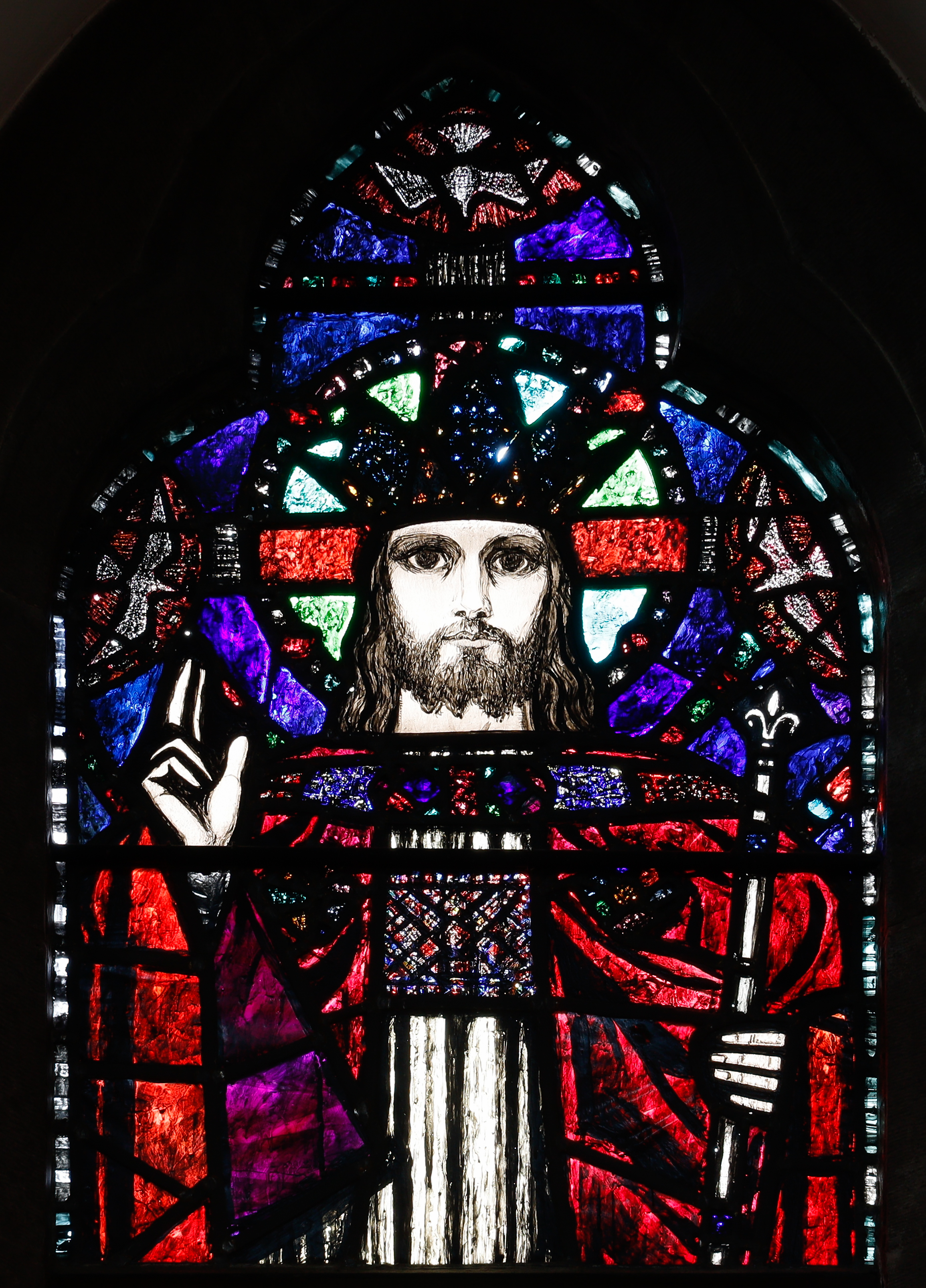
There is no systematic statement of the doctrine of the Kingdom in the Bible. It is given in brief covenants, in separate prophecies, in detached portions, in fragments, in hints, in promises, in concise outlines, and to bring all these together in their regular order much labor is requisite. Without diligent comparison, no progress can be made.3
Our goal in this section is bring greater clarity to the subject by examining popular views of the kingdom in the light of Scripture—especially in relation to the revelation given to Daniel in chapters 2 and 7.Before discussing the kingdom of God in greater depth, let’s begin with a very high-level definition of the kingdom of God. The kingdom of God is the rule of God governing His creation in accord with His will as administered through human representatives of His choosing (e.g., Adam, David, Jesus).4Vlach elaborates:The kingdom of God is the grand central theme of Scripture that encompasses all other biblical themes. . . . God’s kingdom program involves five major parts or developments: 1. Creation; 2. Fall; 3. Promise; 4. Redemption; 5. Restoration. The Bible’s storyline shows how the kingdom created goes to the kingdom fallen, which then leads to the kingdom restored. This storyline is centered and anchored in Jesus the Messiah [the divine-human King]. . . . The kingdom theme connects harmoniously with other major themes of the Bible. For instance, “covenant” is a major theme of Scripture, and the covenants are the instruments through which the kingdom program unfolds. . . . the kingdom is a crucial part of God’s plans and a thorough study of it is beneficial. The major themes of Scripture work together in a symphonic-like harmony. Yet “kingdom” is a key theme of the Bible. As one tracks the kingdom theme through Scripture he or she is tracking the storyline of the Bible.5
See Further Study on the Kingdom of God for resources discussing this important topic in greater depth.Christ reigns in the hearts of believers in a spiritual sense today, but this passage describes the bestowing of a physical kingdom through which he will someday rule the earth. All of the other kingdoms described in this chapter are real, earthly empires; and it is best to see this kingdom as real and earthly as well.8
We can have no quarrel with the dictum of writers who insist that the Kingdom is a ‘spiritual’ matter, unless they insist upon a definition which is exclusively Platonic, or if they are so foolish as to deny that a spiritual kingdom can function tangibly in a world of sense experience. As a matter of fact, it would be wrong to say that the Kingdom of Old Testament prophecy is basically ‘spiritual,’ yet a Kingdom producing tangible effects in every area of human life.9
The kingdom program is holistic. It is based in a spiritual relationship with God, yet its ultimate manifestation is physical. Thus, the kingdom is both spiritual and material.10
Appealing to symbolism in support of an exclusively spiritual interpretation of the fifth kingdom is unconvincing. Symbols are used to describe all five kingdoms, including the first four geopolitical kingdoms.11The issue of whether one takes God’s kingdom as geopolitical or purely spiritual has far-reaching ramifications. One’s belief on this issue influences one’s views on numerous related doctrines. See Kingdom Views Compared and Dangers of Misunderstanding God’s Kingdom.Those who take God’s kingdom to be primarily spiritual often believe the following:[The disciples] ask him [Acts 1:6] as concerning a kingdom; but they dream of an earthly kingdom, which should flow with riches, with dainties, with external peace, and with such like good things . . . They are also greatly deceived herein, in that they restrain Christ’s kingdom unto the carnal Israel, which was to be spread abroad, even unto the uttermost parts of the world.13
Expecting an earthly manifestation of God’s kingdom is seen as contrary to the destiny of the saints whose minds should be fixed “on things above, not on things on the earth” (Col. 3:2).The four kingdoms of which we have spoken above were earthly in character. . . . But the saints shall never possess an earthly kingdom, but only a heavenly. Away, then, with the fable about a millennium!14
Augustine actually explains why he gave up belief in a future millennial reign of Christ. Concerning the opinion that the first resurrection of Revelation 20:4-6‣ refers to the saints who will reign with Christ for a thousand years on earth, he writes, “this opinion would not be objectionable, if it were believed that the joys of the saints in that Sabbath shall be spiritual, and consequent on the presence of God; for I myself, too, once held this opinion. But, as they assert that those who then rise again shall enjoy the leisure of immoderate carnal banquets, furnished with an amount of meat and drink such as not only to shock the feeling of the temperate, but even to surpass the measure of credulity itself, such assertions can be believed only by the carnal.15
This idea—that believers are destined for heaven and have no future dealings with earthly realities—shares with Gnosticism in its denigration of the material creation.The constant premise in all these [gnostic] systems was an uncompromisingly radical dualism: however much their mythological schemes may have differed from one another in particular details, they all taught that the God who acts to rescue his elect is not in any sense the God of this world; and that the material cosmos is the evil or defective creation either of inferior gods (the archons or “rulers” who reign in the planetary spheres above) or of the chief archon (the wicked or incompetent demiurge or “world maker,” often identified with the God of the Old Testament), who out of either ignorance or envy claims to be the sole true God, beside whom there is no other.16
Gnostic dualism . . . leads to the view that the material world is evil and unredeemable and that salvation only applies to the soul, not the body. It leads to a denigration of history; if the physical world is unredeemable then the panorama of history played out in the physical world is of little consequence. It leads to a distinction in gods—the lesser material god of the OT and the higher spiritual God of the NT.17
Gnostic ideas, based upon Greek philosophy (Platonism), made their way into Christian theology through early church fathers, such as Clement of Alexandria, Origin, and Augustine.According to Gary Habermas, “Christian thought also came under the influence of Platonism, as scholars of the third century such as Clement of Alexandria and Origen mixed this Greek philosophy with their theology. In particular, Augustine’s interpretation of Plato dominated Christian thought for the next thousand years after his death in the fifth century.” [Gary R. Habermas, “Plato, Platonism,” Evangelical Dictionary of Theology, ed. Walter A. Elwell (Grand Rapids: Baker, 1984), 860. Allen states, “The Greek Fathers and Augustine drew most extensively on the philosophy of Plato and the Platonists.” [Diogenes Allen, Philosophy for Understanding Theology (Atlanta: John Knox, 1985), 91.]18
Two thousand years of church history show that the fog of Platonism has often clouded Christians. Many think God’s ultimate purposes involve escape from the “carnal” physical world to a glorious spiritual existence in the sky. A strong contrast is made between earth and heaven, so much that the ultimate goal is to escape earthly existence. But anti-material views are wrong. Physical things are not bad. In fact, the material and immaterial aspects of God’s creation are in harmony with each other.19
Those who deny a future geopolitical kingdom of God urge believers to place greater focus now upon societal and political reform.But strangely enough, some of the very men who are so scornful of the alleged ‘materialism’ of a millennial kingdom, are the most insistent that the Church today must make effective in society what they call the social and moral ideals of the present kingdom of God. Thus, it is our duty to vote the right ticket politically, give to the Red Cross, help the Boy Scouts, support the United Nations, endow hospitals, etc. But if a ‘spiritual’ kingdom can and should produce such effects at the present time through the very imperfect agency of sinful men, why cannot the same thing be true in larger measure in the coming age when the rule of God will be mediated more perfectly and powerfully through the Eternal Son personally present among men as the Mediatorial King? . . . The reasoning of such men at times seems very curious. If physicians conquer disease, if scientists eliminate certain physical hazards, if by legislation governments improve the quality of human existence, if wise statesmen succeed in preventing a war, etc.,—these things are often cited as evidence of the progress of a present Kingdom of God. But if the Lord Jesus Christ Himself returns to earth in person to accomplish these same things, more perfectly and universally, then we are told that such a kingdom would be ‘carnal.’20
What must we say then to that large class of professed believers, who establish unbelief in themselves and others by denouncing our doctrine of the Kingdom (under the garb of superior piety, spirituality, etc.), as “sensual,” “carnal,” “fleshly,” etc. Do they not see that by so doing they not only caricature the faith of the early Church at the expense of Christianity, but direct a deadly blow at the preaching of the Kingdom as given in the opening of the New Testament by which the knowledge, integrity, etc., of the first preachers, specially and divinely sent forth, are sacrificed? . . . What must we think of a doctrine of the Kingdom which is erected only by invalidating the character of the first ministers? it is amazing, and illustrative of the power of preconceived opinion and unrelenting prejudice, that men of the greatest ability and piety, are engaged in this destructive work when heaping such terms upon us.21
This view sets the stage for the Political Misuse of Scripture as the Church mistakenly takes upon itself the role of ushering in the kingdom through global, social reform.Why is an earthly kingdom necessary? Did He not receive His inheritance when He was raised and exalted in heaven? Is not His present rule His inheritance? Why does there need to be an earthly kingdom? Because He must be triumphant in the same arena where He was seemingly defeated. His rejection by the rulers of this world was on this earth (1Cor. 2:8). His exaltation must also be on this earth.22
The declaration that “the government will rest on His shoulders” [Luke 1:32] shows there is a social-political dimension to this leader’s rule. While some believe that Messiah’s kingdom means an end to all politics and government this is not the picture Isaiah paints.23
God’s redemptive plan includes His entire creation—He has not abandoned the physical realm to achieve victory only in the spiritual realm (Rom. 8:19-22).24When the effects of The Fall are reversed, representatives of mankind will reign in accord with God’s original dominion mandate (Gen. 1:26-28; Ps. 8:6; 72:8; Dan. 7:14‣).Then the devil, taking Him up on a high mountain, showed Him all the kingdoms of the world in a moment of time. And the devil said to Him, “All this authority I will give You, and their glory; for this has been delivered to me, and I give it to whomever I wish.” (Luke 4:5-6)
Could Jesus have been tempted by Satan’s offer of the literal geopolitical kingdoms of the world (Luke 4:5-6) unless it was his rightful destiny?Why would Christ be tempted to do something He didn’t want to do? He didn’t have a sin nature remember! Therefore, we maintain that the strength of this particular temptation, and Jesus’ response to it (in Luke 4:12 - which shows, I think, that He was tempted), present proof that it is indeed within His plan to reign over this earth one day; and this is in-line with Luke 1:32-33 and OT expectations in Mic. 5:2; Isa. 11:1-10; Jer. 33:15f., Zec. 14:9 etc.25
Jesus’ refusal to accept Satan’s offer was not because the offer was out-of-step with God’s plan for Jesus, but because the timing and manner in which kingdom rule would have been attained was contrary to God’s will. Satan’s offer was premature and proffered an independent path to the throne of David—circumventing the cross. Yet the offer—and its tempting reality—underscores God’s eventual plan for Jesus to reign geopolitically over all the nations.26Now as they heard these things, He spoke another parable, because He was near Jerusalem and because they thought the kingdom of God would appear immediately. Therefore He said: “A certain nobleman went into a far country to receive for himself a kingdom and to return. . . . And so it was that when he returned, having received the kingdom, he then commanded these servants, to whom he had given the money, to be called to him, that he might know how much every man had gained by trading.” (Luke 19:11-15) [emphasis mine]
Jesus’ listeners are of the impression the kingdom of God will soon appear, but the nobleman in the parable (representing Jesus) must first travel to a far country and is gone for a lengthy period of time (approaching 2,000 years as of our day). Only after this absence, does the nobleman receive a kingdom and return to rule—His kingdom is associated with His return, not His departure. His servants are not ruling on His behalf during His absence—because He has not yet received the kingdom. Instead, they are investing wisely to further His interests.Those biblical interpreters who assert that Jesus became King in the first century A.D. and, therefore, that some form of the Kingdom of God was inaugurated at the first advent, must do so in the face of Jesus’ own teaching here [Luke 19:11] at the end of His ministry.35
Immediately prior to His ascension, having taught them for an additional 40 days, the disciples still expect the kingdom to be restored to Israel. This expectation is in line with the Old Testament and the teachings of Jesus (e.g., Matthew 13). Jesus does not correct their expectation, but redirects their attention to the intervening Church age, having a different mandate and focus.36Therefore, when they had come together, they asked Him, saying, “Lord, will You at this time restore the kingdom to Israel?” And He said to them, “It is not for you to know times or seasons which the Father has put in His own authority. But you shall receive power when the Holy Spirit has come upon you; and you shall be witnesses to Me in Jerusalem, and in all Judea and Samaria, and to the end of the earth.” (Acts 1:6-8)
Writing circa A.D. 45-48, the Apostle Paul indicates believers are still striving to entered the kingdom of God, declaring, “We must through many tribulations enter the kingdom of God” (Acts 14:21-22).37At the end of Paul’s life he was still expecting to be brought “safely to His heavenly kingdom” (2Ti. 4:18), because he had not yet entered it. James (Jas. 2:5) and Peter both concur (2Pe. 1:11) with Paul that they had not yet entered that kingdom—a kingdom whose coming John describes in Rev. 12:10‣.38
God’s kingdom did not begin at the First Coming. By leading the nation in the rejection of her King, the Jewish leaders explicitly asked to remain under Gentile rule, extending the Times of the Gentiles to our present day and beyond.39But they cried out, “Away with Him, away with Him! Crucify Him!” Pilate said to them, “Shall I crucify your King?” The chief priests answered, “We have no king but Caesar!” (John 19:15) [emphasis mine]
Besides the New Testament passages above, Daniel 7‣ establishes a sequence of events precluding the notion God’s kingdom began at the First Coming and is present today: 1) the little horn has his appointed time on the stage of history → 2) the Ancient of Days and His court make judgment against the horn → 3) as a result of the judgment, the little horn is destroyed → 4) dominion is awarded to “One like the Son of Man” and his people. Specifically: dominion is not given to the Son of Man until after the beast is destroyed.Alas, some Christians reject this straightforward reading, refusing to accept the idea God’s kingdom was not established at the First Coming of Jesus. They appeal to several arguments in an attempt to deny the sequence set forth by Daniel 7‣: 1) being spiritual, the kingdom is not evident as a geopolitical reality; 2) the fourth beast was dispatched soon after the First Coming of Christ—as recorded in the events of the life and death of Caesar Nero—the events of the book of Revelation being interpreted as a veiled-political description of those times; or 3) the events depicted in this passage are not strictly chronological.We discuss inadequacies associated with the first argument throughout this section.The second argument, the preterist interpretation, attempts to reposition the events of the book of Revelation from the future to the past—asserting fulfillment in the political events associated with Caesar Nero in the first century.Among those who seek to relegate the events of the book of Revelation to the distant past, no figure is more often held to be the Beast of Revelation than the Roman Emperor Nero. . . . this may seem surprising. How could it be said with all seriousness that Nero fulfills the many details given concerning the Beast throughout Scripture? A simple reading of Scripture gives numerous aspects of this man which Nero fails to fulfill.40
For a discussion of the problems associated with taking Nero to be Daniel’s little horn (associated with the fourth beast) see Garland.41The third argument attempts to subvert the clear sequence set forth in Daniel 7‣, by separating the events into two realms: earthly vs. heavenly.The events depicted here do not chronologically follow the destruction of the little horn in verse 11. The first twelve verses represent what will take place down here [on earth]. Verses 13-14 show what will take place up there [in heaven]. The chronological relationship between verses 1-12 and verses 13-14 must be determined by other means.42
By denying the straightforward sequence within this passage, wiggle-room is found to argue the Son of Man receives dominion at His ascension associated with the First Coming.43 Since the Son of Man and clouds appear in both Daniel 7:13‣ and Acts 1:9, they argue the Son of Man must have received the kingdom at His ascension.Fausset provides an example of those convinced the Son of Man was awarded the kingdom at His ascension.This investiture was at His ascension “with the clouds of heaven” (Acts 1:9; 2:33-34), which is a pledge of His return “in like manner” in the clouds (Acts 1:11; Mat. 26:64), and “with clouds” (Rev. 1:7‣). The kingdom then was given to Him in title and invisible exercise; at His second coming it shall be in visible administration. . . . the words, “with the clouds,” and the universal power actually, though invisibly, given Him then (Eph. 1:20-22), agree best with His investiture at the ascension, which, in the prophetic view that overleaps the interval of ages, is the precursor of His coming visibly to reign; no event of equal moment taking place in the interval.44
The crucifixion of Jesus is certainly a prerequisite for His eventual rule, but Fausset and others are premature in trying to make the kingdom a present reality—in advance of the arrival and destruction of the little horn—as revealed in Daniel 7‣ and elsewhere.45 This attempt to have the kingdom established at the First Coming usually includes appeals to Jesus’ reference of Daniel 7‣ at His trial (Mat. 26:26; Mark 14:62). But several interpretive clues argue Jesus had in view His Second Coming.Daniel 2‣ and 7‣, as connected with the ultimate re-establishment of Israel, does not refer in the slightest manner to the first Coming of the Christ. The subject-matter is Gentile domination, and as the Messiah’s Kingdom, which is to supersede the same, was not then set up but postponed, the prophecies only, and in strict accordance with what has taken place, direct our attention to the Second Advent, when this will be accomplished.47
It has been the hope of the Church through many a starless night, when other hopes had gone out one by one, like beacons shattered by the tempest, leaving her disconsolate and helpless. And it is now again, in our day, pressed upon her notice, as her strength in ‘the hour of temptation, which is coming upon all the world,’ the only light which cannot be quenched, and by which alone she will be able to steer her perilous course through the gloom of the thickening storm. It is no dream of carnal enthusiasts, enamored of materialism, and anticipating a paradise of gross delights. It is the calm belief of spiritual men, resting upon God’s sure promise, and looking forward to a Kingdom of ‘righteousness, peace, and joy in the Holy Ghost.’ It is no hasty conjecture, no novelty of a feverish period, rashly caught up, without consideration and without evidence. It can produce the testimony of ages in its behalf; and they who have held it in our day have been men who studied their Bible on their knees, and have come to their conclusions after long, deliberate, and most solemn investigation. It is no fable of romance; it is sober, Scriptural reality, though far beyond what fancy ever painted. It is no vision of the politician, yet it shows us how, erelong, shall be exemplified that which earthly governments have been vainly striving to realize—a peaceful and prosperous world.49
4.6.3.2.1.1 - Antichrist Revealed and Defeated
Perhaps the clearest prerequisite for the establishment of the fifth kingdom is the destruction of the final leader of the fourth kingdom: the little horn, the Antichrist.The fourth beast is not finished until the little horn is killed and destroyed at the second coming of Christ.50
This fact is clear enough from Daniel 7‣ alone. All-the-more difficult to ignore when the book of Revelation also ties the destruction of Antichrist to the return of Jesus at the Second Coming (Rev. 19:20‣ cf. 2Th. 2:8).It should be noted that the destruction of the Antichrist takes place before Christ’s kingdom is established, demonstrating that the kingdom of God in view here [Daniel 7:13‣] did not begin at Christ’s first coming but will be inaugurated at his return.51
[The fifth] kingdom is not now on earth. It cannot be here till the fourth beast with its ten horns and the eleventh little horn with all its blasphemies have been on the earth. It cannot come until He comes again. The second Coming of Christ terminates Gentile rule and establishes the kingdom on the earth.52
Amazingly, this scriptural time-table isn’t sufficient to dissuade those intent on placing the kingdom of God at the First Coming from obfuscating the order of events revealed in Scripture.534.6.3.2.1.2 - Times of the Gentiles End
Another clear prerequisite to the establishment of the fifth kingdom is for the Times of the Gentiles to be brought to their conclusion. These times correspond to the historical period spanned by the image of Nebuchadnezzar’s dream (Daniel 2‣), the same period occupied by the sequence of beasts in Daniel’s vision (Daniel 7‣). This period began with the Babylonian captivity—the setting for much of the book of Daniel—and is characterized, generally, by the dispersion of Jews globally, outside the land of promise. Specifically, it is the period in history where no Jewish king sits upon the throne of David.54The presentation of the kingdom to Israel by Jesus at His First Coming (Zec. 9:9; Mat. 10:5-7; Luke 19:30-44; Acts 1:6-7) provided an opportunity for this period to end. Instead, the Jews crucified their King and chose to remain under Gentile dominion, declaring, “We have no king but Caesar!” (John 19:15). The rejection of the ultimate Davidic King resulted in another destruction of Jerusalem (A.D. 70), trampling of the city by Gentiles, and dispersion of the Jews (this time, at the hands of Rome rather than Babylon—as predicted by Daniel (Dan. 9:26‣) and Jesus.But when you see Jerusalem surrounded by armies, then know that its desolation is near. . . . And they will fall by the edge of the sword, and be led away captive into all nations. And Jerusalem will be trampled by Gentiles until the times of the Gentiles are fulfilled (Luke 21:20-24). [emphasis mine]
This trampling of Jerusalem extends to our own times, where wrangling over the occupation and ownership of Jerusalem continues to factor in the latest news of the Middle East. Meanwhile, most of the world’s media remains ignorant of the spiritual and geopolitical significance of these events.55It seems that ever since Nebuchadnezzar invaded Jerusalem over 2600 years ago Jerusalem has been “trampled under foot by the Gentiles” (Luke 21:24). The destruction of Jerusalem by Titus was hardly the end of trampling, but one in a series of tramplings which continue to this very day. To this day Jerusalem is still not at peace, a fact which prompts the question, “if Jerusalem is still trampled then how could the times of the Gentiles be said to be fulfilled?” Obviously that time has not yet come, for the trampling must continue “until the times of the Gentiles be fulfilled.”56
Dr. Norval Geldenhuys in his recent work on Luke’s Gospel (1951) introduces something which no one would think the text even implied when he says that “Christ nowhere implies that the times of the Gentiles will be followed by Jewish dominion over the nations,” and rejects the idea of a Jewish kingdom. The one commentator, as far as my knowledge of this literature extends, who most satisfactorily deals with this final clause, is Bishop J. C. Ryle, in his great work, Expository Thoughts on the Gospels. “A fixed period is here foretold during which Jerusalem was to be given over into the hands of Gentile rulers, and the Jews were to have no dominion over their ancient city. A fixed period is likewise foretold which was to be the time of the Gentiles’ visitation, the time during which they were to enjoy privileges, and occupy a position something like that of Israel in ancient days . . . Both periods are one day to end. Jerusalem is to be once more restored to its ancient inhabitants. The Gentiles, because of their hardness and unbelief, are to be stripped of their privileges and endure just judgments of God. But the times of the Gentiles are not yet run out. We ourselves are living within them at the present day. The subject before us is a very affecting one and ought to raise within us great searchings of heart. While the nations of Europe are absorbed in political conflicts and worldly business, the sands of their hourglass are ebbing away. While governments are disputing about secular things, and parliaments can hardly condescend to find a place for religion in their discussions, their days are numbered in the mind of God. Yet a few years, and ‘the times of the Gentiles will be fulfilled.’ Their days of visitation will be past and gone. Their misused privileges will be taken away. The judgments of God shall fall on them. They shall be cast aside as vessels in which God has no pleasure. Their dominion shall crumble away, and their vaunted institutions shall fall to pieces. The Jews shall be restored. The Lord Jesus shall come again in power and great glory. The kingdom of this world shall become the kingdom of our God and of His Christ, and ‘the times of the Gentiles’ shall come to an end. Happy is he who knows these things, and lives the life of faith in the Son of God! He is the man, and he only, who is ready for the great things coming on this earth, and the appearing of the Lord Jesus Christ. The kingdom to which he belongs, is the only kingdom which shall never be destroyed. The King whom he serves, is the only King whose dominion shall never be taken away (Dan. 2:44‣; 7:14‣).” [J. C. Ryle: Expository Thoughts on the Gospels, St. Luke, Vol. II, p. 373. Rev. ed., London, 1910] (Unfortunately, these comments are omitted in a recently published Anniversary Edition of Ryle’s work.)57
Jesus himself had predicted the destruction of Jerusalem in AD 70 (see Luke 21:20-24) and indicated that these revolts would lead to the expulsion of the Jews from the land: “They will fall by the edge of the sword and be led away as captives among the nations. Jerusalem will be trampled down by the Gentiles until the times of the Gentiles are fulfilled” (Luke 21:24 NET). Although the Roman Empire would eventually collapse by AD 476, the long exile of Jews from the land of Judah would continue until modern times.58
See Times of the Gentiles. See When Does the Stone Strike?4.6.3.2.1.3 - Signs Precede
Jesus said, “So you also, when you see these things happening, know that the kingdom of God is near” (Luke 21:31). “These things” include signs in the sun, moon and stars, distress of nations, sea and waves roaring, men’s hearts failing from fear, things coming . . . upon the earth, and the powers of heaven shaken. Unless one is prepared to spiritualize these signs, they have not yet transpired.59 These preliminary signs precede the ultimate sign: the visible manifestation of Jesus’ glory at His return (Mat. 24:30; Luke 11:30), a preview Peter, James, and John were privileged to see (Mat. 16:28; Mat. 17:2; Mark 9:2; Luke 9:29; 2Pe. 1:16-18).4.6.3.2.1.4 - Israel Turns to Christ
Lamenting His rejection by Israel, Jesus said,O Jerusalem, Jerusalem, the one who kills the prophets and stones those who are sent to her! How often I wanted to gather your children together, as a hen gathers her chicks under her wings, but you were not willing! See! Your house is left to you desolate; for I say to you, you shall see Me no more till you say, ‘Blessed is He who comes in the name of the LORD! (Mat. 23:37-39). [emphasis mine]
This established a prerequisite related to Jewish evangelism before Jesus returns. Jerusalem won’t see Him again until her occupants recognize His messianic claims. Sadly, Scripture reveals Israel will not turn to Christ until God “pleads His case” with her. This results in a unique period of discipline under the hand of God.“And I will bring you into the wilderness of the peoples, and there I will plead My case with you face to face. Just as I pleaded My case with your fathers in the wilderness of the land of Egypt, so I will plead My case with you,” says the Lord GOD. “I will make you pass under the rod, and I will bring you into the bond of the covenant; I will purge the rebels from among you, and those who transgress against Me; I will bring them out of the country where they dwell, but they shall not enter the land of Israel. Then you will know that I am the LORD” (Eze. 20:35-38).
This period of divine discipline is unlike any other in Israel’s troubled history (Dan. 12:1‣).60 During this “time of Jacob’s trouble” (Jer. 30:7), the Jews finally put their faith in their Messiah, Jesus (Jer. 30:9; Dan. 12:1‣).61The spiritual restoration of Israel is the event Paul described in his letter to the church at Rome advising them not to be haughty regarding God’s acceptance of Gentiles following Israel’s rejection of Jesus.62The New Testament teaches that Christ will be seated upon His Davidic Throne only after Israel’s repentance. This becomes clear in Matthew 23-25. In Matthew 23:37-39, Christ expresses His desire to gather (episynagō) His chosen people but clarifies that such a gathering will only transpire subsequent to Israel’s acknowledgement of Him as their Messiah (Mat. 23:39). Such an acknowledgment of Christ’s rightful place over the nation will take place during the Tribulation Period (Zec. 12:10) thus allowing the regathering (episynagō) of the nation to transpire at the end of this period as depicted i n the Olivet Discourse (Mat. 2431). Only after this regathering does Matthew then portray the inauguration of Christ’s reign on David’s throne (Mat. 25:31). Thus, Matthew’s chronology mandates a conversion of national Israel as a condition to Christ reigning on David’s Throne. Because of Israel’s current state of unbelief (Rom. 10:21; 11:25), a current Davidic reign of Christ violates this chronology.63
Scripture indicates that for the future Millennial, Davidic Kingdom of God to come to Earth (the Kingdom foretold through the Hebrew prophets), it is Israel, not the Gentiles or Samaritans, that must repent (Zec. 12-14; Acts 3:12-21). That is why the gospel of the Kingdom was to go only to Israel [Mat. 10:6; 15:24]. Israel is to be the spiritual leader of the world in the coming Kingdom (Isa. 1:2-3; 61:6; Zec. 8:20-23).64
Is Israel’s repentance a precondition for the establishment of the Messianic Kingdom? The answer is, Yes.65
See Daniel 12:1.4.6.3.2.1.5 - Seven Trumpets of Revelation Have Sounded
John records the historic occasion when the fifth kingdom supplants the kingdoms of this world: at the sounding of the seventh trumpet of Revelation. “Then the seventh angel sounded: And there were loud voices in heaven, saying, ‘The kingdoms of this world have become the kingdoms of our Lord and of His Christ, and He shall reign forever and ever!’ ” (Rev. 11:15‣). The seventh trumpet announces the arrival of the seven bowls of God’s wrath—the penultimate judgments poured upon a God-rejecting world. This follows the opening of the seven seals and the sounding of the previous six trumpets.66 This period in history has not arrived—unless one is willing to spiritualize or otherwise obfuscate67 the judgments unleashed by the seven seals and first six trumpets. This is why Jesus said signs precede the arrival of the kingdom.4.6.3.2.1.6 - King Returns to Reign
The fifth kingdom cannot begin until its king returns to reign. The king did not begin His reign at the First Coming. Instead, “His citizens hated him” and rejected His rule—so he departs until a later time when, “having received the kingdom,” He returns (Luke 19:14-15). He only begins his kingly duty as judge at His return at the Second Coming (Mat. 25:31-32, 34).The view that the Kingdom is present only when the King is present is also consonant with the OT . . .68
Since the King has gone until His return in glory, it is plausible to think that the Kingdom is held in abeyance until that return.69
Matthew 25:31 is strategic since it links the coming of the kingdom and Jesus’ reign from the Davidic throne with the second coming of Jesus to earth . . . This verse has great implications concerning the timing of the kingdom since Jesus explicitly states when His kingdom will begin. It is at His second coming, and not before, when Jesus assumes the Davidic throne.70
4.6.3.2.2.1 - Jesus on the Throne of David
When the kingdom commences, Jesus will take His own throne, the throne of His father David, just as the angel Gabriel prophesied to Mary. “He will be great, and will be called the Son of the Highest; and the Lord God will give Him the throne of His father David” [emphasis mine] (Luke 1:32).71Paul tells Timothy that Jesus will judge “at His appearing and His kingdom” (2Ti. 4:1 cf. Mat. 25:31-32). Paul connects Jesus’ Second Coming with the arrival of His kingdom.Jesus revealed He will not “sit on the throne of His glory” until “the regeneration”—at which time the disciples will judge the twelve tribes of Israel (Mat. 19:28; Luke 22:19-30).This Kingdom is given to the Son of Man at a particular, definite time. Now without entering into a discussion . . . concerning the period of time designated by Daniel, we only, at present, remark: (1) that as this Kingdom is unalterably associated with David’s Son restoring the fallen Theocratic-Davidic throne and Kingdom (so both covenant and promise), and as such a restoration has not yet been experienced, it must, in the very nature of the case, be still in the future; (2) that the peculiar phraseology, corroborated by the prophets and applied by Jesus, unmistakably refers it to the Second Advent.72
See A Promised King on the Throne of David. See Davidic Throne is on Earth.4.6.3.2.2.2 - Believers Over the Nations
When the kingdom has arrived, not only will the apostles rule over Israel (Mat. 19:28; Luke 22:19-30), but believers will co-rule with Jesus over the nations (Dan. 7:27‣; 1Cor. 6:2; 2Ti. 2:12; Rev. 2:26-27‣; 3:21‣).73 Their rule includes the suppression of sin and rebellion—which Jesus connects with His physical reign from Mt. Zion (Jerusalem) by citing Psalm 2 (Rev. 2:27‣ cf. Ps. 2:9). This reign upon the earth is future to the giving of the book of Revelation to John (circa A.D. 95), “And we shall reign on the earth” [emphasis mine] (Rev. 5:10‣b). For additional background on the rule of believers in God’s kingdom, see Millennial Reign of the Saints.744.6.3.2.2.3 - Israel Dwells Safely in the Promised Land
Having turned to Christ, Israel will no longer live in fear, having been gathered from her dispersion among the nations and returned permanently to their land of promise.‘Therefore do not fear, O My servant Jacob,’ says the LORD, ‘Nor be dismayed, O Israel; For behold, I will save you from afar, And your seed from the land of their captivity. Jacob shall return, have rest and be quiet, And no one shall make him afraid.’ (Jer. 30:8-10) [emphasis mine]
God’s gathering of the Jews to their land under David’s righteous branch is in fulfillment of God’s promise to Israel. “ ‘Behold, the days are coming,’ says the LORD, ‘that I will perform that good thing which I have promised to the house of Israel and to the house of Judah: In those days and at that time I will cause to grow up to David a Branch of righteousness; He shall execute judgment and righteousness in the earth. In those days Judah will be saved, And Jerusalem will dwell safely’ ” [emphasis mine] (Jer. 33:14-16a).Although this promise of restoration was given by Jeremiah in the context of the Babylonian captivity, God has promised a final restoration of Israel surpassing anything history has known. Israel will be gathered from the nations to the promised land where they will faithfully serve God.75Behold, I will gather them out of all countries where I have driven them in My anger, in My fury, and in great wrath; I will bring them back to this place, and I will cause them to dwell safely. They shall be My people, and I will be their God; then I will give them one heart and one way, that they may fear Me forever, for the good of them and their children after them. And I will make an everlasting covenant with them, that I will not turn away from doing them good; but I will put My fear in their hearts so that they will not depart from Me. Yes, I will rejoice over them to do them good, and I will assuredly plant them in this land, with all My heart and with all My soul. For thus says the LORD: ‘Just as I have brought all this great calamity on this people, so I will bring on them all the good that I have promised them.’ (Jer. 32:37-42) [emphasis mine]
Similar promises are found in Ezekiel. Israel will be gathered to her own land, cleansed of idolatry, ruled by David, and walk in obedience to God (Eze. 37:21-24). Following her return from Babylon, Israel never had a king—evidence this passage awaits fulfillment.Then say to them, ‘Thus says the Lord GOD: “Surely I will take the children of Israel from among the nations, wherever they have gone, and will gather them from every side and bring them into their own land; and I will make them one nation in the land, on the mountains of Israel; and one king shall be king over them all; they shall no longer be two nations, nor shall they ever be divided into two kingdoms again. They shall not defile themselves anymore with their idols, nor with their detestable things, nor with any of their transgressions; but I will deliver them from all their dwelling places in which they have sinned, and will cleanse them. Then they shall be My people, and I will be their God. David My servant shall be king over them, and they shall all have one shepherd; they shall also walk in My judgments and observe My statutes, and do them.” ’ (Eze. 37:21-24)
The Kingdom . . . demands the national restoration of the Jews in their own land.76
4.6.3.2.2.4 - God’s Will Prevails on Earth
Each time we pray the “Lord’s Prayer,” we petition God. Several of those petitions identify attributes of God’s kingdom. Where these attributes are missing, God’s kingdom has not arrived.In this manner, therefore, pray: ‘Our Father in heaven, Hallowed be Your name. Ⓐ Your kingdom come. Ⓑ Your will be done Ⓒ On earth as it is in heaven.’ (Mat. 6:9-10)
This familiar prayer, made daily by millions of believers, has similarities to Psalm 2, both of which describe conditions once the kingdom arrives.“Ask of Me, and I Ⓐ will give You The nations for Your inheritance, And the Ⓒ ends of the earth for Your possession. You shall Ⓑ break them with a rod of iron; You shall Ⓑ dash them to pieces like a potter’s vessel.’ ” Now therefore, be wise, O kings; Be instructed, you judges of the earth. Ⓑ Serve the LORD with fear, And rejoice with trembling. Kiss the Son, lest He be angry, And you perish in the way, When His wrath is kindled but a little. Blessed are all those who put their trust in Him. (Ps. 2:8-12)
Matthew 6 and Psalm 2 both reveal: Ⓐ The kingdom is future; Ⓑ the kingdom has arrived when God’s will prevails; Ⓒ the authority of the kingdom extends over earth (Zec. 14:9).77 not only heaven: “And the LORD shall be King over all the earth. In that day it shall be ‘The LORD is one,’ And His name one.”To determine whether the kingdom of God is underway, we simply need to ask whether God’s will prevails on earth? The answer is obvious.78John says Christians are “a kingdom” [Rev. 1:6-7‣]. Then with Revelation 5:10‣ he says those who make up the nucleus of this “kingdom” “will reign upon the earth.” As Koester notes, “The faithful constitute a kingdom now by resisting the purported authority of evil, but the kingdom comes when evil is overthrown and the world recognizes the power of God and his Messiah (Rev. 11:15‣; 12:10‣).” [Craig R. Koester, Revelation, The Anchor Yale Bible (New Haven: Yale University Press, 2014), 389.] [emphasis mine]79
As Psalm 2 and other passages make plain, in God’s kingdom His will prevails, but not by way of gradual reform and the eventual conversion of mankind. No, His will comes through rebuke and judgment of His enemies.He shall judge between the nations, And rebuke many people; They shall beat their swords into plowshares, And their spears into pruning hooks; Nation shall not lift up sword against nation, Neither shall they learn war anymore. (Isa. 2:4).
In His days the righteous shall flourish, And abundance of peace, Until the moon is no more. He shall have dominion also from sea to sea, And from the River to the ends of the earth. Those who dwell in the wilderness will bow before Him, And His enemies will lick the dust. . . . Yes, all kings shall fall down before Him; All nations shall serve Him. (Ps. 72:7-11)
God’s plans are holistic. He will restore all things material and immaterial. This includes individuals, the nation Israel, and the nations of the world.80
4.6.3.2.2.5 - Passover Fulfilled
On the night of His betrayal, Jesus promised his apostles He would not celebrate Passover with them again, “until the kingdom of God comes” (Luke 22:18 cf. Mat. 26:29; Mark 14:25). In the meantime, believers are commanded to celebrate the Lord’s Supper, in remembrance of Him (Luke 22:19; 1Cor. 11:24-25). From this, we conclude the present period of the Church is not the kingdom of God, but precedes its arrival. When the kingdom of God arrives, the Church will no longer need to remember Jesus because He will be physically present.That the premillennial interpretation alone is a satisfactory explanation is demonstrated by the following: 1. The facts of the prophecy demand that the Kingdom of Messiah follow the kingdom of the Gentiles—that its very establishment awaits the destruction of those kingdoms, being at no point of its history contemporaneous with those kingdoms. . . . 2. The Kingdom of the Most High succeeds a final form of the Roman kingdom, a form in which that kingdom has not to the present moment appeared. . . . 3. The Kingdom of Messiah clearly follows the appearance of the Antichrist and his destruction, events which are still in the future, as explained by the New Testament. . . . 4. The Kingdom to be established by Messiah at His coming is to be a Kingdom of power and glory, not one of suffering and cross-bearing. . . . 5. The Kingdom of the Most High is Jewish in some definite sense, just as our premillennial doctrine affirms of the coming Kingdom of Messiah.81
Let us again refer to Luke 21:31, in which it is stated “when ye see these things come to pass, know ye that the Kingdom of God is nigh at hand.” Now among “these things” which are first to happen are the Jewish tribulation and “the times of the Gentiles” (Luke 21:24), and when these come to pass, and Jerusalem is no longer under Gentile dominion, and the Advent (Luke 21:27) of the Savior is witnessed, then the Kingdom will be established. So long as “the city of the great King,” and so long as His land, His by inheritance . . . as David’s Son, is under Gentile dominion, it is simply impossible for the Kingdom to exist; and it is folly to argue, with the light of the Davidic covenant and prophetic announcements relating to it, that the Messianic Kingdom has been set up. This Jewish tribulation, these times of the Gentiles, this gathering out of an elect, the nonfulfillment of “these things,”—these, and a multitude . . . of considerations, show that it is thus postponed.82
Some Bible students have concluded that the Kingdom of God portrayed in Daniel’s dream was established by Jesus Christ during His first coming. At least two things are opposed to that view. First, according to Daniel 7:13-14‣, Messiah would receive the kingdom in conjunction with His coming with the clouds of heaven. It is a fact that Jesus did not come with the clouds of heaven in His first coming. Instead, He came through birth by a young Jewess (Gal. 4:4). Second, Jesus placed the fulfillment of Daniel 7:13-14‣ at His second coming. In Matthew 24:29-31 Jesus said that it would be after the Tribulation of the future that the sign of the Son of Man would appear in the sky and the tribes of the earth would see the Son of Man coming on the clouds of the sky with power and great glory. Again He said that when the Son of Man would come in His glory, and all the angels with Him, then He would sit on His glorious throne (Mat. 25:31). When Jesus was on trial, He told the men of the Sanhedrin that they would see the Son of Man coming on the clouds of heaven hereafter (Mat. 26:64). For reasons such as these, it can be concluded that the Kingdom of God in Daniel 7‣ will be established by Christ in conjunction with His second coming.83
The kingdom thus established . . . will indeed be Christ’s earthly, millennial rule, rather than a spiritual kingdom established at His first coming. . . . First, in this vision, as in Nebuchadnezzar’s dream of chapter two, it is only after the emergence of the ten-horn kings, and even the little horn, that any mention of Christ’s contrasting kingdom is made, giving the suggestion that it will not come to existence until after their time. . . . [but] Rome continued for some centuries after Christ’s first coming. Second, it is only after the destruction of the little horn, the Antichrist, that Christ’s kingdom is mentioned; and it is commonly accepted, even by those who identify this kingdom with Christ’s spiritual rule, that the Antichrist is still future. Third, verses thirteen, fourteen and twenty-seven speak clearly of the inauguration of the kingdom of Christ (not its close, as Keil argues) and the verses show that this kingdom will be a glorious rule in which all peoples will serve Christ—something not yet true today, so far as His spiritual rule is concerned, but which will be true when He comes to set up His earthly reign after the demise of the Antichrist (Eze. 37:23).84
See When Does the Stone Strike?| Spiritual - the kingdom has no specific political or geographic manifestation: world governments and culture gradually conform to God’s law through the indirect influence of evangelized citizens.
“That the disciples, in common with the Jews, expected the Messiah’s kingdom to be at least in part secular, I have often had occasion to note. In this opinion they continued less or more till the day of pentecost; when the mighty outpouring of the Holy Spirit taught them the spiritual nature of the kingdom of Christ.”85 “[George Eldon Ladd] says, ‘The Kingdom of Christ here is the invisible sphere of Christ’s reign into which men enter by faith in Jesus Christ’ [A Theology of the New Testament, 411].” [emphasis mine]86 “[The Kingdom of God is] in the elect of God among the Jews, in their hearts; it being of a spiritual nature, and lying in righteousness, and peace, and joy in the Holy Ghost; in the dispossession of Satan, the strong man armed; in the putting down of the old man, sin, with its deceitful lusts, from the throne; and in setting up a principle of grace, as a governing one; and so escapes the observation of natural men, and cannot be pointed at as here, or there: hence it appears, that the work of grace is an internal thing; it is wrought in the hearts of men; it has its seat in the inward parts, and is therefore called the inner, and the hidden man.” [emphasis mine]87 “The prophecy authorizes us to anticipate a time when there shall be a general prevalence of true religion; when the power in the world shall be in the hands of good men—of men fearing God; when the Divine laws shall be obeyed—being acknowledged as the laws that are to control men; when the civil institutions of the world shall be pervaded by religion, and moulded by it; when there shall be no hinderance to the free exercise of religion, and when in fact the reigning power on the earth shall be the kingdom which the Messiah shall set up. There is nothing more certain in the future than such a period, and to that all things are tending.”88 “The eternal nature of this kingdom cannot be material, because David’s political throne and dominion perished, but his spiritual kingdom is and will be forever on earth.”89 “Jesus taught that His Kingdom is . . . moral and spiritual, and not political (Mat. 5:3-12; Luke 6:20-23; John 18:36); that it is invisible and internal (Luke 17:20-21) . . .”90 This view promotes Platonic dualism and considers the material realm inferior to the spiritual realm.91 But, prior to The Fall, God pronounced all of His creation as “very good” (Gen. 1:31). A fatal problem with this view is its depiction of a kingdom radically different from Old Testament teaching. “The problem with using New Testament verses in an attempt to argue that the Messianic kingdom now exists in spiritual form only is to interpret the New Testament in a manner that contradicts the Old Testament. . . . the authenticity of New Testament interpretations must be judged by their harmony and congruence with prior revelation. Determining what is true by its conformity to prior revelation is a principle that is taught throughout Scripture (Deu. 13:1-5; Acts 17:11; Gal. 1:6-9; 1Th. 5:21; 1 Cor. 14:29; 1 John 4:1; Rev. 2:2‣). If such congruence did not exist and God could rewrite concepts found in prior revelation, then the various biblical commands to test what one hears according to what God has already revealed (1Th. 5:21; 1Cor. 14:29; 1Jn 4:1) become impossible to follow.”92 “May it be allowed, without reflecting upon any writer, to say . . . language which casts us loose from a sense actually contained in the inspired Record, is taking dangerous and undue liberty with the Word of God. Look at its sad results in the overwhelming mass of mystical interpretation which a taxed ingenuity and an apparently profound learning have heaped upon the Scriptures, rejecting the visible, outward Kingdom taught by the prophecies and substituting for it the vaguest of explanations, and making it appear that God said one thing but meant quite another; the Jews, John the Baptist, the disciples, being deceived by what was said, not being able to comprehend the spiritual and mystical interpretation that afterward such men as Origen, Jerome, Augustine, and others bestowed upon the grammatical sense.”93 See Puzzling Kingdom Passages. | Geopolitical - An earthly, geopolitical government similar to the governments which preceded.94
The overthrow of the previous geopolitical kingdoms can only be said to have occurred if the final kingdom manifests in the same realm. “The interpreter of the vision states plainly in verse 23 that the fourth beast represents the fourth kingdom, an earthly kingdom which will be different from the preceding kingdoms and will devour the whole earth, that is, be worldwide in its sway. In the process, it will tread down and break in pieces the preceding kingdoms. By so much, the interpretation eliminates the idea that the fifth kingdom refers to the rule of God in the new heavens and the new earth (Rev 21‣ and 22‣) or that it is merely a spiritual kingdom which gradually gains sway by persuasion, such as the kingdom of God in the earth at the present time. By its terminology the interpretation of verses 23-27 demands that, for the fifth kingdom to overcome the fourth, the fifth must be basically a sovereign and political kingdom, whatever its spiritual characteristics. By so much, it also demands that this be a future fulfillment, inasmuch as nothing in history corresponds to this.”95 This is exactly the type of government one is led to expect having read the Old Testament, as evidenced by the understanding of the rabbis.96 “How do we know . . . King Messiah . . . will hold sway on land? Because it is written, All kings shall prostrate themselves before him; all nations shall serve him (ib. II) [Midrash Rabbah, Numbers XIII, 14].”97 “The Old Testament portrays the kingdom in earthly, terrestrial terms (Gen. 15:18-21). When the kingdom comes, it will exercise dominion over a repentant Israel (Eze. 36-37). Although the kingdom certainly has other qualities, an inductive study of the kingdom as portrayed in the Old Testament makes it impossible to divest the kingdom of these terrestrial, geopolitical characteristics.”98 “Now we must frankly admit that a literal interpretation of the Old Testament prophecies give us just such a picture of an earthly reign of the Messiah as the premillennialist pictures. [Floyd E. Hamilton, The Basis of Millennial Faith (Grand Rapids: Eerdmans, 1942), 38.]”99 | |
| First Coming - at the death and resurrection of Jesus.
Calvin provides a ready example of this view: “God therefore, who had seemed for so many ages not to notice the world nor to care for his elect people, ascended his tribunal at the [first] advent of Christ.”100 “God, therefore, still exercises his heavenly reign in the world, because he dwells in the hearts of his people by his Spirit. . . . [Daniel’s] vision ought not to be explained of the final advent of Christ, but of the intermediate state of the Church. The saints began to reign under heaven, when Christ ushered in his kingdom by the promulgation of his Gospel.”101 Steinmann asserts the kingdom began at the First Coming and that all four beasts, including the final beast ruled by Antichrist, which nearly all agree is Rome (either past or future) have already transpired: “Christians read Daniel 7‣ knowing that the four world kingdoms depicted by the beasts have already passed away. Christ has already established the eternal kingdom of God by his incarnation, life, ministry, suffering, death, and resurrection, and he has granted us membership in it through faith alone.”102 But the fourth empire was not overthrown by events associated with the First Coming. The western branch of Rome continued until the almost the end of the 5th century while the eastern branch lasted until the mid-fifteenth century (the fall of Constantinople in 1453).103 Seiss sees the kingdom as a spiritual reign within the heart, without external form—but understands it will ultimately manifest in an outward visible form: “It is usually and not improperly understood as the reign and rule of God through Christ which is set up by the Spirit in the hearts of believers. But that is its hidden form, its interior beginning only. It is yet to be amplified and manifested outwardly in the transformation, glorification and eternal regency with Christ of all who are Christ’s.”104 This is closer to the mark: the focus of today’s Church is the reconciliation of sinners to God through regeneration. Born-again individuals qualify to enter God’s kingdom, but the kingdom does not begin until the King returns. See Relationship of Church and Kingdom. | Second Coming - at the victorious return of Jesus, the King.
Although believers in this age qualify-—find entry-—to God’s kingdom, the kingdom does not begin until it manifests externally, at the overthrow of the previous geopolitical kingdom. “Did Jesus’ coming to the earth in the first century destroy the Roman Empire? We could only say yes if we interpreted the destruction of the fourth kingdom in a non-literal way. I choose not to do this because the destruction of the previous kingdoms was literal. It seems that we should also expect that the destruction of the fourth kingdom by the fifth kingdom shall be literal. Therefore the second coming of Christ must be the initiation of the fifth kingdom and the final destruction of the fourth kingdom.”105 “The Roman Empire would be completely gone before the Kingdom of God would be established. In light of this, the Kingdom of God portrayed in Daniel 7‣ was not established by Christ during His first coming, for . . . the Roman Empire continued to exist for several centuries after Christ’s first coming. The Kingdom of God of Daniel 7‣ will not be established until Christ’s second coming.”106 “The penitent thief on the cross obviously saw the kingdom as a future reality when he exclaimed, ‘Jesus, remember me when You come in Your kingdom!’ (Luke 23:42). Joseph of Arimathea, a wealthy disciple of Christ in whose tomb Christ was eventually buried, also understood Christ as teaching a future kingdom. Mark 15:43 says, ‘Joseph of Arimathea came, a prominent member of the Council, who himself was waiting for the kingdom of God; and he gathered up courage and went in before Pilate, and asked for the body of Jesus’ (italics added)”107. | |
| Gradual - the Church gradually and peacefully grows the kingdom, through evangelization and promoting social justice.
Proponents of this view assert the Church age represents a period of continual expansion and influence of the gospel resulting in the socio-political transformation of the world. “The destruction of the world-kingdoms can in reality proceed only gradually along with the growth of the stone, and thus also the kingdom of God can destroy the world-kingdoms only by its gradual extension over the earth. The destruction of the world-power in all its component parts began with the foundation of the kingdom of heaven at the appearance of Christ upon earth, or with the establishment of the church of Christ, and only reaches its completion at the second coming of our Lord at the final judgment.”108 “The victory of the Kingdom of Messiah is conceived [by postmillennialists] to be gradually accomplished within the present age but to be consummated at the second coming of Christ.”109 “Although the Kingdom was established definitively in the finished work of Christ, it is established progressively throughout history (until it is established finally on the Last Day). [David Chilton, Paradise Restored (Tyler, TX: Reconstruction Press, 1985), 73-34.]”110 “[Jesus] is in the process of putting all of His enemies under His feet. . .” [emphasis mine]111 But, unlike God’s coming kingdom, today’s Church coexists with Gentile world dominion.112It will not suffice to say God’s kingdom is administered through today’s Church when Scripture asserts the kingdom of God is administered from Jerusalem, capital of the Jewish nation of Israel (Zec. 14:16-18). Yet the Church remains overwhelmingly Gentile in composition. | Sudden - God dramatically and personally intervenes in judgment when the King returns at the Second Coming and ascends His throne (Mat. 25:31).
The overthrow of the beast and his kingdom, ushering in the kingdom, does not span a lengthy period of time. The fourth beast is said to prevail over the saints for a relatively-short period: “a time, times, and half a time,” which most interpret as 3.5 years. This does not correspond to a gradual conversion process spanning millennia since the First Coming. See commentary on Daniel 7:25. This period, preceding the Second Coming, is associated with the Day of the Lord, a period of sudden, unexpected judgment upon an unsuspecting world. “For you yourselves know perfectly that the day of the Lord so comes as a thief in the night. For when they say, ‘Peace and safety!’ then sudden destruction comes upon them, as labor pains upon a pregnant woman. And they shall not escape. But you, brethren, are not in darkness, so that this Day should overtake you as a thief” [emphasis mine] (1Th. 5:2b-4). Paul describes the manner these events transpire as “sudden”, as when a thief unexpectedly arrives to plunder a household.113 Paul compares the coming judgment of a disobedient world sleeping in imagined independence to God with the sudden and unexpected arrival of a thief. This does not describe the gradual conversion and submission of the kingdoms of this world through the influence of Christianity. “History needs the cataclysmic intervention of Christ for societal salvation, just as each sinner needs a similar event for personal salvation.”114 See When Does the Stone Strike?. | |
| Internal - within saved individuals across the globe. The King need not be physically present.
Calvin and Barnes provide ready examples of the view the kingdom is internal. “The nature and the extent of this kingdom is immediately designated as one that would be universal and perpetual. What is properly implied in this language as to the question whether it will be literal and visible . . . ” [emphasis mine]116 Barnes suggests the fulfillment of Daniel 7:10‣ does not require the physical presence of the king on earth, but will manifest in some other way. “The necessary interpretation of the passage does not require us to understand this . . . of a public and visible making over to him of a kingdom upon the earth. . . . we should look for the fulfillment of this in some great and momentous change in human affairs.”117 “These two things, then, are mutually in accordance, namely, the slaying of the fourth beast, and the giving of the kingdom and authority to the people of the saints. This does not seem to have been accomplished yet; and hence many, nay, almost all, except the Jews, have treated this prophecy as relating to the final day of Christ’s advent. All Christian interpreters agree in this; but, as I have shewn before, they pervert the Prophet’s intention. . . . This prophecy does not seem to be accomplished at the destruction of the beast; but this is easily explained. . . . Christ’s kingdom and his dignity cannot be perceived by carnal eyes, nor even comprehended by the human intellect.” [emphasis mine]118 Barnes tells us not to look for the presence of the King, but for some nebulous change in human affairs. Calvin admits, “this prophecy does not seem to be accomplished at the destruction of the beast.” Notice the common element here—an attempt to reinterpret the obvious—because the present kingdom is ruled by God’s adversary. “If there is a kingdom on earth right now, it is ruled over by Satan, ‘the prince of the power of the air’ (Eph. 2:2), who is ‘the god of this age’ (2 Cor. 4:4), ‘the ruler of this world’ (John 12:31). He is so powerful that, according to John, ‘the whole world lies under the sway of the wicked one’ (1Jn. 5:19). And yes, it does have geopolitical geopolitical dimensions (cf. Dan. 10:12-13‣, 20‣; Rev. 2:13‣), as difficult as it may be to comprehend such matters.”119 | External - over the entire physical globe.
God gave dominion to mankind over the earth and all its creatures (Gen. 1:26). No mention was made of ruling exclusively over a spiritual or heavenly realm. Earthly dominion was evidently lost through the fall of mankind and usurped by Satan, as evidenced by his uncontested ability to offer it to Jesus (Mat. 4:8-9; Luke 4:5-7). If God’s kingdom manifests only as a inward spiritual reality, how can it be said to fulfill the original dominion mandate? “Because Earth began with God’s theocracy as its government, it must also end with God’s theocracy as its government. Otherwise, Satan would defeat God within the scope of the present earth’s history. Restoring God’s Kingdom for earth’s final age of history is essential to fulfill God’s purpose for the world. Thus, before this Earth’s history ends, God must again have a man—an Adam—functioning as His representative, administering His rule over this earthly theocracy.”120 “God created man to rule successfully over the earth. Since the Last Adam, Jesus, must succeed from and over the realm where the first Adam failed, Jesus must reign over the earth. The Last Adam’s destiny is not to rule from heaven in a spiritual kingdom. Instead, He is to rule from and over the earth just like the first Adam was supposed to do. But unlike Adam, Jesus will succeed. Those who place Jesus’ kingdom reign in this age from heaven over a spiritual kingdom are not giving justice to an important part of God’s kingdom program—man must reign over the earth.”121 How else can it be said that the material, geopolitical kingdoms of this world become the kingdom of our Lord (Rev. 11:15‣)? If the geopolitical kingdoms of this world and the spiritual kingdom of our Lord occupy different spheres, how can it be beyond dispute “the kingdoms of this world . . . become the kingdoms of our Lord” (Rev. 11:15‣)? Whatever else may be in question, the dreams and visions of Daniel 2‣ and 7‣—along with the book of Revelation—describe God’s kingdom as completely supplanting the previous kingdoms. “Nor is the kingdom here foreshown a mere spiritual and invisible kingdom, with no outward and tangible reality, and which can as well coexist with the dominion of the beasts as not. According to this vision, it does not come, or is only in process of coming, till the beast-kingdoms, to their very last, are utterly swept away and destroyed. It is distinctly presented as coming into their place, and as exercising the same dominion for peace and blessedness which had been for so long perverted to every savage brutality, devil-rule and destruction. . . . It must therefore be a literal kingdom as truly as those empires which it displaces and supersedes. . . . whosoever conceives or teaches concerning it in any way so as to cut out of it the idea of a literal and real dominion of the earth, such as we may suppose that Adam would now possess and exercise if he had never sinned nor died, as I read God’s word, browbeats some of the plainest texts of Holy Scripture, abridges the ordination and prerogatives of the Son of man, dwarfs and disables the Biblical idea of redemption, and stultifies a great element of the faith and hope of God’s people in all the ages of time and in heaven itself.”122 Lest there be any confusion on this point, let it be noted: only an external geopolitical kingdom meets the requirements to fulfill the plain promises found in the Old Testament. “This is the meaning, and that it is visible on the earth, including the nations, is abundantly evident from Daniel 2‣ and 7‣, as comp. e.g. with Isaiah 2, Micah 4 etc. The prophecy not only takes it for granted that it takes the place of preceding Kingdoms, but expressly asserts that it is a Kingdom under heaven, here on earth, which embraces the rulership of the saints and the subjection of the nations. It requires the grossest perversion of language to make a purely spiritual and invisible Kingdom out of the one delineated, and thus corresponding with the covenanted one. The Kingdom promised to David’s Son by oath, and which is His inheritance is not an invisible one—far from it.”123 “The kingdom itself is a worldwide political and religious structure. It will be constituted on earth, centered in Jerusalem, and extending not just over (a reestablished) Israel but also over all nations.”124 “It is much too weak simply to say that the kingdom is in our hearts. This does not do justice to the Old Testament predictions of the kingdom or the Messiah’s universal dominion (Dan. 7:13-14‣), nor does it adequately explain the humbling of the nations before the Lord’s Anointed (Ps. 2).”125 The answer to this difference in opinion as to the sphere of rule of God’s kingdom is to recognize there are both spiritual and geopolitical elements concerning the kingdom. During the present age, the Church calls the world to enter God’s kingdom by faith—a spiritual work (John 3:3-8) positionally transferring those who respond out of Satan’s kingdom of darkness into God’s kingdom of light (Col. 1:13). “Of course, Jesus would be more than a political ruler. He would also be a Savior from sin. But these two concepts are not mutually exclusive. They harmonize. A savior from sin can also be a political ruler over nations. So there is a political dimension to the coming Messiah. . . . Jesus became a spiritual Savior to all who believed on Him with His first coming, but a political rule awaits His second coming (Rev 19:15‣).”126 See Relationship of Church and Kingdom. See commentary on Daniel 7:13. | |
| Heart - within each believer, within the body of Christ collectively (Luke 17:21).127
“And he shall reign over the house of Jacob, Not over the Jews, the posterity of Jacob, in a literal sense; but over the whole Israel of God, consisting of Jews and Gentiles. . . . he shall reign in the hearts of his people here unto the end of the world; and with his saints a thousand years in the new heavens and new earth; and with them to all eternity, in the ultimate glory.”128 “The Messiah would have such a kingdom; that is, that he would reign on the earth, in the hearts and lives of men . . . and that it would be then eternal in the heavens. . . . The universal prevalence of true religion, in controlling the hearts and lives of men, and disposing them to do what in all circumstances ought to be done, would be a complete fulfilment of all that is here said [Dan. 7:22‣]. . . . there would be a universal prevalence of righteousness on the earth, and that God would reign in the hearts and lives of men.”129 | Jerusalem - the capital of Israel
This is the testimony of the Old Testament, when allowed to speak on its own behalf without being subjected to allegorization or spiritualization. The following passages describe Christ’s rule from the earthly Jerusalem—in the midst of opposition. Therefore, these passages cannot be describing “Jerusalem above” (Gal. 4:26; Rev. 3:12‣; 21:2‣, 10‣) where sin is forever absent. “Yet I have set My King On My holy hill of Zion. . . . I will give You The nations for Your inheritance, And the ends of the earth for Your possession. You shall break them with a rod of iron; You shall dash them to pieces like a potter’s vessel” (Ps. 2:6-9). “Many people shall come and say, ‘Come, and let us go up to the mountain of the LORD, To the house of the God of Jacob; He will teach us His ways, And we shall walk in His paths.’ For out of Zion shall go forth the law, And the word of the LORD from Jerusalem. He shall judge between the nations, And rebuke many people; They shall beat their swords into plowshares, And their spears into pruning hooks; Nation shall not lift up sword against nation, Neither shall they learn war anymore” (Isa. 2:3-4 cf. Mic. 4:2-3). “And it shall come to pass that everyone who is left of all the nations which came against Jerusalem shall go up from year to year to worship the King, the LORD of hosts, and to keep the Feast of Tabernacles. And it shall be that whichever of the families of the earth do not come up to Jerusalem to worship the King, the LORD of hosts, on them there will be no rain” (Zec. 14:16-17). “Yet concerning this second coming to set up his kingdom on earth, some acknowledge no kingdom of Christ on earth except the spiritual and invisible kingdom in the hearts of the elect. . . . But there is another, a political kingdom of Christ to be established in the last times, foretold by Daniel in chapters 2:44-45 and 7:14, 18, 22-28, and by the Angel Gabriel to the Virgin Mary (Luke 1:32-33), and by the Apostle John in Revelation 19‣ and 20‣. Yes, and all the prophets from Samuel onward, as many as have spoken, have likewise foretold of these days, as Peter says in Acts 3:24. [John Davenport, A Letter to the Reader]”130 | |
| Fulfilled, A Type, No Longer Relevant - The land promise of the Old Testament was fulfilled in the past or is only a model prefiguring our position in Christ, the entire earth, or heaven.
Calvin suggests our position in the body of Christ is equivalent with occupation of the holy land. “And as Christ has pulled down the wall of partition, so that there is now no difference between Jews and Gentiles, God plants us now in the holy land, when he grafts us into the body of Christ..”131 Other interpreters argue Old Testament promises have been fundamentally altered in the events of the New Testament. “W. D. Davies asserts, ‘For Paul, Christ had gathered up the promise into the singularity of his own person….The land, like the Law, particular and provisional, had become irrelevant.’ [W. D. Davies, The Gospel and the Land (Berkeley, CA: University of California Press, 1974), 179.]”132 Gary Burge likewise says, “The New Testament locates in Christ all of the expectations once held for ‘Sinai and Zion, Bethel and Jerusalem.’ For a Christian to return to a Jewish territoriality is to deny fundamentally what has transpired in the incarnation.” [Gary M. Burge, Jesus and the Land (Grand Rapids: Baker, 2010), 129-30.] “Old Testament scholars . . . typically view the prophetic texts as idyllic aspirations fulfilled historically under the Old Covenant or hyperbolic ‘restoration language’ that was intended to find fulfillment in Christ and the Church.”133 Another approach takes the promised land in the Old Testament as a concept the prophets could understand, but would expand to a greater reality once New Testament revelation arrived. “In the nature of things Old Testament writers such as Ezekiel could only employ the images with which they and their hearers were familiar. In their case, the idea of restoration to the geographical land from which Israel had been deported represented the fulfillment of their fondest hopes. Yet in the context of the realities of the new covenant, this land must be understood in terms of the newly recreated cosmos about which the Apostle Paul speaks in Romans. [Lisa Loden, ‘Knowing Where We Start: Assessing the Various Hermeneutical Approaches,’ in The Bible and the Land: an Encounter. Eds. Lisa Loden, Peter Walker, Michael Wood (Jerusalem, Israel: Musalaha, 2000), 77-78.]”134 Others suggest the land promise is irrelevant—having been fulfilled in the return of the Jews from Babylon.135 | Literal - the land promised to Abraham, Isaac, and Jacob, with specific earthly boundaries, will be fulfilled exactly as promised.
A careful consideration of Old Testament passages shows the land promise has never been fulfilled. “There was also a failure to possess the promised boundaries with the return of a Jewish remnant from Babylon to Judah in 538 B.C. First, a paltry return of less than 50,000 from one place, though noble and a evidence of faith in God’s promised deliverance through the Persians at the conclusion of the 70 year exile, cannot seriously merit the scale of regathering from the four points of the compass predicted for the new Covenant return (Isa. 11:12; 56:8; Eze. 36:22; Zep. 3:10; Zec. 8:7; 10:8-12). Second, ‘the enemies,’ the ‘people of the land’ (Samaritans) possessed the boundaries of Samaria (Ezra 4:2-5) and the Persians had hegemony over the entire country (Ezra 4:6, 12-13, 16, 20-22; 5:3). This was followed by a succession of foreign occupiers and rulers from the Greeks to the Romans, in fulfillment of Daniel’s vision of Gentile domination (Dan. 2:37-43‣) from the time of the Babylonian conquest of Jerusalem until the advent of Messiah and the establishment of the messianic kingdom (Dan. 2:44-45‣; 7:13‣, 26-27‣; 8:19-25‣).”136 Prophets as late as Zechariah (circa 500 B.C.), after the return from Babylon, predicted a future, global return to the land.137 The land promise, part of the Abrahamic Covenant (Gen. 12:1, 6-7; 13:14; 15:7, 18; etc.), will only find fulfillment on the basis of the New Covenant—which provides spiritual regeneration enabling Israel’s obedience to God and occupation of the land. “Unlike the structure of the Mosaic economy, the land is perpetuated as a vital element of the new covenant (Jer. 31:27-40 Eze. 11:14-21; 36:22-37:23). In other words, it is important to understand that the Abrahamic covenant finds its fulfillment in the new covenant, notwithstanding the intervening, temporal Mosaic covenant. The Abrahamic covenant promised the land, and the intervening Mosaic covenant involved temporal association with the land, yet the new covenant declares consummate fulfillment of that promise to Abraham with its specific references to the land, and not some extrapolated abstract universalism. In particular, the new covenant describes Israel’s return to the land from dispersion as ‘the land that I gave to your forefathers’ (Jer. 31:38-40; Eze. 11:17; 36:24, 28).”138 If the promised land has now been expanded to encompass the earth or a heavenly realm, how could Abraham have been justified by faith for believing a mere type he never truly understood? “The main problem with the expansion of the land view is that it makes no sense for Abraham to be justified through faith in a promise never revealed to him. The expansion of the land view leaves Abraham with no concrete revealed truth to have believed since God did not reveal to him that he would inherit the entire physical territory of the world.”139 Some have claimed the land promise is no longer relevant since it is not explicitly restated in the New Testament. But there are numerous things God states in the Old Testament that do not required restatement in the New Testament. God need only say something once for it to be established beyond doubt.140 “S. Lewis Johnson, Jr. makes this point when he writes: What about the land promises? They are not mentioned in the NT. Are they, therefore, canceled?” In my opinion the apostles and the early church would have regarded the question as singularly strange, if not perverse. To them the Scriptures consisted of our OT, and they considered the Scriptures to be living and valid as they wrote and transmitted the NT literature. The apostles used the Scriptures as if they were living, vital oracles of the living God, applicable to them in their time. And these same Scriptures were filled with promises regarding the land and an earthly kingdom. On what basis should the Abrahamic promises be divided into those to be fulfilled and those to remain unfulfilled? Finally, there is no need to repeat what is copiously spread over the pages of the Scriptures. There seems to be lurking behind the demand a false principle, namely, that we should not give heed to the OT unless its content is repeated in the New.”141 | |
| King - ruling from the throne of David in heaven.
“[Peter] . . . argues [Acts 2:30-31] that this enthronement has taken place upon the entrance of Jesus into heaven . . .”142 “The New Testament presents Jesus’ present position and activity as a fulfillment of promises of the Davidic covenant.”143 “The Bible teaches us that Jesus is prophet, Priest, and King now. He was given His kingdom when He sat down at the right hand of the Father.”144 “The new redemptive events in the course of [salvation history] have compelled Peter [in Acts 2:36] to reinterpret the Old Testament. Because of the resurrection and ascension of Jesus, Peter transfers the messianic Davidic throne from Jerusalem to God’s right hand in heaven. Jesus has now been enthroned as the Davidic Messiah on the throne of David, and is awaiting the final consummation of his messianic reign. . . . in his exaltation Jesus becomes the Messiah in a new sense: he has begun his messianic reign as the Davidic king. This involves a rather radical reinterpretation of the Old Testament prophecies, but no more so than the entire reinterpretation of God’s redemptive plan by the early church.” [emphasis mine]145 “The throne on which Jesus is said to sit [Acts 2:30] is the one promised to David’s descendant through the Davidic promise of 2 Samuel, which was initially passed on through Solomon. Jesus sits here as David’s promised Son on David’s promised throne. . . . As the Davidic heir, Jesus sits in and rules from heaven.” [emphasis mine]146 | Priest - interceding for believers while seated at the right hand of the Father’s throne.
“The Messiah holds three offices: prophet, priest, and king. However, He does not function in all these offices simultaneously. Rather, the functioning of these three offices is to be carried out in a chronological sequence. During His ministry on earth at His First Coming, Jesus function in the office of a prophet. . . . Since His death and resurrection, and until He returns, He is functioning in the office of a priest. This duty will cease at the Second Coming. Jesus has never yet functioned in the office of a king. For Him to do so, there must be the reestablishment of the Davidic Throne upon which He will sit to rule as King over Israel and King of the world. This duty will begin at the Second Coming [Mat. 25:31].”147 Christ’s activities in His present priestly role (His “present session”) include: 1) sustaining creation (Col. 1:16-17); 2) leading the Church (Eph. 1:22-23); 3) groom of the Church (Eph. 5:22-33); 4) building the Church (Mat. 16:18; Acts 2:41; 4:4); 5) bestowal of Spiritual Gifts (Eph. 4:7-12); 6) Melchizedekian High Priestly role (Heb. 6:20); 7) keeping the Saints (John 10:27-29; 1Pe. 1:5); 8) interceding for the Saints (Rom. 8:34; Heb. 7:25); 9) advocating for the Saints (Heb. 9:24; 1Jn. 2:1); 10) restoring broken fellowship (1Jn. 1:9); 11) disciplining His children (Heb. 12:5-12).148 “The New Testament has fifty-nine references to David. It also has many references to the present session of Christ. A search of the New Testament reveals that there is not one reference connecting the present session of Christ with the Davidic throne. While this argument is, of course, not conclusive, it is almost incredible that in so many references to David and in so frequent reference to the present session of Christ on the Father’s throne there should be not one reference connecting the two in any authoritative way. The New Testament is totally lacking in positive teaching that the throne of the Father in heaven is to be identified with the Davidic throne.”149 “The New Testament teaches that Christ will be seated upon His Davidic Throne only after Israel’s repentance. This becomes clear in Mat. 23-25. In Mat. 23:37-39, Christ expresses His desire to gather (episynagō) His chosen people but clarifies that such a gathering will only transpire subsequent to Israel’s acknowledgement of Him as their Messiah (Mat. 23:39). Such an acknowledgment of Christ’s rightful place over the nation will take place during the Tribulation Period (Zec. 12:10) thus allowing the regathering (episynagō) of the nation to transpire at the end of this period as depicted in the Olivet Discourse (Mat. 24:31). Only after this regathering does Matthew then portray the inauguration of Christ’s reign on David’s throne (Mat. 25:31). Thus, Matthew’s chronology mandates a conversion of national Israel as a condition to Christ reigning on David’s Throne. Because of Israel’s current state of unbelief (Rom. 10:21; 11:25), a current Davidic reign of Christ violates this chronology.”150 | |
| Transformation of Society - achieving social justice through individual salvation coupled with the transformation of society and its institutions.
“Thus, the mission of the Church... is not to retreat from culture, but to transform the world into a God-honoring place, into an image of heaven, and part of this task is political. (p. 7) [Peter Leithart, ‘Politics: An Image of the Kingdom,’ Chalcedon Report, July 1988, 7.]” [emphasis mine]151 “Our goal is world dominion under Christ’s lordship, a ‘world takeover’ if you will. [David Chilton, Paradise Restored: An Eschatology of Dominion, 214.]”152 “Both the premill and the postmill [position] argues that Jesus Christ’s kingdom, the kingdom of God, must . . . accomplish the original mandate, namely not just to save people but also to save society along with people. So the premill argues that the millennial kingdom is the salvation of society corporally as well as the postmillennialist who argues that the church will bring in that saved society.”153 “Based on Augustine’s ”154City of God, the equation of the church and the kingdom resulted in the absolute authority of the church on earth. Postmillennialism builds the earthly kingdom on the growth and success of the church. The mistaken concept of theonomy sees the church’s mission as establishing the Old Testament Law of God in the kingdoms of the world today. Reformed theology, less frontal than theonomy, builds on the concept of the lordship of Christ over all the structures of the world and sees the church as a principal agent in accomplishing this. “Reconstructionists say that since it is God’s will to bring both personal and social salvation before Christ returns, it is necessary to redeem institutions as well as people.”155 George Grant states, “Personal redemption is not the do-all and end-all of the Great Commission. Thus, our evangelism must include sociology as well as salvation; it must include reform and redemption, culture and conversion, a new social order as well as a new birth, a revolution as well as a regeneration. [George Grant, Bringing in the Sheaves (Atlanta: American Vision Press, 1985), 70.]”156 Gary North agrees: an important goal of the Church is to impose God’s law upon society. “Step by step, person by person, nation by nation, Christians are to disciple the nations. This means that they are to bring men under the discipline of the legal terms of God’s covenant. . . . How can we disciple the earth if we are not involved in running it? [Gary North, Liberating Planet Earth (Forth Worth, Dominion Press, 1987), 9]”157 A similar “mandate” drives today’s “Seven Mountain Mandate” (7MM) movement, which misconstrues the “seven mountains” on which the harlot of Revelation 17:9‣ sits as seven spheres of influence158 within society such as: family, religion, education, media, entertainment, business, and government. Proponents believe it is the job of the church to gain control over these spheres, thereby establishing the kingdom of God on earth. Certainly, individual salvation undergirds the mandate (the spheres can only be subjugated when believers exercise dominance in each area), but there is an over-emphasis upon achieving societal transformation through political action. All-too-often this leads to allegiances with non-Christian groups sharing similar political goals, usually by compromising the exclusive nature of the gospel. See Political Misuse of Scripture. | Salvation of Individuals - reconciling the lost to God to gain heaven and avoid eternal punishment in hell.
“The New Testament views the present aeon or age of the world as essentially heathenish, which we cannot love without forsaking Christ (Rom. 12:2; 1Cor. 1:20; 3:18; 7:31; 2Cor. 4:4; Gal. 1:4; Eph. 2:2; 2Ti. 4:10; compare 1Jn. 2:15, 17). The object of Christianity is not so much to Christianize the present world as to save souls out of it, so as not to be condemned with the world (1Cor. 11:32), but to rule with Him in His millennium (Mat. 5:5; Luke 12:32; 22:28-30; Rom. 5:17; 1Cor. 6:2; Rev. 1:6‣; 2:26-28‣; 3:21‣; 20:4‣). This is to be our hope, not to reign in the present world course (1Cor. 4:8; 2Cor. 4:18; Php. 3:20; Heb. 13:14).” [emphasis mine]159 “God’s purpose is not Christianization of the world but evangelization. The church is the instrument for calling the peoples of the world to repent and believe the gospel.”160 “Our calling is not to Christianize the world, but to evangelize the world.”161 This is not to say society won’t be transformed as a result, but: 1) this is not the primary focus of the Church; 2) Scripture reveals the means by which societal transformation ultimately occurs: the removal of the unsaved from the earth at the establishment of the kingdom at the Second Coming. “Believers are here to witness to the coming kingdom, not to inaugurate the kingdom rule. They are here as ambassadors of the King, to urge people to transfer their citizenship to the future kingdom by coming into a relationship with the King today. This focus of ‘witness’ is clearly evident in the words of the Lord’s so-called ‘great commission’ (Luke 24:47-48) as well as in the purpose of the coming of the Spirit summed up in Jesus’ words, ‘He will bear witness of Me, and you will bear witness also’ (John 15:26-27). [Robert Saucy, ‘The Presence of the Kingdom and the Life of the Church,’ Bibliotheca Sacra 145 (January-March 1988):46.]”162 “In this age before Jesus comes again, the church’s mission is not cultural or societal transformation. . . . Although such matters are not the church’s emphasis in this age, Christians are called to apply their Christian worldview to every aspect of the environment. Thus, Christians can be involved in all aspects of culture including music, the arts, architecture, agriculture, politics, education, sports, etc. for the glory of God (1Cor. 10:31). Christians certainly should vote and promote values that most accord with God’s righteous standards. Yet there should be the understanding that true cultural and societal transformation will not occur in this evil age. These await the kingdom of Jesus at His return. . . . As those who live between the two comings of Jesus the Messiah, the church should avoid two extremes concerning culture and society. The first is acting as if the church has no relationship to these areas. The second is to see the church’s mission as transforming the world before the return and kingdom of Jesus.”163 “The church has never been a political organization. In fact, even in its outward form, the visible church is required by Scripture to be subject to Caesar. The sentence ‘Render unto Caesar the things that are Caesar’s and unto God the things that are God’s’ (Mat. 22:21; Mark 12:17) summarizes the relationship between the church, secular government, and society. Daniel’s description of the fifth kingdom is vastly different. Unlike the church, this kingdom will remove all other empires and become the absolute authority on the earth.”164 “The Gospel is . . . about justice; not “social justice” but true moral justice. All humanity has rebelled against God and His justice demands death. The good news is that Christ’s death and Resurrection has satisfied God’s demand for justice . . . the Christian mission is not about . . . gaining academic respectability . . . It is not about being liked by, or gaining favour with, the media. It is to ‘go and make disciples of all nations, baptizing them in the name of the Father and of the Son and of the Holy Spirit’ and to teach them to obey everything Christ commanded (Mat. 28:19-20). . . . This is not to say that addressing social issues is unimportant, but this should not be the church’s prime focus or priority. Themes of social justice (as properly defined by caring for the poor, refugees, abolishing slavery, etc.) are not the primary focus of, or are conspicuously absent from, Christ’s teachings and the other New Testament writings. This is because social transformation comes about as a result of spiritual transformation.”165 “I would lay it down as a basic proposition that the primary task of the Church is not to educate man, is not to heal him physically or psychologically, it is not to make him happy. I will go further; it is not even to make him good. These are things that accompany salvation; and when the Church performs her true task she does incidentally educate men and give them knowledge and information, she does bring them happiness, she does make them good and better than they were. But my point is that those are not her primary objectives. Her primary purpose is not any of these; it is rather to put man into the right relationship with God, to reconcile man to God.”166 | |
| World Converted - all people and nations willingly serve Christ.
“I believe that the world will see the progressive triumph of Christ’s people until the whole world is Christian and a glorious material and spiritual era unfolds. [R. J. Rushdoony, God’s Plan for Victory: The Meaning of Postmillennialism, 2.]”167 “Christianity shall increase, and prevail to the end of the world.”168 “Restoration begins by realizing we live in the midst of God’s kingdom. . . . God has not called us to forsake the earth, but to impress heaven’s pattern on earth. [Gary DeMar, Ruler of the Nations: Biblical Principles for Government (Fort Worth: Dominion Press, 1987), 122-23.]” [emphasis mine]169 “The Kingdom of God is now being extended in the world through the preaching of the Gospel and the saving work of the Holy Spirit in the hearts of individuals . . . the world eventually is to be Christianized, and the return of Christ is to occur at the close of a long period of righteousness and peace . . .”170 “All opposition in all areas will be overcome by the King. . . . it will be an indication that the Messianic kingdom is coming. . . . the coming of the kingdom means the doing of God’s will and the reign of Christ (His kingdom) [comes] through our obedience . . . here on earth. [Gary DeMar and Peter Leithart, The Reduction of Christianity: Dave Hunt’s Theology of Cultural Surrender (Fort Worth, Dominion Press, 1988), 356.]”171 | Elect Saved - all those who will trust in God come to faith while the world continues in its rejection of God.
“We must not be afraid to say that all our Christianity exists in the first instance for the purpose of saving the wrong-doer who wishes to be saved. That is the primary purpose of the Church; other purposes are no doubt included, but the one initial, all-commanding object of the Church is to be a city of refuge, a place where the lamp of hope burns brightly, a sanctuary where the gospel words are spoken with gospel fervour and unction. The Church of the living God should resound with the cry:—Flee for refuge, to the hope set before you in the Gospel.”172 As Jesus taught, the majority of people throughout history will refuse Christ: “Enter by the narrow gate; for wide is the gate and broad is the way that leads to destruction, and there are many who go in by it. Because narrow is the gate and difficult is the way which leads to life, and there are few who find it” (Mat. 7:13-14). “ ‘Ekklesia,’ as critics assure us, denotes a calling forth out of, or from among, others, meaning therefore a body separated from others or the mass; these form the company of believers, the assemblage of the faithful. Therefore, the name chosen to designate God’s people in this dispensation being applicable down to the end of the age, itself intimates that it always, to the end of this dispensation, will only compose a portion taken out of the nation. This is confirmed by the applied terms ‘elect’ ‘chosen,’ etc., which in themselves convey the idea that others remain outside of this favored body. The preaching of the Gospel and the acceptance of the same has always more or less been accompanied by the division predicted by Christ, Luke 12:51-53, and the hatred prophesied John 15:19. Innumerable instances from the days of the apostles to the present evidence its continued truthfulness. But comparatively few families are all believers, while no city, town or village, however great the advantages but has its unbelievers, and such in the majority.”173 “The condition of the Church down to the harvest, a mingling of tares and wheat, good and bad fish, foolish and wise virgins, forbids the attainment of a manifested unity however desirable to man and acceptable to God.”174 “The preaching of the gospel is never going to establish the kingdom; nor did God intend that it should. After nineteen hundred years of gospel preaching, there are far more heathen in the world than there were when the Lord Jesus Christ appeared the first time. Those who are really Christians are just a little handful compared with the multitude that know not God. The gospel is not God’s way of bringing in the kingdom and converting the world. This will be brought about only through judgment; . . . And we may rest assured that our Lord will not come while there is one soul out of Christ who is yet anxious to be saved.”175 As the book of Revelation clearly reveals, Christ returns to a world refusing to repent of its godless behavior, including the worship of demons and idols, murders, sorceries, sexual immorality, and blasphemy (Rev. 9:20-21‣; 16:9‣; 16:11‣). “The ‘Church of the Future’ instead of converting the nations, is to be itself under fearful trial, persecution, and suffering. It is useless—yea, dangerous—to portray a Church as our hope widely different from that which the Spirit of God has delineated. . . . [By this erroneous view] . . . the Church is made to do the work which the Spirit attributes alone to Christ at His Second Coming. Thousands of works take this false position, leading the Church into a state of unbelief, from which some day there will be a terrible awakening.”176 | |
| Reinterpreted - Jesus castigated His listeners for misunderstanding Old Testament passages predicting an earthly, geopolitical kingdom. He labored to correct this misconception.177
“Jesus spent His whole ministry redefining what the kingdom meant. He refused to give up the symbolic language of the kingdom, but filled it with such a new content that, as we have seen, he powerfully subverted Jewish expectations. [N. T. Wright, Jesus and the Victory of God, (Minneapolis: Augsburg Fortress Press, 1997), 471.]”178 See Is the Old Testament Misleading? | Literal/Expanded - Jesus castigated His listeners for their unfamiliarity with the Old Testament. His teaching augmented the Old Testament which He took at face value.
Jesus asserted the Scriptures would be perfectly “fulfilled,” including the details (Mat. 5:10; John 10:35 cf. Mat. 21:42; 22:29; 26:54; Mark 12:10, 24; 14:49; 15:28; Luke 4:21, 27; John 19:28, 36-37; 20:9). This statement is meaningless if the Old Testament cannot be understood when plainly read (John 2:22; 5:39; 7:42). See Is the Old Testament Misleading? | |
| New Testament over Old Testament - The New Testament is seen as contradicting the Old Testament and given priority as an “interpretive lens” to spiritualize or overthrow the plain meaning of the Old Testament.
“In his massive Reformed Dogmatics, in true Augustinian fashion, Bavinck approaches the whole of the OT as follows: ‘The spiritualization of the Old Testament, rightly understood, is not an invention of Christian theology but has its beginning in the New Testament itself. The Old Testament in spiritualized form, that is, the Old Testament stripped of its temporal and sensuous form, is the New Testament. . . . All Old Testament concepts shed their external Israelitish meanings and become manifest in their spiritual and eternal sense.’ [Herman Bavinck, The Last Things (Grand Rapids, Baker, 2000), 96-97.]”180 “In the NT, in contrast to the expectation of Judaism [derived from a plain reading of the OT], the kingdom’s character is ‘heavenly’ and ‘spiritual,’ not ‘earthly’ and ‘political’ . . . ”181 By beginning in the New Testament and looking backward to the Old Testament, questionable assumptions concerning the meaning of the New Testament are imposed upon the Old Testament text. “Testament priority is a presuppositional preference of one testament over the other that determines a person’s literal historical-grammatical hermeneutical starting point. This is especially significant concerning a New Testament author’s use of the Old Testament. . . . for the evangelical nondispensationalist . . . his . . . hermeneutic begins in the New Testament. The New Testament ‘unpacks’ the . . . meaning of the Old Testament. The Old Testament is reread by the New Testament because Old Testament authors presented their subjects in ideal forms and thereby never fully understood what they wrote. The human author’s intended meaning is clouded. However, the divine author’s intended meaning—the ultimate meaning—is more clearly discernible due to the coming of Jesus Christ and the close of the New Testament canon. . . . Consequently, the New Testament is the starting point [for understanding the meaning of the Old Testament].” [emphasis mine]182 “By allowing the NT to reinterpret the OT without reference to the original context . . . systems like Covenant Theology play fast and loose with a literal hermeneutic whilst claiming unabashedly that they are still interpreting the sacred text literally. In other words, they believe that the spiritual applications of the apostolic writers give them carte blanche to ride roughshod over the plain prophecies of the OT.”183 “According to Feinberg, ‘the difference between dispensational and non-dispensational hermeneutics is found in three areas: (1) the relation of the progress of revelation to the priority of one Testament over the other; (2) the understanding and implications of the New Testament’s use of the Old Testament; and (3) the understanding and implications of typology.’ In sum, the main difference rests in how dispensationalists and non-dispensationalists view the relationship between the Old and New Testaments. . . .”184 See Is the Old Testament Misleading? | Both Testaments Have Equal Priority - neither testament has priority over the other. Specifically: the Old Testament does not require the New Testament in order to be understood.185
“The primary meaning of any Bible passage is found in that passage. The New Testament does not reinterpret or transcend Old Testament passages in a way that overrides or cancels the original authorial intent of the Old Testament writers. . . . the starting point for understanding all passages of Scripture, including those in the Old Testament, is the passages themselves, not other passages.”186 “Dispensationalists hold to ‘passage priority’ in which the primary meaning of a passage is found in the passage at hand and not in other passages. Dispensationalists do not believe in the priority of one testament over the other . . .”187 “There are serious weaknesses in using the NT as a pair of glasses through which to read the OT, as nice as it may sound. By reading the NT back into the OT, Covenant Theologians may in effect minimize the historical-grammatical interpretation of great sections of the OT and produce allegorizations of the OT. New Covenant Theologians admit that the OT says one thing (i.e., ‘Israel’), but it must mean something else (i.e., ‘church’), because they have restricted its meaning only to what they think the NT directs the OT to say. New Covenant Theologians in effect ‘undo, or replace the results that would have been obtained in performing true biblical theology of the OT.’ In doing theology, the OT is almost an afterthought in this procedure. In actuality, the NT is used like the ‘presidential power of veto’ over legitimate exegetical results in OT passages. Consequently, a true OT biblical theology that serves to form the production of systematic theology is nonexistent. The systematic theology is ‘one-legged.’ The proper approach for doing theology is as follows: (1) The formulation of a biblical theology from the OT; (2) The formulation of a biblical theology from the NT; (3) The production of a systematic theology by harmonizing all biblical inputs to theology. And why is this better? For at least three reasons. First, because this is the nature of progressive revelation. In progressive revelation, revelation builds upon previous revelation. Second, because this process enables the interpreter to read the OT with a consistent grammatical-historical hermeneutic. And third, because in this procedure, there is really no priority of one testament over another except in a chronological order of progressive revelation. In the end it is superior to be able to insist that an OT test must not be stripped of its original meaning in its context, found through historical-grammatical interpretation and biblical theology. Both the NT and the OT should be treated as perspicuous, not just the NT.”188 “Since the OT was the Bible of the Early Christians it would mean no one could be sure they had correctly interpreted the OT until they had the NT. In many cases this deficit would last for a good three centuries after the first coming of Jesus Christ. . . . Thus, no unbeliever could be accused of unbelief so long as they only possessed the OT, since the apparatus for belief (the NT) was not within their grasp. . . . In consequence of the above the status of the OT as ‘Word of God’ would be logically inferior to the status of the NT. The result is that the NT (which refers to the OT as the ‘Word of God’) is more inspired than the OT, producing the unwelcome outcome of two levels of inspiration.” [emphasis mine]189 Assuming the New Testament has priority over the OT not only distorts biblical teaching, it impugns the character of God. “The character of any being, be it man or angel, but especially God, is bound to the words agreed to in a covenant (cf. Jer. 33:14, 24-26; 34:18). This being so, God could not make such covenants and then perform them in a way totally foreign to the plain wording of the oaths He took; at least not without it testifying against His own holy veracious character. Hence, not even God could ‘expand’ His promises in a fashion that would lead literally thousands of saints to be misled by them.”190 See Is the Old Testament Misleading? | |
| Spiritualized - “Israel” is thought to refer to the New Testament “people of God” who are “sons of Abraham” by faith. (Literal Israel is replaced or superseded by the Church.)191
“Augustine commented on Ps. 114:3, For if we hold with a firm heart the grace of God which hath been given us, we are Israel, the seed of Abraham. . . . Let therefore no Christian consider himself alien to the name of Israel. . . . The Christian people then is rather Israel. . . . But that multitude of Jews, which was deservedly reprobated for its perfidy, for the pleasures of the flesh sold their birthright, so that they belonged not to Jacob, but rather to Esau. [Augustine, Expositions on the Book of Psalms by Saint Augustine, Vol. 5 (Oxford: John Henry Parker, 1853), 114.3]” [emphasis mine]192 “And so all Israel, &c. Many understand this [Rom. 11:26] of the Jewish people, as though Paul had said, that religion would again be restored among them as before: but I extend the word Israel to all the people of God, according to this meaning,—“When the Gentiles shall come in, the Jews also shall return from their defection to the obedience of faith; and thus shall be completed the salvation of the whole Israel of God, which must be gathered from both . . .”193 “But the hope of the Jews that another physical return is still to take place . . . this is a dream of their own, and not one letter in the prophets or in the Scripture says or signifies anything of the kind . . . When the prophets say of Israel that it is all to come back or be gathered . . . they are speaking of the new covenant and of the new Israel [Luther’s Works (St. Louis edition) 20: 2030 in Ewald Plass (ed.); What Luther Says (Concordia, 1959), II, 271.]”194 “So the church is the seed of Jacob, who is called God’s son (Hos. 11:1) . . . All God’s people are called Israel; not only his posterity according to the flesh, but proselytes of old, and Gentile Christians now under the gospel. The sincerely godly, and they only, are the true Israel.”195 “For the true spiritual Israel, and descendants of Judah, Jacob, Isaac, and Abraham (who in uncircumcision was approved of and blessed by God on account of his faith, and called the father of many nations), are we who have been led to God through this crucified Christ . . .”196 “Christ is the Israel and the Jacob, even so we, who have been quarried out from the bowels of Christ, are the true Israelitic race.”197 “The believing remnant of the old Israel, along with believing Gentiles, constitutes a new Israel, the church. . . . The ethnic, national, and ceremonial realities of the old Israel are gone. . . . The old concept of Israel will no longer do. Israel must be redefined in Christ; and the church is that redefinition. [Michael D. Williams, Far As The Curse Is Found: The Covenant Story of Redemption (Phillipsburg, PA: P & R, 2005), 251-252.]”198 “ ‘God chose the Jewish people after the fall of Adam in order to prepare the world for the coming of Jesus Christ, the Savior. After Christ came, however, the special role of the Jewish people came to an end and its place was taken by the church, the new Israel.’ [R. Kendal Soulen, The God of Israel and Christian Theology (Minneapolis, MN: Fortress, 1996), 1-2.]”199 “The believing remnant of the old Israel, along with believing Gentiles, constitutes a new Israel, the church . . . Since Jesus becomes the new covenant representative, himself the true Israel, the people of God are constituted as such in relationship to him . . . The new people of God are the people of the new covenant, the community of faith constituted in Christ. The ethnic, national, and ceremonial realities of the old Israel are gone . . . The old concept of Israel will no longer do. Israel must be redefined in Christ; and the church is that redefinition.”200 | Literal - “Israel” always refers to physical descendants of Jacob.
“There is no single passage anywhere in the New Testament which equates the Church with Israel and the only passage actually used by all Covenant Theologians, Galatians 6:15-16, is a weak basis since it lends itself to other options. In every case that the term Israel is found, it refers to either Jews as a whole or to the ‘believing remnant which has become part of the body of Christ.’ It is never used either of the Church or of Gentile believers within the Church.”201 “The term Israel . . . always has reference to those who are physical descendants of Jacob. Within this larger definition, however, there are distinctions. There is a godly or spiritual Israel in the Old Testament who are true believers in God, and there is a godly Israel in the church consisting of Israelites who are believers in Jesus Christ.”202 “All 73 references to ‘Israel’ in the New Testament refer to ethnic Israelites or ethnic Israelites who have believed in Jesus (‘Israel of God’ Gal. 6:16). There is no transformation or transcending of the concept of Israel. . . . With the 73 references to ‘Israel’ in the New Testament none refer to the church, nor are Gentiles ever referred to as ‘Israel.’ ”203 | |
| Cancelled - in rejecting King Jesus, the promised Jewish kingdom was forever lost by the Jews.
The kingdom promise to Israel has been redirected to find fulfillment in the Church. “The kingdom promises are comprehensively fulfilled in the church, not in restored national Israel. . . the Jewish nation no longer has a place as the special people of God; that place has been taken by the Christian community which fulfills God’s purpose for Israel.”204 “They [the Jews] had been his chosen and peculiar people. But he says that now this privilege should be taken away [Mat. 21:23], and they cease to be the peculiar people of God; and the blessing should be given to a nation who would bring forth the fruits thereof, or be righteous; that is, to the Gentiles, Acts 28:28.”205 “The kingdom, according to Jesus [Mat. 21:43], has been taken away from the old Israel, national Israel. It has been given to the remnant, the new spiritual Israel, the church. . . . The church is the legitimate heir of the kingdom promises.”206 Old Testament promises to Israel have morphed from material realities into heavenly alternatives. “As the material aspects of the promises to Abraham typify Christ and his church, so also with the promises to David; . . . Scripture itself must clarify what is fulfilled materially . . . and what aspects of the type became obsolete when they were replaced by their heavenly antitypes.”207 See Kingdom Given to Nation Bearing Fruit (Matthew 21:43). | Deferred - the Jews of Jesus’ generation rejected their king and kingdom, choosing to remain under Caesar (John 19:15). The offered kingdom has been deferred until the Jews recognize and accept their king (Mat. 21:43; Mat. 23:39).
“There will be a native government again; there will again be the form of a body politic; a state shall be incorporated, and a king shall reign. Israel has now become alienated from her own land. Her sons, though they can never forget the sacred dust of Palestine, yet die at a hopeless distance from her consecrated shores. But it shall not be so for ever, for her sons shall again rejoice in her: her land shall be called Beulah, for as a young man marrieth a virgin so shall her sons marry her. ‘I will place you in your own land,’ is God’s promise to them. . . . they are also to be re-united . . . one Israel praising one God, serving one king, and that one king the Son of David, the descended Messiah. They are to have a national prosperity which shall make them famous; nay, so glorious shall they be that Egypt, and Tyre, and Greece, and Rome, shall all forget their glory in the greater splendour of the throne of David. The day shall yet come when all the high hills shall leap with envy, because this is the hill which God hath chosen, when Zion’s shrine shall again be visited by the constant feet of the pilgrim. . . . If there be meaning in words this must be the meaning of this chapter [Eze. 37]. I wish never to learn the art of tearing God’s meaning out of his own words. It there be anything clear and plain, the literal sense and meaning of this passage-a meaning not to be spirited or spıritualized away-must be evident that both the two and the ten tribes of Israel are to be restored to their own land, and that a king is to rule over them.”208 “That Israel will again be restored to the place of privilege and blessing upon earth is not a matter of opinion, but of faith; and no one who accepts the Scriptures as Divine can question it.”209 “The nation Israel will be both saved and restored with a unique functional role in a future earthly millennial kingdom.”210 “John Archer, minister to an English congregation in the Netherlands, also believed in a return of the Jews : Israel and Iudah shall be one People forever, under one king David, that is Christ typified by David . . . so the Cities of the Tribes shall be built again, and inhabited by natural Israelites, especially Ierusalem, which shall bee the most eminent city them in the world, or that ever was in the world . . . when the Lord is one king over all the Earth, then shall Ierusalem be built . . . the Israelites shall have the greater glory . . . from the Israelites shall glory descend to the Gentiles, as the Gospell first did . . . upon the taking in of the Israelites again to be God’s people . . . and shew that all Israel will be saved. [John Archer, The Personal Reign of Christ upon Earth (London, 1642), 26-27].”211 “[Isaac Newton’s] study of the Bible brought him to expect a restored Israel in the last days : The mystery of this restitution of all things is to be found in all the Prophets [but] few Christians in our age can find it there. For they understand not that the final return of the Jews captivity and their . . . righteous and flourishing kingdom at the day of judgment is this mystery. Did they understand this they would find it in all the old Prophets who write of the last times as in the last chapters of Isaiah . . . “I will take the children of Israel from among the heathen whether they be gone and will gather them on every side and bring them into their own land . . . the nations whom the dragon deceived . . . did compass the beloved city and were devoured by fire from the throne. ” . . . This was God’s covenant with Abraham when he promised that his seed should inherit the land of Canaan for ever, and on this covenant was founded the Jewish religion . . . it ought to be considered and understood by all men who pretend to the name of Christians. [Isaac Newton, ‘Of the Day of Judgment and World to Come’, Yehuda MS.6 folio 12r-19r, Jerusalem University Library]”212 “To summarize: the Kingdom was taken from a nation of our Lord’s day because of its sin; and it shall be given to a nation which brings forth proper fruit. The difference between the two nations is spiritual and moral, not racial. The nation of which the Kingdom is bestowed will be the nation of Israel, in harmony with all Old Testament prophecy; but an Israel repentant and regenerated.”213 “After His resurrection, Jesus was seen for forty days by His apostles whom He had chosen; and during this time He was speaking to them concerning the Kingdom. It was natural, therefore, for them to inquire, at the end of those days, ‘Lord, wilt Thou at this time restore again the kingdom unto Israel?’ (Acts 1:6) and they had full warrant from the prophets to expect that great event when their Messiah came. They had not, however, grasped the meaning of the then dawning age of the gathering out of the Bride, and in this passage they are seen adjusting themselves to the newly revealed Divine program, and recognizing the God-appointed delay in the predicted earthly kingdom.”214 See Kingdom Deferred and Kingdom Given to Nation Bearing Fruit (Matthew 21:43). |
The kingdom itself is a broader category than the church and relates to God’s plan to exercise His sovereignty over every aspect of creation—material and immaterial; humans and angels; animals, trees, inanimate objects, etc. The kingdom encompasses other major themes of Scripture including covenants, law, salvation, people of God, etc. The church is a category within the people of God concept. . . . the church proclaims the message of the kingdom that qualifies people to enter the kingdom of God. Thus, proclaiming the gospel of Jesus involves proclaiming the kingdom of God. An intersection occurs between salvation and the kingdom in that salvation qualifies one to enter God’s kingdom. Unless one is born again he cannot enter the kingdom of God (see John 3:3).216
In attempting to understand the relationship between the Church and kingdom, we must navigate between two extremes.Two extremes must be avoided. First, it is wrong to deny any connection between the kingdom and the present [church] age. The kingdom program is related to the present age in regard to the message of the kingdom and the growth of kingdom citizens. Second, it is incorrect to hold the kingdom reign itself has been established in this age. That will occur at Jesus’ second coming.217
The primary mission of the Church is reconciling sinners to God (2Cor. 5:18) whereupon believers qualify for entry into the kingdom once it arrives. During this age, believers are legally (de jure) transferred into the kingdom (Col. 1:13; Jas. 2:5; Rev. 1:6‣), but their participation (de facto inheritance)218 in the kingdom awaits its future establishment at the return of Christ (Mat. 25:31; 2Ti. 4:1, 11, 18; Heb. 12:28; 2Pe. 1:11; Rev. 11:15‣; 12:10‣; 20:4‣;).219Jesus answered and said to him, “Most assuredly, I say to you, unless one is born again, he cannot see the kingdom of God.” Nicodemus said to Him, “How can a man be born when he is old? Can he enter a second time into his mother’s womb and be born?” Jesus answered, “Most assuredly, I say to you, unless one is born of water and the Spirit, he cannot enter the kingdom of God” (John 3:3-5) [emphasis mine]
Jesus emphatically states a person must be “born again” to “see” (“enter”) the kingdom of God.220This requirement for entering the kingdom was undoubtedly puzzling to Nicodemus221 because it depended upon a change of heart rather than religious performance,222 something the majority of Jews in Jesus’ day were unwilling to acknowledge (Rom. 10:3).Although some have described the believer’s present relationship to the kingdom as participating in a spiritual kingdom,223 this terminology is too easily misinterpreted as suggesting the kingdom is only spiritual in nature, already fully present.224When people come to faith during the Church age, they become “sons (or daughters)” of the kingdom, they are “conveyed into the kingdom” (Col. 1:13).225In the parable of the tares among the wheat, Jesus refers to the “good seed” as “sons of the kingdom” (Matt 13:38). Thus, when people believe in the kingdom message they become “sons of the kingdom” and are related to the kingdom, even before its establishment on earth.226
As citizens and ambassadors of the kingdom, the Church proclaims the message of salvation enabling people to enter the kingdom.The relationship of the New Testament church to the present form of the kingly rule of God has chiefly a fourfold aspect: As to their persons they are citizens of the kingdom; as to their existence they are the fruit of the message of the kingdom; as to their nature they are the organism of the kingdom; as to their task they are the ambassadors of the kingdom. . . . The kingdom of God as the future kingdom of glory is the inheritance of the church. The sanctified in Christ will inherit the kingdom (1Cor. 6:10; Gal. 5:21; Eph. 5:5). They will enter into it (Acts 14:22). It is the goal of their pilgrimage. They are called unto this kingdom (1Th. 2:12). It is their reward. Thus as regards the future the church will be “in” the kingdom. [emphasis mine]227
That there exists today a genuine relationship between the [Mediatorial Kingdom and the Church] cannot be successfully denied. Let us now attempt briefly to summarize this relationship: (1) During the present Church age, from Pentecost to the second coming of Christ, the Mediatorial Kingdom must be said to be in abeyance, in the sense of its actual establishment on earth. (2) In another sense, however, it might be said that the Mediatorial Kingdom does have a present de jure existence, even prior to its establishment. This is true, first, in the sense that God is today saving and preparing in the ekklēsia the members of the royal family who are destined to rule with Christ in the future established Kingdom; and, second, in the sense that, as those born of the royal family, we enter judicially into the Kingdom before its establishment, a divine action so remarkable that Paul speaks of it as a translation (Col. 1:13). (3) It must be admitted also that the Church of the present age is enjoying many of the spiritual blessings which in the Old Testament were predicted in connection with the Messianic Kingdom of the future; e.g., pardon for sin (Isa. 55:4-7), justification through faith by means of imputed righteousness (Jer. 23:6), regeneration (Eze. 36:24-38), and the coming of the Holy Spirit upon men (Joel 2:27-28). But some of these blessings have always been available to contrite sinners, as far back as Abel (Heb. 11:4) and Abraham (Rom. 4:3), long before the Kingdom appeared in Old Testament History.228
The Church’s function in relation to the kingdom is priestly in this age (2Cor. 5:19-20; Rev. 1:6‣), but will be kingly—co-ruling with Christ when the kingdom comes (Rev. 5:10‣; Rev. 20:4‣).In summary: the role of the Church is calling the elect into the kingdom, not producing the kingdom. “The Gospel itself has no power to produce the Kingdom, but is simply preliminary to it, designed to call the elect, who become ‘heirs’ of the Kingdom.”229As in previous eras, the majority will continue in their rejection of God, refusing the saving gospel (Dan. 12:10‣; Mat. 7:13-14) ensuring the kingdom will never arrive by human means apart from direct, severe, divine intervention (Rev. 11:15‣).See Must be Born Again to See the Kingdom (John 3:3).Theological confusion, especially in matters which have to do with the Church, will inevitably produce consequences which are of grave practical concern. The identification of the Kingdom with the Church has led historically to ecclesiastical policies and programs which, even when not positively evil, have been far removed from the original simplicity of the New Testament ekklēsia. It is easy to claim that in the “present kingdom of grace” the rule of the saints is wholly “spiritual,” exerted only through moral principles and influence. But practically, once the Church becomes the Kingdom in any realistic theological sense, it is impossible to draw any clear line between principles and their implementation through political and social devices.230
One of the most controversial elements of theonomy is the advocacy of re-establishing the Mosaic penal system. . . . Most prominently, the death penalty for at least the following crimes: murder, gross negligence resulting in the death of another, rape, adultery, apostasy, homosexuality, bestiality, gross incorrigibility in children, idolatry and perhaps sabbath breaking.234
In the Mosaic law the death penalty was prescribed for eighteen different offenses: murder (Ex. 21:12-14); causing the death of a pregnant woman, and possibly for causing the death of her child (Ex. 21:22-25); killing a person by a dangerous animal that had killed before, yet was not kept caged (Ex. 21:28-30); kidnapping (Ex. 21:16); rape of a married woman (Deu. 22:25-29); fornication (Deu. 22:13-21); adultery (Lev. 20:10); incest (Lev. 20:11-12, 14); homosexuality (Lev. 20:13); sexual intercourse with an animal (Lev. 20:15, 16); striking a parent (Ex. 21:15); cursing a parent (Ex. 21:17); rebelling against parents (Deu. 21:18-21); sorcery and witchcraft (Ex. 22:18); cursing God (Lev. 24:10-16); attempting to lead people to worship other gods (Deu. 13:1-16); avenging a death despite acquittal by the law (Deu. 17:12); intentionally giving false testimony against someone in jeopardy of the death penalty. [John Jefferson Davis, Evangelical Ethics (Phillipsburg, N.J.: Presbyterian & Reformed Publishing Co., 1985), 198.]235
An antidote to misapplying Old Testament passages to the Church is found in recognizing the Church as a New Testament creation, a mystery not found in the pages of the Old Testament.236The present age is one never referred to in the Old Testament, save in the most general way; for the calling out of the Church was a mystery hidden in God throughout all past ages, and only revealed in this dispensation for the obedience of faith.237
Daniel’s prophecies appear to omit the Church Age, the age in which we live. That naturally raises the question of whether Daniel is a reliable revelation of the future, for if its portrayal of mankind’s history omits such a notable spiritual event as a two thousand year period in which souls from every nation on earth would come into a saving relationship with God, can it be regarded as a reliable revelation of God’s future actions toward mankind? . . . The use of the word ‘mystery’ provides a key to understanding the nature of Daniel’s revelation. . . . Jesus reintroduced this word into theological use by revealing to the disciples, later to become His apostles, that to them had been accorded the privilege of knowing the ‘mysteries of the Kingdom of Heaven’ (Mat. 13:11; Mark 4:11; Luke 8:10). Paul was an apostle to whom these mysteries were revealed, and he was inspired to explain that one mystery in particular was unknown during Old Testament times—the ‘mystery’ of the Church Age (Eph. 3:1-9; Col. 1:26-27). So twenty-eight years after Jesus’ ascension, an inspired scriptural statement to the effect that the wonders and grace of the Church Age had not been revealed in the Old Testament. . . . the silence on this two thousand epoch in man’s history has not been ignored, for the Bible very early in this period, announced that it had been omitted from the Old Testament. . . . the New Testament explains that not all mysteries were revealed to the earlier prophets, so we have biblical confirmation that Daniel does not give a full perspective of what God would do in history.238
If the church pursues worldly power, she becomes distracted from her divine mission to fulfill the Great Commission (Matt 28:18-20). . . . If Satan can convince the church to become involved in projects that she was never given the power to fulfill, he will have effectively neutralized the church. . . . seeing the church as the kingdom causes the church to substitute social causes in lieu of preaching the true gospel. The Great Commission is subtly transformed from evangelism and discipleship to altering societal structures. . . . rather than fulfilling the Great Commission, the church perceives its central purpose as fixing societal ills such as curing cancer, ending world poverty and hunger, and establishing social justice. The collective salvation of nations or communities replaces the individual salvation of souls. This philosophy and misguided emphasis is known as the “Social Gospel.”239
Another danger the Reconstructionist movement inclines toward is the blunting and lessening of efforts to evangelize the world as believers are distracted by misguided political and social involvements. Reconstructionists truly believe in evangelism and practice it, but often the practical effect is that Christians become more interested in developing blueprints for taking over the world than in our true calling to evangelize it.240
An overemphasis on social issues provides a subtle temptation leading the Church away from the exclusivity of the true gospel. To achieve social goals, the Church forms alliances with incompatible religions or groups promoting incompatible world views. In societies where political outcomes are determined by vote, the Church suppresses the offensive nature of the uniqueness of the gospel message to appease political allies (e.g., Jews, Mormons, Muslims).241 Ultimately, the Church loses its pilgrim character, being not only “in the world,” but becoming “of the world” (John 15:19).242To be sure, believers are to be “salt and light” (Pr. 24:25; Mat. 5:13; Luke 14:34; Mark 9:50; Col. 4:6) shining forth (Mat. 5:14-15; Luke 16:8; Eph. 5:8; Php. 2:15; 1Th. 5:5) in the midst of a crooked and perverse generation. Individually and collectively, believers are to manifest the righteousness of God within all realms of society. Yet our focus must remain laser-focused on individual redemption rather than societal transformation.I recall hearing William Booth, the first general of the Salvation Army say . . . that its real objective was, not just the amelioration of social conditions, but first and foremost the bringing of men to repentance that their souls might be saved. I can recall the flash in his eye, and the noble bearing of his commanding figure as he exclaimed, “Take a man from the filth and squalor of the slums, exchange his rags for decent clothing, move him from the stifling stench of the city tenement to a neat little cottage in the pure air of the country, put him on his feet economically where he can make a decent living for himself and his family, and then let him die in his sins, unsaved, and be lost forever at last — really it is not worth while, and I, for one, would not attempt it.” [emphasis mine]243
Where societal transformation occurs, it is a Spirit-empowered byproduct of individual salvation resulting from the faithful preaching of the gospel among the lost. Where, when, and how this occurs—both historically and geographically—is a best left to the Holy Spirit![Dan. 7:28‣] . . . does not necessarily imply that there would be any visible appearing of the Son of man, or any personal reign . . . . there would be great changes; there would be a rapid progress of the truth; there would be a spread of the gospel; there would be a change in the governments of the world, so that the power would pass into the hands of the righteous, and they would in fact rule. . . . From that time the “saints” would receive the kingdom, and the affairs of the world would be put on a new footing. From that period it might be said that the reign of the saints would commence; that is, there would be such changes in this respect that that would constitute an epoch in the history of the world—the proper beginning of the reign of the saints on the earth—the setting up of the new and final dominion in the world. If there should be such changes—such marked progress—such facilities for the spread of truth—such new methods of propagating it—and such certain success attending it, all opposition giving way, and persecution ceasing, as would properly constitute an epoch or era in the world’s history, which would be connected with the conversion of the world to God, this would fairly meet the interpretation of this prophecy; this occurring, all would have taken place which could be fairly shown to be implied in the vision. . . . There is nothing more certain in the future than such a period, and to that all things are trending. [emphasis mine]244
When kingdom passages are taken at face value, history testifies of conditions on earth far short of those describing the coming kingdom.Is it a spiritual kingdom? Is Jesus sitting upon David’s throne currently, as many claim? Has he broken the nations “with an iron scepter” (Ps. 2:9)? Is he ruling in the midst of his enemies “from Zion’ (Ps. 110:2)? If this is true, if the nations have been given to Jesus as his “inheritance,” his “personal property” (Ps. 2:8), how could John say, “the whole world lies [currently, present indicative] in the power of the evil one” (1Jn. 5:19)? What else, but demonic and blasphemous, could one call Paul’s assertion that Satan is “the god of this age” (2Cor. 4:4), if Jesus is reigning king?245
The Word of God forbids us to look for the fulfillment of a covenanted Kingdom and the triumphant Millennial glory during these “times”; if we do, we then embrace mere delusion and do violence to Holy Writ. We must patiently await the ending of these “times,” and then, and then only, will “the sure mercies of David” be realized in the Theocratic ordering and the rich blessings resulting there from.246
It is easy to claim that in the “present kingdom of grace” that the rule of the saints is wholly “spiritual,” exerted only through moral principles and influence. But practically, once the church becomes the Kingdom in any realistic theological sense, it is impossible to draw any clear line between principles and their implementation through political and social devices. For the logical implications of a present ecclesiastical kingdom are unmistakable, and historically have always led in one direction, ie., political control of the state by the church. The distances traveled down this road by various religious movements, and the forms of control which were developed, have been widely different. The difference is very great between the Roman Catholic system and modern Protestant efforts to control the state; also between the ecclesiastical rule of Calvin in Geneva and the fanaticism of Münster and the English “fifth-monarchy.” But the basic assumption is always the same: The church in some sense is the kingdom, and therefore has a divine right to rule; or it is the business of the church to “establish” fully the Kingdom of God among men. Thus the church loses its pilgrim character and the sharp edge of its divinely commissioned “witness” is blunted. It becomes an ekklēsia which is not only in the world, but also of the world. It forgets that just as in the regeneration of the soul only God can effect the miracle, even so the “regeneration” of can only be wrought by the intrusion of regal power from on high (Mat. 19:28).250
Once the Church believes it has the divine right to rule in this age, Scripture is interpreted as granting the requisite authority.251Consider the “Fifth Monarchy men,” a political movement during the time of Cromwell and England’s civil war. The name Fifth Monarchy derives from their belief they constituted the fifth kingdom in Daniel 2‣, the divinely commissioned stone: the Church destined to bring in the kingdom of Christ through political means.252Since the fifth century Augustine’s view predominated, that the fourth monarch was the Roman Empire, while the fifth monarchy was the Roman Christian Church which conquered the pagan Roman Empire. The Reformers also accepted this traditional Christian view, that as part of Christ’s Church on earth they were part of that Fifth Monarchy.253
This belief and attendant zeal was fueled by the mistaken belief geopolitical events of their day—including the execution of King Charles I of England in 1649—marked the end of the Fourth (Roman) Monarchy and the beginning of the Fifth Monarchy (the stone of Daniel 2‣)—heralding the soon-return of Christ.254 As postmillennialists, they believed the Church played the role of bringing in the kingdom, after which Christ would return.255 The prophetic errors of the Fifth Monarchy men, coupled with the view the Church was divinely-instituted to bring in the kingdom, led to political excesses and violence. But the movement eventually fizzled out256 and the Stuarts were restored to power.As a more sober study of the books of Daniel and Revelation would have predicted, the Fifth Monarchy movement was unsuccessful in establishing Christ’s kingdom. Instead, members of the movement were brutally executed.257As well noted by Clarence Larkin nearly a century ago, if “kingdom now” theology should get the upper hand in the church, it will confuse God’s original purpose for the church in at least five fundamental ways. First, the church will no longer see itself as a mere pilgrim passing through Satan’s domain. Rather, it will begin to view itself as being at home in the world. Second, the church will begin to embrace a holistic gospel that focuses upon altering societal structures rather than the salvation of souls. Third, the church will forge alliances with groups that do not share its core biblical convictions so as to foster the political alliance necessary in order to usher in a “kingdom now” agenda. Fourth, the church will also cease emphasizing Bible prophecy. Fifth, the church will [unwittingly] involve itself in building Satan’s kingdom rather than God’s kingdom.258
The coming of Jesus . . . alter[s] . . . the promises . . . of the Old Testament . . . the promises of the Old Testament are fulfilled differently now . . .” [emphasis mine]261
Mark 10:45 depicts Jesus as beginning to fulfill the Daniel prophecy [Dan. 7:13‣] in an apparently different way than prophesied . . . in a hitherto unexpected manner. [G. K. Beale, A New Testament Biblical Theology, p. 195.] . . . The word “mystery”, e.g., Matthew 13 . . . when so linked with OT allusions, is used to indicate that prophecy is beginning fulfillment but in an unexpected manner in comparison to the way Old Testament readers might have expected [Ibid., p. 202.] [emphasis mine]262
Perhaps one of the most striking features of Jesus’ kingdom is that it appears not to be the kind of kingdom prophesied in the OT and expected by Judaism. [G. K. Beale, A New Testament Biblical Theology, p. 431.] [emphasis mine]263
The New Testament . . . repeatedly maintains that Christ is the fulfillment of [the] terms, images, promises and foreshadowings in the Old Testament which were presented in such a way that is different from the fulfillment. For the New Testament the interpretation of the Old Testament is not ‘literal’ but ‘Christological.’ That is to say that the comings of Christ transforms all the kingdom terms of the Old Testament into gospel reality. [Graeme Goldsworthy, “Gospel and Kingdom” in The Goldsworthy Trilogy, 109-110] [emphasis mine]264
J.L. Lord (Israel’s Judicial Blindness) informs us, “That Christ first offered to the Jewish nation, not the Davidic and temporal Kingdom which they had expected, but His spiritual Kingdom only, upon conditions which were as repugnant to their ceremonial self-righteousness as it was to their infatuated worldly hopes and expectations.”265
Many of Jesus’ listeners at the first-advent expected a geopolitical kingdom. Before dismissing this expectation as erroneous, we should ask, “Why did they have such an expectation—where did it come from?” The answer is both unavoidable and profound: Their expectation came from Old Testament passages predicting such a kingdom! Theirs was an error of timing, not mistaken interpretation. They were familiar with Old Testament passages predicting the glorious reign of the Messiah (e.g., Daniel 7‣), but didn’t pay adequate attention to passages concerning the suffering of Messiah associated with Christ’s first advent (e.g., Psalm 22; Isaiah 53).Interpreters leverage this error in timing in an attempt to justify jettisoning all geopolitical aspects of the kingdom described within the Old Testament.The apostles had entertained the common opinions of the Jews about the temporal dominion of the Messiah. They expected that he would reign as a prince and conqueror, . . . Many instances of this expectation occur in the Gospels, notwithstanding all the efforts which the Lord Jesus made to explain to them the true nature of his kingdom.266
The design of [John the Baptist’s] preaching was to turn the people from their sins and to prepare them for the coming of Messiah (not only their changed lives, but by getting them to change their minds about the type of coming kingdom it was to be). [emphasis mine]267
The Jews are seen as slow and inflexible, stuck in an overly-literal interpretation of what God revealed concerning the kingdom, having mistakenly taken Old Testament passages at face value. Jesus’ mission then becomes, in part, to free them from literal interpretation so they can see the “deeper” spiritual meaning of the kingdom. When the New Testament is read this way, Jesus functions like a spiritual guru, deciphering what God really meant—as if God was unable to make Himself clear in the Old Testament. The “spiritual kingdom now” view implies God was unable (or unwilling) to communicate clearly in the Old Testament. So much so, the New Testament must be read before one can make sense of the Old Testament. Not only that, but for hundreds of years, readers of the Old Testament were left without the “decoder ring” (the New Testament) such that previously-given revelation could not be properly understood. This makes the Old Testament a collection of books unable to stand on their own—without the “correction” of the New Testament.It would mean no one could correctly interpret the OT until they had the NT. In many cases, this deficit would last for a good three centuries or more after the first coming of Jesus Christ. . . . It would excuse anyone (e.g., the scribes in Jn. 5:35ff.) for not accepting Jesus’ claims based on OT prophecies—since those prophecies would require the NT to reinterpret them, and they did not have the NT.269
Imagine this scenario:Jesus: “The Scriptures testify of Me.”
Pharisees: “Where are you in the Scriptures?”
Jesus: “In types and shadows.”
Pharisees: “How can anyone rightly interpret these types and shadows?”
Jesus: “By the New Testament.”
Pharisees: “By the what?”
Jesus: “It won’t be written for about 50 years, and won’t be widely available for longer than that, but you need the New Testament to rightly interpret the Scriptures.”
Pharisees: ?!?!?!?? . . . “So until we can read a copy of this NT I guess we can suspend judgment on your claim that the Scriptures testify of you?”270
Do the covenants “jump the tracks” in the NT, assigning fulfillment to the Church what was promised to Israel? . . . If the NT fulfills many of the OT prophecies, but only once they undergo “transformation” can we really say fulfillment has occurred?273
One thing a 6th-century Israelite would not do is to take all the covenant oaths of Yahweh, reinterpret them, and redirect them to the Church.274
The certainty of a covenant or a promise is only as good as 1) the reliability of each party involved; 2) the clarity of the terms. In the case of covenants and promises made by God, whose reliability is beyond question, the certainty of the covenant is solely determined by the comprehensibility of the terms—the clarity of the language used. If the language expressing the covenant can mean something other than what seems to have been intended, then the covenant is unreliable—its terms can’t be known for certain. It won’t do for a perfect God to issue solemn promises in an ambiguous manner requiring reinterpretation or spiritualization!The hermeneutic of reinterpretation and transference is illegitimate, which takes the adapted quotation of the OT in the NT to be justification for nullifying the literal interpretation of that same OT passage. The reason is that it not only ignores a fundamental, Hebrew, hermeneutical frame of reference, but it also brings about a serious distortion of meaning, especially where the eschatological message of the Prophets is concerned.275
As we interpret the puzzling passages below,276 our guiding principle is this: although a purely spiritual interpretation may be possible, is it the best understanding considering what the rest of Scripture—including the Old Testament—reveals concerning God’s kingdom?There is an inescapable pre-understanding of God’s kingdom established by centuries of writing within the Old Testament. Especially when we consider Jesus assumes an Old Testament understanding when announcing the kingdom without qualification or elaboration.Let us place ourselves in the position occupied by the first hearers of “the Gospel of the Kingdom.” Consider that the Old Testament is alone in our hands, and that the plain grammatical sense is the one in which we receive the predictions of the Kingdom. Suppose, under such circumstances, we would have heard John, Jesus, and the disciples preach the Kingdom of God in the manner indicated, what would have been the impressions made upon our minds? Certainly, among other things, that we already knew what the Kingdom was, viz.: the Theocracy as it existed previously, permanently united with the Davidic throne and kingdom. The preaching, let us not forget, directly appeals to a well-known kingdom, and surely we, too, would have, under its influence, imbibed the very views of the Kingdom, which the mass of the church now regards as a Jewish weakness, a lack of discernment, in the early history of this subject. But the question, which but few ever consider, is, whether, after all, this was an error. The answer will follow, in detail, with proof attached. . . . If the Kingdom, as multitudes maintain, was not thus known; if it is correct to assert that the Jews and the disciples at first utterly misapprehended its meaning; if the announcement denoted one thing to the hearers and yet contained in itself a spiritual idea which the future was to develop—how comes it, then, that Christ could send out disciples to preach the Kingdom without previous instruction as to its real meaning; and even invite strangers (Luke 9:56-57, 60) to “Go and preach the Kingdom of God.” Why does not John and the disciples first receive preliminary counsel, so that, themselves freed from alleged error, they may properly teach others respecting the Kingdom?277
What Kingdom is taken for granted as known? Evidently the one predicted in the older Scriptures, and hence, without an investigation of the Old Testament, from whence the Jews and the first Christians obtained their views and expectations, it is simply impossible to obtain a correct idea of the Kingdom. The New Testament begins with the conviction that the source of all true knowledge concerning it is to be found in the Word of God previously given. And this information imparted is not merely elementary in the sense that it is to be superseded by something else, for, as we shall show, it is so encompassed by covenant and prophecy, so imbedded in the Divine Purpose as unfolded and attested to by oath, that it becomes and ever remains unchangeably essential and fundamental in its nature. God will not, cannot produce a faith by the unvarnished grammatical sense of His Word, existing for many centuries, and then supersede it by another through men engrafting a different meaning upon the identical Scriptures which led to the former. Multitudes, indeed, dream that this actually takes place, but it is a vain, idle vision, productive of vast injury to the truth.278
This is our contention: it is not valid to pit the New Testament against the Old Testament—as if our understanding of God is an either/or choice between the Testaments. No, progressive revelation is based on the principle of both/and—both testaments contribute to an accurate understanding of God’s message. Both testaments are equally inspired and equally clear.If an interpretation of a New Testament passage requires an understanding foreign to related Old Testament passages, then that interpretation is in error!279In those days John the Baptist came preaching in the wilderness of Judea, and saying, “Repent, for the kingdom of heaven is at hand!” (Mat. 3:1-2, NKJV)
| MATTHEW 3:2 | |
| . . . is at hand | |
| . . . has come near | |
| . . . is near |
The Greek verb engizō is translated “near” or “at hand” . . . “kingdom now” theologians understand the phrase “at hand” to mean “here” in the sense that the kingdom has already arrived. However, such an interpretation is controversial and is hardly a foregone conclusion. James 5:8-9 uses the identical verb engizō to communicate the nearness or any-moment expectation of the Lord’s coming. These verses say, “You too be patient; strengthen your hearts, for the coming of the Lord is near. Do not complain, brethren, against one another, so that you yourselves may not be judged; behold, the Judge is standing right at the door.” Here, the verb engizō translated “near” is used that is also employed in the early-Gospel expression “Repent, for the kingdom of heaven is at hand.” . . . In all of these instances, the verb engizõ appears as a third person, singular, perfect, active, indicative. Virtually no one interprets James 5:8-9 as conveying the Lord’s presence or arrival. Rather, all understand the passage as describing His imminent nearness or any-moment appearance. Thus, why should the same verb and parsing in the expression “for the kingdom of heaven is at hand” not be given the same rendering of the kingdom’s imminent nearness rather than its presence or arrival? In other words, if the grammatical structure of James 5:8-9 conveys the imminency and nearness of the Lord’s coming, then consistency dictates that the same grammatical structure in the expression “Repent, for the kingdom of heaven is at hand” also depicts the kingdom’s imminent nearness rather than its arrival. . . . As long as Christ was present amongst first-century Israel offering them the kingdom, it was in an imminent state of nearness. This reality is an entirely different matter from saying that the kingdom was present or had arrived.283
Jesus associates the kingdom of God being “at hand” with “the time is fulfilled” (Mark 1:15), but we need to ask the question, what fulfillment was Jesus referring to? The establishment of the kingdom?More likely, Jesus meant His arrival and presentation to Israel as predicted by the Old Testament (e.g., Isa. 7:14; 9:6-7; Dan. 9:24-27‣; Mic. 5:2). As Paul wrote, “But when the fullness of the time had come, God sent forth His Son, born of a woman, born under the law” (Gal. 4:4). This understanding explains the timing of the arrival of the magi from the east, seeking the King of the Jews (Mat. 2:2).But if I cast out demons by the Spirit of God, surely the kingdom of God has come upon you. (Mat. 12:28, NKJV).
| MATTHEW 12:28 | |
| . . . has come upon you | |
| . . . has come to you | |
| . . . has already overtaken you |
What is being revealed here is what I would call the tokens of the kingdom. In other words, what Jesus is doing with these various miracles is He’s showing them what life will be like in the kingdom, what life could be like for the whole nation of Israel and therefore the whole world if Israel had simply responded to their king. In other words, the miracles that He’s doing here He’s not inaugurating the kingdom, He’s basically saying here are the kinds of things that you can expect on a worldwide scale if Israel meets her conditions and enthrones Me as their King.285
The kingdom had come upon Israel because, for a time, the King was physically present, ministering in Israel’s midst. Israel’s reaction to His ministry would determine whether this foretaste would become a permanent reality. Sadly, with the impending rejection of the King and His kingdom, the spiritual works and blessings they were experiencing in the presence of Christ would be deferred until the Second Coming (Mat. 12:42-45).286This principle is evident in a similar passage in Luke.. . . heal the sick there, and say to them, “The kingdom of God has come near to you.” But whatever city you enter, and they do not receive you, go out into its streets and say, “The very dust of your city which clings to us we wipe off against you. Nevertheless know this, that the kingdom of God has come near you” (Luke 10:9-11). [emphasis mine]
They are to announce the kingdom of God as having come near even when the apostles are not received—the kingdom having been rejected. Rather than indicating the kingdom has begun, the phrase indicates characteristics of the kingdom (i.e., healing the sick) were demonstrated in their midst. It is in this sense the kingdom has come near.The kingdom “came upon” Israel—her house was “swept and put in order” as unclean spirits were cast out and the sick healed. But in rejecting her king, Israel’s house remained spiritually empty allowing dark spiritual powers to return en-mass and the “last state of that man” (Israel) would be “worse than the first” (Mat. 12:45; Luke 11:26). As Jesus later declared, “Even so will it be also to this evil generation” (Mat. 12:45).Therefore I say to you, the kingdom of God will be taken from you and given to a nation bearing the fruits of it. (Mat. 21:43, NKJV).
Assuredly, I say to you, all these things will come upon this generation. O Jerusalem, Jerusalem, the one who kills the prophets and stones those who are sent to her! How often I wanted to gather your children together, as a hen gathers her chicks under her wings, but you were not willing! See! Your house is left to you desolate; for I say to you, you shall see Me no more till you say, ‘Blessed is He who comes in the name of the LORD!’ (Mat. 23:36-39)288 [emphasis mine]
The sequence of “taken from you” followed by “given to a nation bearing the fruits of it” should be seen in light of what Scripture reveals concerning Israel’s stumbling and ultimate restoration; 1) Jesus is rejected by first-century Israel; 2) judgment falls on first-century Israel (“this generation”): Jerusalem and the temple are destroyed; 3) the Jews of a later generation repent and ask Jesus to return, “a nation bearing the fruits of it” (Mat. 21:43 cf. Mat. 23:39).Jesus was simply saying the kingdom was being taken away from the nation Israel at that time, but it would be given back to the nation in a future day when that nation would demonstrate true repentance and faith. . . . Jesus was using the term “nation” in the sense of generation (cf. Mat. 23:36). Because of their rejection, that generation of Israel would never be able to experience the kingdom of God (cf. comments on Mat. 21:18-22). But a future generation in Israel will respond in saving faith to this same Messiah (Rom. 11:26-27), and to that future generation the kingdom will be given.289
The kingdom is being taken from the current generation of Israel, of which the religious leaders are representatives, and will be given to a future believing generation of Israel, the coming generation that will truly say, “Blessed is He who comes in the name of the Lord” (see Mat. 23:39). This is the “all Israel” who will be saved according to Romans 11:26. Thus, the nation to whom the kingdom will be given is a future believing generation of Israel. . . . Jesus is removing the kingdom from the current generation of Israel until a future nation of Israel cries out to Him for salvation.290
Christ Himself told that generation, “The kingdom of God shall be taken away from you, and shall be given to a nation bringing forth the fruits thereof” (Mat. 21:43). He spoke of a future generation of Israel who will repent and fully embrace Him as the Messiah.291
This is the thrust of Paul’s argument in Romans 9-11 concerning Israel’s stumble in rejecting Jesus, ultimately followed by her restoration: “I will call them My people, who were not My people, and her beloved, who was not beloved” (Rom. 9:25 citing the apostasy and promised restoration of Israel, Hos. 2). . . . “if their being cast away is the reconciling of the world, what will their acceptance be but life from the dead?” (Rom. 11:15) . . . “The deliverer will come out of Zion, and He will turn away ungodliness from Jacob” (Rom. 11:26).There is also the question of whether the Church can legitimately be considered a nation? A nation is, “A community of people composed of one or more nationalities and possessing a more or less defined territory and government . . . a territorial division containing a body of people of one or more nationalities and usually characterized by relatively large size and independent status.” [emphasis mine]292 Unlike the Church, a nation has geographical boundaries.Although Paul alludes to the Church as a “foolish nation” (Rom. 10:19), he is drawing from an Old Testament passage where God creates an intentional juxtaposition between the true nation of Israel and a false nation (Deu. 32:21). God sarcastically refers to the “not a nation” as a “foolish nation.”293In the same way Israel provoked God to jealousy by what is “not God” (idols), God would provoke Israel to jealousy by those who are “not a nation.” Just as an idol is not God, neither is the Church a nation, being composed of every tongue, tribe and nation (Rev. 5:9‣).294The “nation” [receiving the kingdom] cannot be the church since the church is not a nation. In Romans 10:19, Paul writes, “But I say, surely Israel did not know, did they? First Moses says, ‘I WILL MAKE YOU JEALOUS BY THAT WHICH 1S NOT A NATION, BY A NATION WITHOUT UNDERSTANDING WILL I ANGER you.’ ” Here, Paul explains how God’s present blessing on the church is currently provoking unbelieving Israel to jealousy. In this description Paul calls the church a non-nation. The singular noun “nation” (ethnos) is used twice here to depict the church’s lack of national status. After all, the church does not consist of a single nation but rather consists of believers in Jesus Christ from all nations (Gal. 3.28; Eph. 2:14-15; Col. 3:11; Rev. 5:9‣).295
Christ is Head of the Church (Col. 1:18; Eph. 1:22; 5:23), but is He King of the Church? My answer is “No.” Not only does the NT not make such a statement, but the Church is not a geopolitical entity that can be reigned over as a king reigns over a nation.296
Although the Greek word for “nation” (ἔθνος [ethnos]) is used of non-Jewish groups (e.g., Gentiles), it also is used of Israel (Luke 7:5; 23:2; John 11:48, 50-52; 18:35; Acts 10:22; 24:2, 10, 17; 26:4; 28:19; 1Pe. 2:9).As for the interpretation which takes ἔθνει [ethnei] as Gentiles, there are major concerns with this view . . . for this would reduce the Jewish/Davidic nature of the kingdom of God. If such a thing were taken from the nation of Israel by way of its representatives and given to the Gentiles, then this hardly sounds like the Davidic kingdom prophesied in Dan. 2‣; 7‣. . . . Jesus was making an ethical point, which is seen further by the characterization of the ἔθνει [ethnei] as being “a people producing the fruit of it.” Therefore, Jesus was not emphasizing that an ethnic change was occurring from Israel to Gentiles, only an ethical change from unrighteous to righteous. Such logic would lend its way to only one view of the identification of ἔθνει [ethnei], that is, Israel.297
Some point to Peter’s use of the phrase “a holy nation” in 1 Peter 2:9 as proof the church is the “nation bearing the fruits of it.”But you are a chosen generation, a royal priesthood, a holy nation, His own special people, that you may proclaim the praises of Him who called you out of darkness into His marvelous light. (1Pe. 2:9)
But Peter is drawing from an Old Testament passage spoken to Israel.“And you shall be to Me a kingdom of priests and a holy nation.” These are the words which you shall speak to the children of Israel (Ex. 19:6) [emphasis mine]
In the next verse, Peter continues drawing from Old Testament passages spoken to Israel in her disobedience, concerning Israel’s rejection and subsequent restoration by God, “who once were not a people but are now the people of God, who had not obtained mercy but now have obtained mercy” (1Pe. 2:10 cf. Hos. 1:9-10; 2:23).Many assume Peter’s mention of these Old Testament passages redefines or redirects their meaning—as if the Church is the new “holy nation,” but this doesn’t automatically follow when we realize Peter is writing to Jewish believers, reminding them of their history and God’s promised restoration of the nation. Peter’s readers are said to be scattered aliens (1Pe. 1:1) living among the Gentiles (1Pe. 2:12; 4:3).298 who inherited a way of life from their forefathers (1Pe. 1:18)—all characteristics of Jewish believers outside their homeland.299 Peter’s reference to their being “a nation” reflects the status of Jewish believers in the early church who represent “first responders” in initial fulfillment of the promise of Hosea that God would one day restore Israel following her long period of apostasy.The difference between the fruitless vinedressers and the future productive vinedressers is not ethnic, but ethical.Now when He was asked by the Pharisees when the kingdom of God would come, He answered them and said, “The kingdom of God does not come with observation; nor will they say, ’See here!’ or ’See there!’ For indeed, the kingdom of God is within you.” (Luke 17:20-21, NKJV)
The reign of God is in the heart. It does not come with pomp and splendour, like the reign of temporal kings, merely to control the external actions and strike the senses of men with awe, but it reigns in the heart by the law of God; it sets up its dominion over the passions, and brings every thought into captivity to the obedience of Christ.300
In the elect of God among the Jews, in their hearts; it being of a spiritual nature, and lying in righteousness, and peace, and joy in the Holy Ghost; in the dispossession of Satan, the strong man armed; in the putting down of the old man, sin, with its deceitful lusts, from the throne; and in setting up a principle of grace, as a governing one; and so escapes the observation of natural men, and cannot be pointed at as here, or there. . .301
This may sound plausible until one considers Gabriel’s earlier message to Mary and whom Jesus was speaking to when he made this statement.Simply put, the spiritual fulfillment view is incompatible with what Gabriel told Mary in Luke’s gospel.And behold, you will conceive in your womb and bring forth a Son, and shall call His name JESUS. He will be great, and will be called the Son of the Highest; and the Lord God will give Him the throne of His father David. And He will reign over the house of Jacob forever, and of His kingdom there will be no end. (Luke 1:31-33, NKJV). [emphasis mine]
Is David’s throne inside people? Are we, as believers, equivalent to the “house of Jacob”?302Besides contravening the meaning of Gabriel’s prophecy to Mary, there is the obstacle of thinking the kingdom of God is within the Pharisees, the Christ-rejecting enemies of Jesus.In context Christ was addressing the Pharisees . . . How could the kingdom be within the satanically empowered Pharisees (John 8:44)? These unbelieving Pharisees were the very individuals plotting to murder Christ at the very time these words were uttered. . . . Furthermore, Christ’s kingdom could not be within them since the Scripture always portrays people entering the kingdom (Mat. 5:20; 23:13; John 3:5) rather than the kingdom entering people.303
The Pharisees failed to see the King Himself was already standing in their presence! Not only were they rejecting the King, they were making the same mistake as John the Baptist (Mat. 11:4-6; Luke 7:22-23): looking for the triumphant aspects of the kingdom associated with Messiah’s Second Coming as a victorious King (e.g., Daniel 2‣; Daniel 7‣) while overlooking those aspects associated with Messiah’s First Coming as a suffering servant (e.g., Isaiah 53; Isaiah 61).304Jesus’ words about “outward observation” were not intended to imply that there would be nothing to see. All the Gospel writers record that He performed many signs and miracles whose purpose was to call attention to the manifestation of God’s recuperative power at work in the ministry of Jesus. But the question of the Pharisees about when the Kingdom would come had within it a misunderstanding that it would only come abruptly with apocalyptic force. Jesus has arrived with the fanfare provided by John the Baptist, and He has preached a Kingdom to come. Yet He is Messiah! He is the promised One. To look for signs beyond what He was already doing proved that the attention, and thus the thinking, was all in the wrong place.305
This understanding resolves the seeming conflict between Luke 17 and 21.Note the difference between Luke 17:21 and Luke 21:31: (1) Luke 17:20-21—Jesus says not to look for signs concerning the kingdom; (2) Luke 21:31—Jesus says to look for signs concerning the kingdom. The best way to harmonize these two passages is to understand that Jesus’ bodily presence carries with it a presence of the kingdom, but when He is gone from the earth, the kingdom is not present. At the time of Luke 17:20-21 Jesus was bodily present, thus there was no need to look for signs of the kingdom. The kingdom was present in His person. But when He is bodily absent from earth one can look for signs of His return and the coming of the kingdom of God Luke 21:31.306
When we consider Gabriel’s message to Mary and the identity of Jesus’ listeners (unbelieving Pharisees), it is better to translate “within you” (NKJV) as “in your midst” (LSB, NASB95, NET), “in the midst of you” (ESV), or “among you” (HCSB).307All of this to say, that the kingdom was very much in the midst of the nation (Luke 17:21) at Christ’s First Advent since the king was present: This reality explains why Christ in verse 20 noted, “The kingdom of God is not coming with signs to be observed.” In other words, because the kingdom through the presence of the king stood in their very midst, the kingdom, in this sense, was indeed already a present reality and was not preceded by various signs.308
He directs their attention away from anything ‘over there” or ‘over here” to Himself. He is in their midst, the very King of the kingdom. . . . His presence at that very time was the occasion for speaking of the kingdom being present.309
Jesus answered and said to him, “Most assuredly, I say to you, unless one is born again, he cannot see the kingdom of God.” (John 3:3, NKJV)
Those who believe the kingdom was established at the First Coming equate being born again as entering a spiritual kingdom already in-progress.But when speaking to Nicodemus—a man steeped in the OT—Jesus neither redefines or reinterprets the kingdom concepts taught therein.310 If this was completely new teaching—if Jesus was redefining or correcting misconceptions Nicodemus labored under from the OT—how could Jesus have chastised him as not knowing these things? “Are you the teacher of Israel, and do not know these things?” (John 3:10). Clearly, Jesus expected Nicodemus to understand the concept of spiritual regeneration from existing Old Testament revelation: God would ultimately bring Israel to obedience by transforming their hearts by His Spirit.It should have been no surprise to Nicodemus that a new birth would be required to enter the coming Kingdom. Deuteronomy 30:6 and Ezekiel 36:26-27 ought to have come to mind, even if the expression “born again” was foreign. The point is that Nicodemus would have thought that “the kingdom of God” was the eschatological Kingdom, and the Lord does nothing to disabuse him of that notion. The fact that one must be born again to be a part of the Church (future when Nicodemus came to Jesus) does not mean that Jesus was speaking about the Church in John 3. The OT New covenant texts presuppose the same idea. . . . when Christ tells Nicodemus that he must be born from above in order to enter the Kingdom, and when He tells Pilate “My kingdom is not of this world” (John 18:36-37), He is speaking about the future earthly New covenant Kingdom ushered in by the Holy Spirit. The fact that the same Spirit-produced change is true of entering His Church only shows that New covenant work is being wrought in both contexts.311
This passage teaches qualification for eventual participation in the kingdom—when it arrives—is based on having been spiritually-regenerated.When the kingdom comes, entrance into it will only be granted to those who have been born spiritually. . . . By leaving the word “kingdom” undefined in John 3:3-5, Jesus presupposes this rich Old Testament background drawn from the prophet Ezekiel [Eze. 36:24-27] as related to the kingdom’s future arrival. By making a minor reference to the kingdom, Jesus merely reaffirms the idea that the kingdom is only entered into by spiritual birth without in any way altering Ezekiel’s chronology concerning the kingdom’s future arrival. In sum, in John 3:3-5, Jesus merely rehearses a well known fact from Ezekiel-the necessity of spiritual birth prior to entrance into the kingdom. By making such a scant statement and by not defining the kingdom, we must go to the source, the prophet Ezekiel, in order to gain insight as to when the kingdom will arrive. The context of the new birth is found within a larger context that points exclusively to the future for the kingdom’s arrival [Eze. 33-48].312
We are “citizens of heaven” (Php. 3:20), but not dwellers in heaven. I think this is the sense the apostle has in mind when he says we are conveyed into the Kingdom of the Son (Col. 1:13). It is a mistake to conclude from Paul’s words that we are presently participating in the Kingdom of God. We are in “this present evil world” (Gal. 1:4 cf. Php. 2:15). The Kingdom of God does not impinge upon the kingdom of Satan like bleach in dirty water. Call us “pessimillennialists” all you want, but Church History will not validate claims that we are in God’s Kingdom today. Nor will it validate such claims until Jesus returns (cf. John. 16:33; 1Cor. 7:31; 2Ti. 3:12-13; Tit. 2:11-13; Jas. 4:4; 1Jn. 2:16).313
While there is a close relationship between salvation and the kingdom, the two are not the same thing. We cannot say “salvation is the kingdom,” or “the kingdom is salvation.” The kingdom of God is a broader concept than human salvation. One must be saved in order to enter the kingdom. Thus, salvation is the qualification for entrance into the kingdom.314
This is the good news that the presence of the King caused the rule of God on the earth (in fulfillment of many OT prophecies) to be “at hand.” Prerequisites for entrance into the kingdom included repentance (Mat. 4:17), righteousness (Mat. 5:20), childlike faith (Mat. 18:3), or, in summary, being born again (John 3:3). Because the people rejected these requirements, Christ taught that His earthly reign would not immediately come (Luke 19:11). However, this gospel of the kingdom will be preached again during the Tribulation (Mat. 24:14), just prior to the return of Christ to establish His kingdom on earth (Mat. 25:31, 34).315
See Relationship of Church and Kingdom.Jesus answered, “My kingdom is not of this world. If My kingdom were of this world, My servants would fight, so that I should not be delivered to the Jews; but now My kingdom is not from here.” (John 18:36, NKJV).
Most people look at this phrase “kingdom of heaven” and they think it’s just kind of this fuzzy shapeless kind of amorphic kingdom of Jesus reigning in our hearts and that’s not at all what the phrase means. Jesus is not in these passages making any kind of statement concerning the nature of the kingdom.318
But, when Jesus says His kingdom is “not of this world”, the preposition “of”, does not refer to the kingdom’s location, but its origin. Unlike other earthly kingdoms, the kingdom of God does not arise by the schemes and intrigues of men. Jesus’ statement to Pilate reflects what had previously been revealed to Daniel.And in the days of these kings the God of heaven will set up a kingdom which shall never be destroyed; and the kingdom shall not be left to other people; it shall break in pieces and consume all these kingdoms, and it shall stand forever. (Dan. 2:44‣) [emphasis mine]
I was watching in the night visions, And behold, One like the Son of Man, Coming with the clouds of heaven! He came to the Ancient of Days, And they brought Him near before Him. Then to Him was given dominion and glory and a kingdom, That all peoples, nations, and languages should serve Him. His dominion is an everlasting dominion, Which shall not pass away, And His kingdom the one Which shall not be destroyed. (Dan. 7:13-14‣) [emphasis mine]
But the saints of the Most High shall receive the kingdom, and possess the kingdom forever, even forever and ever. (Dan. 7:18‣) [emphasis mine]
Then the kingdom and dominion, And the greatness of the kingdoms under the whole heaven, Shall be given to the people, the saints of the Most High. His kingdom is an everlasting kingdom, And all dominions shall serve and obey Him.’ (Dan. 7:27‣) [emphasis mine]
The “kingdom of heaven” is the only “kingdom originating from heaven.”The preposition [of] is ek, indicating source or originating cause. His kingdom does not originate in the present cosmos or world system.319
His kingdom was not the type of kingdom that would compete with Pilate’s kingdom by waging war. Jesus was not denying that His kingdom was an earthly kingdom. He was not saying it was only the spiritual rule of God over the hearts of His people. He was not saying that His kingdom had nothing to do with this world either. [Note: Beasley-Murray, p. 331.] This should be clear from Jesus’ other references to His kingdom as being an earthly kingdom. His point was that He and His kingdom were not a present threat to Rome (cf. John 18:10-11). The reason was that God had postponed the messianic kingdom due to Israel’s unbelief, though Jesus did not explain this to Pilate. Jesus’ kingdom is “not of this realm” or “from another place” (Gr. ouk enteuthen, lit. not from this place) in another sense. It will come down from heaven to the earth rather than originating from the earth. It will begin when Jesus comes down from heaven to earth at His second coming.320
This is in keeping with the parable of the nobleman (representing Jesus) who goes into a far country to receive a kingdom prior to his return. “[Jesus] spoke another parable, because He was near Jerusalem and because they thought the kingdom of God would appear immediately. Therefore He said: ‘A certain nobleman went into a far country to receive for himself a kingdom and to return’ ” [emphasis mine] (Luke 19:11-12).When Pilate asked Jesus—“Art Thou the KING of the Jews?” He evaded the question by saying—“My Kingdom is not of this world.” That is, it would be given to Him by God the Father, and therefore would be from Heaven. John 18:33-37. . . . From [Luke 19:11-12] we see that Jesus is the “Certain Nobleman” who has gone into a “Far Country” (Heaven) to receive THE KINGDOM, and that, when He has received it, He will return. That He has not as yet received it is evidenced by the fact that He has not as yet returned. The time for receiving the Kingdom, as shown by this Vision, is still future, and is given by John in Rev. 11:15‣ . . .321
Jesus’ words to Pilate do not concern the nature or location of the kingdom, but its timing. This can be seen from the word now (νῦν [νuν]), which some translations render, “as it is.”322 In other words, the kingdom does not originate through politics or intrigue, nor will it be established now (at the First Coming), but in the future at the Second Coming, when the nobleman of Luke 19:11-12 returns.So what Jesus is saying is My kingdom is not now going to be established; that’s His only point. His point is not the kingdom will never be established; His point is it’s not going to be now established within Pilate’s lifetime. So Jesus is denying only one thing here, the immediate arrival of the kingdom. That’s all He’s denying; He is NOT, very important to understand this, He is NOT denying the ultimate arrival of the kingdom.323
It is a lamentable fact, that few theologians are to be found who are willing to give a rigid scriptural examination to this subject. Preachers, who profess themselves called to proclaim “the gospel of the kingdom,” totally waive such a study. A few isolated passages, either torn from their connection, or misapprehended in their relationship to other Scripture, form the basis of a vast inferential structure. Instead of making Holy Writ the standard of interpretation, multitudes, while in theory recognizing the Bible as the sole measure of faith, yet in practice will take the explanations and Scriptural references given by favorite authors as their reliable guides, without the least attempt to verify, by a personal application to Scripture, their correctness.325
First we need to understand the meaning of the word gospel.εὐαγγέλιον [euangelion], good news, gospel (2295); εὐαγγελιζω [euangelizō], bring or announce good news, proclaim, preach (2294) . . . (a) The words in this word group are derived from angelos, messenger . . . or angellō, to bear a message, announce . . . In classical Greek. a euangelos, messenger, is someone who brings a message of victory or other political or personal news that causes joy.326
When we, as the Church, preach “the gospel,” we are proclaiming Jesus died on the cross to atone for our sins enabling sinners to be reconciled with a Holy God. This is extremely good news! When a person responds in faith to the gospel, they are justified before God (Rom. 8:30-33; 1Cor. 6:11), attain eternal life (John 3:15-16; 5:24; 8:51; 11:25; 20:31), and destined to enjoy God’s presence forever (Rev. 22:3-5‣). This gospel we preach goes beyond merely announcing “good news” and includes specific information the listener must understand and embrace to be saved: our fallen condition (Rom. 3:23; 6:23); that Christ died for our sins and was resurrected from the dead (1Cor. 15:1-4); and the need to believe on the Lord to be saved (Acts 16:31).Because this has been the gospel message for nearly 2,000 years, we may not realize there have been times in history when the message of the gospel (the good news) has differed in content and emphasis from what we preach today.327 Different aspects of “good news” are emphasized in different historical contexts. In the vast majority of cases, mention of the gospel includes those elements we preach today, but not always. All this to say “the gospel” refers to good news in general, independent of the specific content of that news. It is the context which determines the content of the gospel.The word gospel occurs some 103 times in 97 verses within the New Testament (NKJV). In the majority of instances, the term stands alone—such that the context must determine what the “good news” consists of. In other instances, the word appears with additional qualifiers: gospel of [our Lord] Jesus Christ, gospel of His Son, gospel of Christ, Christ’s gospel, gospel of peace, gospel of [the blessed] God, gospel of your salvation, My gospel, the everlasting gospel.328 Here, we are interested in the meaning of “the gospel of the kingdom” (Mat. 4:23; 9:35; 24:14; Mark 1:14-15).The gospel of the kingdom finds its basis in the Old Testament where the term gospel (εὐαγγέλιον [euangelion]) is found within passages in the LXX heralding the good news of the coming kingdom.the verb euangelizō [in the LXX] . . . comes to stand for the Heb. biśśar, to announce, tell, publish (e.g., 1K. 1:42; Jer. 20:15). This verb is used in Ps. 40:9; 68:11; 96:2; Isa. 52:7, to herald Yahweh’s universal victory over the world and his kingly rule. With his enthronement (cf. Ps. 96 as an enthronement psalm) and return to Zion (cf. Isa.) a new era begins. The one who brings “good tidings” (euangelizomenos, Isa. 40:9; 52:7) announces this new era of world history and inaugurates it by his mighty word. . . . There is no doubt that Jesus saw his message of the coming kingdom of God (Mark 1:14), which was already present in his words and actions, as good news . . .329
This is the emphasis of the “good news” Jesus and the disciples preached early in their ministry.This restriction which appears in the original preaching of the gospel of the Kingdom [to Israel only, Mat. 15:24] surely indicates that we have here something extraordinary, quite different from the usual program of evangelism in the Christian Church.335
Their message is associated with the gospel of the kingdom, “the kingdom of heaven is at hand” (Mat. 10:7), but no mention is made of the upcoming death and resurrection of Christ. We know this is true because the disciples do not yet understand Jesus is destined for the cross (Luke 9:45-46; 18:31-34). Later, when confronted with this truth, they reject it (Mat. 16:21-23)!For Christians who understand the significance of Jesus’ death for sinners, it is easy to forget that most of Jesus’ predictions concerning His death came late in His earthly ministry and were shocking to His followers. Jesus and His disciples spent much time proclaiming the kingdom but it is not until Matthew 16 that Jesus explicitly brings up the cross. When the cross is brought up, Jesus’ followers are upset and don’t understand how this could possibly be a part of God’s plans. They were expecting a kingdom, not a crucifixion—a reigning Messiah, not a Suffering Servant. Jesus would have to instruct them how both worked together.336
Let that sink in: evangelists are preaching “the gospel” (of the kingdom)337 without any understanding of the impending death of Jesus! It is impossible to avoid the conclusion that their message could not have included the death and resurrection of Jesus.338What then was the “good news” they were proclaiming? 339 It concerned the nearness of the kingdom as announced in the Old Testament. How do we know? Because when John the Baptist, Jesus, and the disciples mention kingdom, there is no further explanation concerning the term. The Jews are expected to have an understanding of the kingdom as defined in their Scriptures, the Old Testament.340The absence of any formal definition of the Kingdom in its initial announcement indicates that the Jewish hearers were expected to know exactly what Kingdom was meant. . . .such a definition would have been absolutely necessary if Christ had entertained a radically novel conception of the Kingdom of God. . . . our Lord’s message cannot be explained apart from the Old Testament.341
It should be noted that [Jesus] was proclaiming the gospel (i.e., “good news”) of the kingdom [Mat. 4:23]. This must be understood as the announcement that John had already been spreading—that the messianic kingdom was at hand. It is not to be confused with the gospel of redemption which would follow. The context was the fulfillment of the promise of God that He would come to His people to bring the Son of David and build the kingdom. . . . The announcement of the kingdom was a particular promise to a particular people, and the Jews knew immediately all the implications of such an announcement.342
This concept was familiar to the Jews of Jesus’ day. In light of Old Testament prophecy (cf. 2S. 7:8-17; Isa. 11:1-9; 24:23; Jer. 23:4-6; Mic. 4:6-7; Zec. 9:9-10; 14:9) they were expecting a future messianic (Davidic) kingdom to be established on earth (cf. Mat. 20:21; Mark 10:37; 11:10; 12:35-37; 15:43; Luke 1:31-33; 2:25, 38; Acts 1:6). So Jesus did not have to arouse interest in His message. His hearers naturally understood His reference to the kingdom of God to be the long-awaited messianic kingdom predicted in the Old Testament.343
The Old and New Testaments describe the same Kingdom—the same Theocratic arrangement under David’s Son. All the writers, separated by centuries, independent of each other, residing in various countries but still under the influence of the same Spirit, locate this Kingdom in the future, link it with the Second Advent, and agree in portraying its distinguishing peculiarities and blessings. In a comparison of their writings, entering even into details, there is no contradiction between them.344
God’s theocratic Kingdom was at hand at that time because Jesus Christ, the Messiah, was present. He could have restored it then, if Israel had turned from its rebellion against God and accepted Jesus as its Messiah.347
In the preaching of the Kingdom, our Lord actually offered to men something which it was their moral duty to accept. . . . The truth is that Jesus offered Himself as the Messianic King of Israel, that the offer was genuine, and therefor the nation should have accepted Him.348
The millennial kingdom is declared to be a literal, earthly kingdom over which Christ rules from David’s throne in fulfillment of the Davidic covenant (2S. 7:8-17; Mat. 1:1; Luke 1:32). This kingdom is the subject of Old Testament prophecy (2S. 7:8-17; Isa. 9:6-7; 11:1-16; Jer. 23:5; 33:14-17; Eze. 34:23; 37:24; Hos. 3:4-5; Mic. 4:6-8; 5:2; Zec. 2:10-12; 8:20-23; Ps. 2:6, 8-10; 72:11, 17; Mal. 3:1-4). This kingdom was proclaimed as being “at hand” at Christ’s first advent (Mat. 3:2; 4:17; 10:5-7); but was rejected by Israel and therefore postponed (Mat. 23:37-39). It will again be announced to Israel in the tribulation period (Mat. 24:14). It will be received by Israel and set up at the second advent of Christ (Isa. 24:23; Rev. 19:11-16‣; 20:1-6‣).349
This offer of the kingdom was genuine350 even though—in the mystery of God—Christ was foreordained to die on the cross (1Pe. 1:20). This is evident in the sorrow Jesus expresses over His rejection by the Jews.351O Jerusalem, Jerusalem, the one who kills the prophets and stones those who are sent to her! How often I wanted to gather your children together, as a hen gathers her chicks under her wings, but you were not willing! See! Your house is left to you desolate; for I say to you, you shall see Me no more till you say, ‘Blessed is He who comes in the name of the LORD!’ (Mat. 23:37-39)
As foretold by the Old Testament, Israel’s King and His kingdom had been presented to Israel (Zec. 9:8; Mat. 21:2; Mark 11:2; Luke 19:30; John 12:13). Yet the “king of the Jews”352 was rejected by His own subjects (John 1:11) who opted to remain under the thumb of Gentile powers declaring the fateful words, “We have no king but Caesar!” (John 19:15). The potential for the Times of the Gentiles to draw to a close was forfeited and Israel would remain dispersed among “the wilderness of the peoples” (Eze. 20:35; Luke 21:24) until she comes to her senses and declares, “Blessed is He who comes in the name of the LORD!” (Mat. 23:39 cf. Rom. 11:25-29) ushering in the return of the King.The contingent offer to Israel to accept her King and His kingdom is akin to God’s instruction to Adam in the garden not to eat of the forbidden tree (Gen. 2:17). In both cases, Christ was foreordained to die for our sin (1Pe. 1:20)—the inevitability of the cross was guaranteed. Yet both parties were presented with a bona fide choice to respond in obedience and therefore, remain morally culpable for their disobedience (Rom. 5:12, 17-19; Acts 2:23). The contingent offer of the kingdom makes sense of what would otherwise be puzzling realities in the gospels:This is not exactly the same message the church is proclaiming today. The message preached today in the Church Age and the message proclaimed in the Tribulation period calls for turning to the Savior for salvation. However, in the Tribulation the message will stress the coming kingdom, and those who then turn to the Savior for salvation will be allowed entrance into the kingdom.357
As we’ve observed, the content of the gospel is established by the context where it is preached. The gospel of the kingdom in the early part of Jesus’ ministry did not feature redemption through His shed blood. But the gospel of the kingdom prior to the Second Coming—presented in a different historical context thousands of years after the crucifixion and resurrection—is certain to include the salvific work of the King as the means of entry to the kingdom arriving soon.358[Some] have charged that since the gospel of the kingdom is being preached during the tribulation there can be no preaching of the cross. The tribulation will witness the preaching of the gospel of the kingdom. Matthew 24:14 makes this very clear. However, the preaching of the cross and the preaching of the gospel of the kingdom are not mutually exclusive. It must be recognized that the term gospel in its literal usage means simply “good news.” The gospel of the kingdom was the good news that the promised King was soon to appear on the scene to offer the promised kingdom. In such usage the gospel of the kingdom was not primarily soteriological but eschatological in concept. The gospel of the kingdom did not offer a way of salvation, but rather offered the hope of the fulfillment of Israel’s eschatological promises, which contained within them the fulfillment of the soteriological hopes . . . There were two phases to John’s preaching of the gospel of the kingdom: “Repent ye, for the kingdom of heaven is at hand” (Mat. 3:2) and “Behold the Lamb of God that taketh away the sin of the world” (John 1:29). The one was just as much a part of John’s message as the other. In these two declarations it may be stated that John proclaimed a cross as well as a kingdom. So it will be in the tribulation period. The soteriological aspect of John’s message is not in the words “the kingdom of heaven is at hand” but rather in the words “Repent ye.” . . . The announcement of the good news that the King is coming will bring about conviction of unworthiness. Such conviction will bring with it the good news of cleansing; not through the sacrifices and ceremonial applications of water, which typified the coming Lamb of God, but through the method of cleansing, “once and for all offered,” the blood of the Lamb. As John announced the King and offered the cleansing in type, so the believing remnant will announce the King and offer cleansing, complete and final, through Him of whom John spake. The fact of the good news of the kingdom does not eliminate the good news of salvation from its message. . . .359
Notes
1St. Brendan’s Cathedral, Loughrea, County Galway, Ireland. Upper section of the stained glass window in the west aisle by Michael Healy (1873–1941), depicting Christ the King. This work was created in 1930 in the An Túr Gloine workshop in Dublin. (See Nicola Gordon Bowe et al, Gazetteer of Irish Stained Glass, ISBN 0-7165-2413-9, p. 57; St Brendan’s Cathedral, Loughrea, ISBN 0-900346-76-0.) Image copyright © 2019 by Andreas F. Borchert. Use of this image is subject to a Creative Commons Attribution-Share Alike 3.0 Germany license.
2“Indeed, no doctrine of the Bible has fared so badly through mere fancy, imagination, enthusiasm, and fanaticism as that of the kingdom. In behalf of a theory or system it has been perverted, distorted, and abused until many persons, looking only at the abuses and antagonism (forgetting that all truth is subject to the same), discard the whole matter. When the Papacy, Shakers, Mormons, etc. define it in a way to embrace their particular organizations; when Anabaptists, Fifth Monarchy men, etc. interpret it so as to include their ambitious projects; when almost every denomination, sect, etc. explain it so as to make themselves the recipients of the kingdom; when it has been prostituted to the basest of purposes, and it is presented in a hundred different aspects and claims—all this only shows how important these parties consider the incorporation and possession in some form, of the doctrine.”—George H. Peters, The Theocratic Kingdom (New York, NY: Funk & Wagnalls. 1884), 1:44.
3Ibid., 1:152.
4“The ‘kingdom of God’ may be defined broadly as the rule of God over His creation.”—Alva J. McClain, The Greatness of the Kingdom (Winona Lake, IN: BMH Books. 1974), 19.
5Michael Vlach, He Will Reign Forever: A Biblical Theology of the Kingdom of God (Silverton, OR: Lampion House Publishing. 2017, 2020), 24-31.
6“A combination of political and geographic factors relating to something (as a state or particular resources).”—Merriam-Webster’s Collegiate Dictionary, (11th ed.) (Springfield, MA: Merriam-Webster. 2003), s.v. “geopolitical.”
7“The spiritual kingdom, is composed of the elect of all the ages, who have experienced a new birth by the power of the Holy Spirit. This kingdom cannot be entered apart from such a new birth. . . . John 3:3-5; Acts 8:12 . . .”—J. Dwight Pentecost, Things to Come: A Study in Biblical Eschatology (Grand Rapids, MI: Zondervan Publishing House. 1958), 142. “The full realization of Messiah’s dominion and kingdom will not come about until the second coming. . . . In the meantime, preparation is being made for this future kingdom as various peoples from all nations place their faith in Messiah Jesus, are redeemed, and are transferred ‘to the kingdom of His beloved Son’ (Col. 1:13). The latter looks at their being made citizens for this kingdom yet to come (not that the kingdom itself is fully operational).”—J. Paul Tanner, Daniel: Evangelical Exegetical Commentary (Bellingham, WA: Lexham Press. 2020), 443. See Relationship of Church and Kingdom.
8Stephen R. Miller, “Daniel,” in E. Ray Clendenen, Kenneth A. Mathews, and David S. Dockery, eds., The New American Commentary (Nashville, TN: Broadman & Holman. 1994), 210.
9McClain, The Greatness of the Kingdom, s.v. “Kingdom Not Just Spiritual.”
10Vlach, He Will Reign Forever: A Biblical Theology of the Kingdom of God, 670.
11“The argument is made that, since the whole vision is symbolic in nature, it should not be thought strange to make Christ’s reign symbolic. This overlooks the fact, however, that symbolism is employed in connection with the four early empires also, but still the empires themselves were literal, earthly periods of rule.”—Leon J. Wood, A Commentary on Daniel (Eugene, OR: Wipf and Stock Publishers. 1998), 194.
12Some prefer to describe the kingdom as having been inaugurated—a more nebulous idea.
13John Calvin, Commentary upon The Acts of the Apostles (Bellingham, WA: Logos Bible Software. 2010, 1561), Acts 1:6.
14Eusebius Sophronius Hieronymus, Jerome’s Commentary on Daniel (Translated by Gleason L. Archer Jr.) (Grand Rapids, MI: Baker Book House. 407, 1958, accessed 2027-05-06), Dan. 7:17-18.
15Ronald E. Diprose, Israel and the Church: The Origin and Effects of Replacement Theology (Rome, Italy: Intituto Biblico Evangelico Italiano. 2000), 161.
16David Bentley Hart, Atheist Delusions: The Christian Revolution and Its Fashionable Enemies (New Haven, CT: Yale University Press. 2009), 138.
17Vlach, He Will Reign Forever: A Biblical Theology of the Kingdom of God, 649.
18Ibid., 652.
19Ibid., 68.
20McClain, The Greatness of the Kingdom, 520-521.
21Peters, The Theocratic Kingdom, 3:229.
22Charles C. Ryrie, Basic Theology (Wheaton, IL: Victor Books. 1987), 511.
23Vlach, He Will Reign Forever: A Biblical Theology of the Kingdom of God, 170.
24“That the kingdom of God includes banquets and celebrations with food and drink is not surprising. God created Adam to enjoy the pleasures of Eden, including food and drink. Why wouldn’t the kingdom . . . include banquets, celebrations and wholesome participation in such delights?”—Ibid., 184.
25Paul M. Henebury, Christ at the Center: The Fulcum of Biblical Covenantalism (Redwood Valley, CA: Paul Henebury. Accessed 2012-10-04).
26“The period of Daniel’s prophecies, therefore, is that from the downfall of the theocracy at the captivity till its final restoration, yet future—the period of the dominion of the world powers, not set aside by Christ’s first coming (John 18:36; for, to have taken the earth-kingdom then, would have been to take it from Satan’s hands, Mat. 4:8-10), but to be superseded by His universal and everlasting kingdom at His second coming (Rev. 11:15‣).”—A. R. Fausset, “The Book of Daniel,” in Robert Jamieson, A. R. Fausset, and David Brown, A Commentary, Critical and Explanatory, on the Old and New Testaments (Oak Harbor, WA: Logos Research Systems, Inc. 1997, 1877), s.v. “Introduction.” “The Kingdom offered to Jesus, as our opponents admit when they explain Revelation 11:15‣ or Daniel 7:14‣, 27‣, etc., is, taking their own explanations (as we have already seen), the very Kingdom and world-dominion tendered by Satan.”—Peters, The Theocratic Kingdom, 1:698.
27“When an unbeliever rejects the gospel, it is not a loss, because the gospel has not been rendered powerless. When it seems like an atheist wins the argument, it is not defeat, because Christ has not been defeated. If the gospel is proclaimed accurately and faithfully, it is victory. The church is not responsible to save souls; it is responsible to proclaim good news. The Great Commission looks less like an army fighting to advance in battle and more like a parade celebrating a victory that’s sure to come. The vision of Daniel 7‣ should fill you with confidence to get out into the world and let the gospel loose.”—James Street, The ‘Vision’ Behind the Great Commission (Los Angeles, CA: The Master’s Seminary. 2020, accessed 2026-05-06). While we agree with Street that the focus of the Church is personal salvation, given the condition of the world it is difficult to embrace the notion the work of the Church in this present age is akin to a parade celebrating victory.
28“The clearest example of Daniel 7‣ in the Great Commission is found in Matthew 28:18, ‘All authority has been given to Me’ (Mat. 28:18). This is almost a direct quotation of the first line of Daniel 7:14‣ (from the Septuagint), ‘And authority was given to him.’ At this moment in Matthew’s Gospel, Jesus brings to the foreground what has been growing in the background of the narrative: He is the Son of Man from Daniel 7‣.”—Ibid.
29“Jesus was not speaking of Satan being cast out at that precise moment, but that his power had been broken and that he was subject to Jesus’ authority.”—John A. Martin, “Luke,” in John F. Walvoord and Roy B. Zuck, eds., The Bible Knowledge Commentary (Wheaton, IL: SP Publications. 1983), Luke 10:18.
30“Stephen points to the commenced fulfilment of His prophecy to Caiaphas [Mat. 26:63-64], I see the heavens opened and the Son of man standing at the Right Hand of God [Acts 7:56].”—Edward B. Pusey, Daniel the Prophet (Oxford, England: James Parker & Co. 1868), 87.
31“Like the critical approach to Daniel 7‣, the most serious error of dispensational premillennialism is that it distorts the scriptural view of messianic deliverance and deprives readers of the chapter’s Gospel message. By placing the last part of the vision only at the very end of history, it fails to see that Daniel’s message is that the messianic kingdom breaks into earthly history in the time of the Roman Empire, through the incarnation, birth, and ministry of the Son of Man, and that the last days began with Christ’s crucifixion and resurrection. The kingdom of God was established at that time by Christ’s first advent, in harmony with the message of Daniel 2‣ (especially Dan. 2:34-35‣, 44-45‣); Daniel 7‣; and the entire NT.”—Andrew E Steinmann, Daniel (St. Louis, MO: Concordia Publishing House. 2008), 382-383.
32The variety of views promoted by those who seek to identify the ten toes/kings at the time of the First Coming provide ample evidence against this interpretation. See When Does the Stone Strike?
33Keil attempts to side-step the lack of a personal Antichrist to-date by emphasizing the ongoing reality of antichrists (1Jn. 2:18). “The kingdom of the Messiah is thus already begun, and is warred against by Antichrist, and the judgment on Antichrist only goes before the raising of it to glory.”—Carl Friedrich Keil, “Daniel,” in Carl Friedrich Keil and Franz Delitzsch, Commentary on the Old Testament (Peabody, MA: Hendrickson. 2002), 9:670. But Daniel 7‣ is clear: the ultimate, personal, Antichrist must first appear (Dan. 7:11‣, 25-27‣ cf. 1Jn. 4:3).
34“If one says that the kingdom is that established by Christ in his first coming, one faces the very serious problem that this kingdom (Christianity? the church?) did not ‘put an end’ to the ancient Roman Empire. The western portion of the Roman Empire lasted until AD 476, and the eastern portion even longer.”—Tanner, Daniel: Evangelical Exegetical Commentary, 203.
35Paul M. Henebury, The Words of the Covenant: Volume 2 - New Testament Continuation (Raleigh, NC: Sojourner Press. 2024), 139.
36The Church Age does not establish the kingdom, but qualifies and prepares people to participate in the future kingdom once it arrives. This is the purpose of evangelization and discipleship. See Relationship of Church and Kingdom.
37“The latter term [kingdom of God, Acts 14:22] certainly describes the eschatological reign of Christ on earth.”—Stanley D. Toussaint, “Acts,” in John F. Walvoord and Roy B. Zuck, eds., The Bible Knowledge Commentary (Wheaton, IL: SP Publications. 1983), Acts 14:22.
38William D. Barrick, “New Covenant Theology and the Old Testament Covenants,” in Richard L. Mayhue, ed., The Master’s Seminary Journal, vol. 18 no. 2 (Sun Valley, CA: The Master’s Seminary. Fall 2007), 179.
39“If Israel had received Him His throne would have been established, and His visible reign on earth commenced then. But He was rejected, and so the promise in reference to setting up again of the Davidic kingdom, which had ceased to exist since the days of Zedekiah, was still deferred until the purpose of God with reference to the Church should be accomplished.”—David Baron, The History of the Ten ‘Lost’ Tribes: Anglo-Israelism Examined, 4th ed (London, England: Morgan & Scott Ltd. 1915+), loc. 941.
40Anthony C. Garland, A Testimony of Jesus Christ : A Commentary on the Book of Revelation (Volume 1, Rev. 1-14) (Camano Island, WA: SpiritAndTruth.org. 2004), 4.12.
41Ibid.
42James E. Smith, What the Bible Teaches About the Promised Messiah (Nashville, TN: Thomas Nelson. 1993), 380.
43Barnes interprets Jesus’ ascension as proof God’s kingdom has no temporal (geopolitical) manifestation in relation to the kingdoms it supplants. “It enabled the apostles to state distinctly where the Lord Jesus was, and at once directed their affections and their thoughts away from the earth, and opened their eyes on the glory of the scheme of religion they were to establish. If their Saviour was in heaven, it settled the question about the nature of his kingdom. It was clear that it was not designed to be a temporal kingdom.” [emphasis mine]—Albert Barnes, Notes on the New Testament (New York, NY: Lewis Colby. 1832), Acts 1:9.
44Fausset, The Book of Daniel, Dan. 7:13.
45To his credit, Fausset mentions the view of Tregelles, which we believe more-accurately reflects the timing of the kingdom revealed in this passage. “TREGELLES thinks the investiture here immediately precedes Christ’s coming forth; because He sits at God’s right hand until His enemies are made His footstool, then the kingdom is given to the Son in actual investiture, and He comes to crush His so prepared footstool under His feet.”—Ibid.
46“This passage forms the foundation for the declaration of Christ regarding His future coming, which is described after Dan. 7:13‣ as a coming of the Son of man with, in, on the clouds of heaven; Mat. 24:30; 26:64; Mark 13:26; Rev. 1:7‣; 14:14‣.”—Keil, Daniel, Dan. 7:13-14.
47Peters, The Theocratic Kingdom, 1:629.
48Hourglass filled with sand counting time. Copyright © 2008 by John Morgon. Use of this image is subject to a Creative Commons Attribution 2.0 Attribution license.
49Ibid., 3:604.
50Tanner, Daniel: Evangelical Exegetical Commentary, 425.
52Arno Clemens Gaebelein, The Prophet Daniel: A Key to the Visions and Prophecies of the Book of Daniel, 2nd (New York, NY: Our Hope. 1911), 79.
53“The giving of the kingdom to the Son of man goes before the appearance of the great adversary of the people of God represented by the little horn—the adversary in whom the enmity of the world against the kingdom of God reaches its highest manifestation.”—Keil, Daniel, 9:674.
54The continuation of the Times of the Gentiles beyond the ascension provides another line of evidence indicating Jesus is not presently ruling from David’s throne.
55Sadly, many Christians—who are supposed to know the times (Mat. 16:3)—seem as clueless as today’s media concerning biblical truths concerning Jerusalem and modern-day Israel.
56David Criswell, “The Times of the Gentiles,” in Christopher Cone, ed., Dispensationalism: Tomorrow & Beyond (Ft. Worth, TX: Tyndale Seminary Press. 2008), 256-257.
57Wilbur M. Smith, Israeli/Arab Conflict and the Bible (Glendale, CA: G/L Publications. 1967), 96-98.
58Tanner, Daniel: Evangelical Exegetical Commentary, 104.
59Signs must be unambiguous and objective to serve as clear indicators. Spiritualization introduces interpretive murkiness. For additional background on the interpretation of symbols, see [Garland, A Testimony of Jesus Christ : A Commentary on the Book of Revelation (Volume 1, Rev. 1-14), 2.7].
60An astonishing and sobering prediction considering the Holocaust.
61“Ask now, and see, Whether a man is ever in labor with child? So why do I see every man with his hands on his loins Like a woman in labor, And all faces turned pale? Alas! For that day is great, So that none is like it; And it is the time of Jacob’s trouble, But he shall be saved out of it. “For it shall come to pass in that day,” Says the LORD of hosts, ‘That I will break his yoke from your neck, And will burst your bonds; Foreigners shall no more enslave them. But they shall serve the LORD their God, And David their king, Whom I will raise up for them” (Jer. 30:6-9). “At that time Michael shall stand up, The great prince who stands watch over the sons of your people; And there shall be a time of trouble, Such as never was since there was a nation, Even to that time. And at that time your people shall be delivered, Every one who is found written in the book” (Dan 12:1‣).
62In relation to this prerequisite, we also expect the end of the Church age (the rapture of the Church). Paul places the removal of Israel’s blindness after “the fullness of the Gentiles has come in” (Rom. 11:25). “For I do not desire, brethren, that you should be ignorant of this mystery, lest you should be wise in your own opinion, that blindness in part has happened to Israel until the fullness of the Gentiles has come in. And so all Israel will be saved, as it is written: ‘The Deliverer will come out of Zion, And He will turn away ungodliness from Jacob’ ” (Rom. 11:25-26). The conversion of Israel, prior to the return of Jesus, will be so complete, “No more shall every man teach his neighbor, and every man his brother . . . for they all shall know Me . . .” (Jer. 31:33-34). “But this is the covenant that I will make with the house of Israel after those days, says the LORD: I will put My law in their minds, and write it on their hearts; and I will be their God, and they shall be My people. No more shall every man teach his neighbor, and every man his brother, saying, “Know the LORD,” for they all shall know Me, from the least of them to the greatest of them, says the LORD. For I will forgive their iniquity, and their sin I will remember no more” (Jer. 31:33-34).
63Andy Woods, The Coming Kingdom (Duluth, MN: Grace Gospel Press. 2016), 243.
64Renald E. Showers, The Sign of His Coming: Understanding the Olivet Discourse (Bellmawr, NJ: The Friends of Israel Gospel Ministry. 2016), par. 451.
65Vlach, He Will Reign Forever: A Biblical Theology of the Kingdom of God, 109.
66It is our view the phrase has come is proleptic: looks forward to the completion of the entire sequence of seals, trumpets, and bowls. “The event is so certain in the sounding of the seventh angel that it is treated as if already past. However, the kingdom will not have arrived in totality until all seven bowl judgments are poured forth (Rev. 16:17) and the King Himself returns to earth to defeat the armies of the nations (Isa. 63:1-6; Zec. 12:1-9; 14:1-8; Rev. 19:11-21.)”—Garland, A Testimony of Jesus Christ : A Commentary on the Book of Revelation (Volume 1, Rev. 1-14), Rev. 11:15.
67Following the preterist interpretation, for example.
68Henebury, The Words of the Covenant: Volume 2 - New Testament Continuation, 134.
69Ibid., 296.
70Vlach, He Will Reign Forever: A Biblical Theology of the Kingdom of God, 440.
71This is where progressive dispensationalism goes astray from the sound view of traditional and revised dispensationalism.“Revised dispensationalists hold that Jesus is not sitting on or ruling from David’s throne during the church age. Thus, Jesus’ Davidic reign is future.”—Michael J. Vlach, Dispensationalism: Essential Beliefs and Common Myths (Los Angeles, CA: Theological Studies Press. 2017), 20. “The claim Jesus has assumed the Davidic throne in heaven and is reigning from this throne has not been convincing in my opinion. Jesus, on two occasions, stated that He will assume His Davidic throne at the time of His second coming (see Mat. 19:28; 25:31).”—Ibid., 100. Progressives confuse things in their attempt to have David’s throne span both the present and future and both heaven and earth. “Progressive dispensationalists like Blaising and Bock see an already/not yet aspect to the Davidic throne and Davidic reign of Christ, viewing the Davidic reign as being inaugurated during the present church age. Robert L. Saucy appears to take a mediating view saying there is a sense in which Jesus is exalted to David’s throne in heaven, but Jesus is not yet reigning from David’s throne. He will do this when He returns to earth.”—Ibid., 21. “Progressive dispensationalists deny that the earthly millennial kingdom has already begun, despite their view that Jesus is on the Davidic throne now.”—H. Wayne House, “The Future of National Israel,” in Bibliotheca Sacra, vol. 166 no. 664 (Dallas, TX: Dallas Theological Seminary. October-December 2009), 474.
72Peters, The Theocratic Kingdom, 1:577-578.
73Old Testament references to the “saints” who rule with Messiah, in contexts such as Daniel 7‣, can only mean Jewish believers. Progressive revelation in the New Testament indicates Church-age believers also reign with Christ.
74Anthony C. Garland, A Testimony of Jesus Christ : A Commentary on the Book of Revelation (Volume 2, Rev. 15-22) (Camano Island, WA: SpiritAndTruth.org. 2004), 4.11.6.
75The same people who experienced God’s calamity experience His good. This cannot be interpreted as a curse for Israel and blessing for the Church.
76Peters, The Theocratic Kingdom, 2:55.
77“The Father’s Kingdom, which is to be prayed for, is the New covenant Davidic Kingdom of the OT Prophets. We also notice that this coming Kingdom is to be ‘on earth,’ not in heaven. This too accords with the Prophets.”—Henebury, The Words of the Covenant: Volume 2 - New Testament Continuation, 170.
78“And suddenly [the demons] cried out, saying, “What have we to do with You, Jesus, You Son of God? Have You come here to torment us before the time?” (Mat. 8:29, my emphasis). What is meant by ‘before the time’? In my opinion, the demon(s) referred to the second advent and its fallout. We cannot know for sure when the destruction of the demons will occur, but we can say more securely that it will be after Christ’s return. In Mark 1:23-24 the question ‘Why are you interfering with us?’ would be a stupid question for a demon to ask the Son of God, unless, of course, the implication was, ‘Why are you interfering with us before the yet distant time of judgment?’ This infers that the demons know the difference between the first and the second comings of Christ. Or at least that they know that the avenging Messiah was not due to close out history until much later.”—Ibid., 229.
79Vlach, He Will Reign Forever: A Biblical Theology of the Kingdom of God, 543.
80Ibid., 288.
81Robert Duncan Culver, Daniel and the Latter Days (Chicago, IL: Moody Press. 1954, 1977), 138-143.
82Peters, The Theocratic Kingdom, 1:419.
83Renald E. Showers, The Most High God: Commentary on the Book of Daniel (Bellmawr, NJ: The Friends of Israel Gospel Ministry. 1982), Dan. 7:1-14.
84Wood, A Commentary on Daniel, 203-204.
85Adam Clarke, Adam Clarke’s Commentary on the Bible - Daniel (Broken Arrow, OK: StudyLamp Software. 1832), Acts 1:6.
86Henebury, The Words of the Covenant: Volume 2 - New Testament Continuation, 337.
87John Gill, Exposition of the Old and New Testaments (Broken Arrow, OK: StudyLamp Software. 1746-1763), Luke 17:21.
88Albert Barnes, Notes on the Old Testament (New York, NY: Lewis Colby. 1847), Dan. 7:28.
89Bruce K. Waltke, “Kingdom Promises as Spiritual,” in John S. Feinberg, Continuity and Discontinuity (Westchester, IL: Crossway Books. 1988), 270.
90W. Graham Scroggie, A Guide to the Gospels (Grand Rapids, MI: Kregel Publications. 1995), 565.
91“No Platonic dualism between spirit and matter is present in Jesus’ kingdom. The kingdom is not only about eating and drinking (see Rom 14:17), but it certainly includes it.”—Vlach, He Will Reign Forever: A Biblical Theology of the Kingdom of God, 450.
92Woods, The Coming Kingdom, 190, 192.
93Peters, The Theocratic Kingdom, 1:191.
94“The title ‘new creationist’ is based on a model of God’s purposes known as the ‘new creation model.’ This model emphasizes the physical, social, political, and geographical aspects of God’s kingdom. This includes a coming new earth, activities on the new earth, and bodily resurrection. As Craig Blaising states, ‘The new creation model expects that the ontological order and scope of eternal life is essentially continuous with that of present earthly life except for the absence of sin and death.’ Thus, eternal life is embodied life on earth. This approach ‘does not reject physicality or materiality, but affirms them as essential both to a holistic anthropology and to the biblical idea of a redeemed creation.’ It affirms the tangible nature of the kingdom as taught in passages such as Isaiah 2; 11; 25; 65; 66; Romans 8; and Revelation 21‣.”—Vlach, He Will Reign Forever: A Biblical Theology of the Kingdom of God, 11.
95John F. Walvoord, Daniel: The Key to Prophetic Revelation (Chicago, IL: Moody Bible Institute. 1971), 174-175.
96“He adds, one empire under the whole heavens. Here the Rabbi Abarbinel, who thinks himself superior to all others, rejects our idea of the spiritual reign of Christ as a foolish imagination. For the kingdom of God, he says, is established under the whole heavens, and is given to the people of the saints. If it is established under heaven, says he, it is earthly, and if earthly, therefore not spiritual.”—John Calvin, Commentary on The Prophet Daniel (Bellingham, WA: Logos Bible Software. 1998, 1561), Dan. 7:27.
97Tom Huckel, The Rabbinic Messiah (Philadelphia, PA: Hananeel House. 1998), Dan. 7:14.
98Woods, The Coming Kingdom, 190.
99Dan Starcevich, Dr. Michael Brown’s Problems with Dispensationalism (Estes Park, CO: TheoFaith.org. Accessed 2026-06-12).
100Calvin, Commentary on The Prophet Daniel, Dan. 7:9.
101Ibid., Dan. 7:27.
103“If one says that the kingdom is that established by Christ in his first coming, one faces the very serious problem that this kingdom (Christianity? the church?) did not ‘put an end’ to the ancient Roman Empire. The western portion of the Roman Empire lasted until AD 476, and the eastern portion even longer.”—Tanner, Daniel: Evangelical Exegetical Commentary, 203.
104Joseph Augustus Seiss, Voices from Babylon; or, The Records of Daniel the Prophet (Philadelphia, PA: Porter & Coates. 1879), 200.
105Thomas Constable, Notes on Daniel (Garland, TX: Sonic Light. 2009), 83.
106Showers, The Most High God: Commentary on the Book of Daniel, Dan. 7:15-27.
107Andy Woods, Is the Kingdom Really “Within” You? (Duluth, MN: GraceGospelPress.org. 2018, accessed 2018-02-18).
109Culver, Daniel and the Latter Days, 137.
110Thomas Ice and H. Wayne House, Dominion Theology: Blessing or Curse? (Portland, OR: Multnomah Press. 1988), 222.
111Keith A. Mathison, Dispensationalism: Rightly Dividing the People of God? (Phillipsburg, NJ: Presbyterian and Reformed Publishing. 1995), 114.
112“The prophetic dreams recorded in Dan. 2‣; 7‣ indicate the future Kingdom of God will not coexist with Gentile world dominion. By contrast, the church has coexisted with Gentile rule for centuries.”—Renald Showers, “Covenant Theology: What’s in it for Israel?,” in Elwood McQuaid, ed., Israel My Glory (Westville, NJ: Friends of Israel Gospel Ministry. January/February 2005), 13.
113Concerning the thief-like arrival of God in judgment: Mat. 24:36, 42, 44, 50; 25:13; Mark 13:32, 35; Luke 12:40, 45-47; 21:34-36; Rev. 3:3‣; 16:25.
114Ice, Dominion Theology: Blessing or Curse?, 337.
115“Boettner ably summarized the issue: ‘The primary difference between the post- and amillennial view on the one hand and the premillennial view on the other as regards the Kingdom has to do with whether or not the Kingdom is spiritual in nature, now present in the hearts of men, the outward manifestation of which is the Church, or whether it is political and economic, absent from the earth at the present time but to be established in outward form when Christ returns.’ [Loraine Boettner, The Millennium, rev. ed. (Phillipsburg, NJ: Presbyterian and Reformed, 1984), 284.]”—Daniel Geopfrich, “The Nature of the Coming Messianic Kingdom as Found in its Covenants,” in Journal of Dispensational Theology, vol. 18 no. 55 (Fort Worth, TX: Tyndale Theological Seminary. Winter 2014), 218.
116Barnes, Notes on the Old Testament, Dan. 7:14.
117Ibid., Dan. 7:10.
118Calvin, Commentary on The Prophet Daniel, Dan. 7:27.
119Henebury, The Words of the Covenant: Volume 2 - New Testament Continuation, 338.
120Showers, The Sign of His Coming: Understanding the Olivet Discourse, par. 632.
121Vlach, He Will Reign Forever: A Biblical Theology of the Kingdom of God, 507.
122Seiss, Voices from Babylon; or, The Records of Daniel the Prophet, 202, 203.
123Peters, The Theocratic Kingdom, 2:121.
124Craig A. Blaising and Darrell L. Bock, Progressive Dispensationalism (Grand Rapids, MI: Bridgepoint Books. 1993, 2000), 229-230.
125Ed Glasscock, Matthew: A Gospel Commentary (Eugene, OR: Wipf & Stock. 1997), 70.
126Vlach, He Will Reign Forever: A Biblical Theology of the Kingdom of God, 298.
127For an alternative interpretation of Luke 17:21, see Kingdom Within You (Luke 17:20-21).
128Gill, Exposition of the Old and New Testaments, Luke 1:33.
129Barnes, Notes on the Old Testament, Dan. 7:14, 22, 23-27.
130Increase Mather, They Mystery of Israel’s Salvation Explained and Applied (Denver, CO: Eternal Bliss Ministries. 1669, 2005), 13.
131John Calvin, Commentary on The Prophet Jeremiah (Bellingham, WA: Logos Bible Software. 1998, 1561), Jer. 32:41.
132Robert L. Saucy, “Is Christ the Fulfillment of National Israel’s Prophesies? Yes and No!,” in Richard L. Mayhue, ed., The Master’s Seminary Journal, vol. 28 no. 1 (Sun Valley, CA: The Master’s Seminary. Spring 2017), 19.
133Randall Price, The Prophetic Promise of the Land in the New Covenant (San Marcos, TX: World of the Bible Ministries. Accessed 2014-02-01), 4.
134Ibid., 6.
135“If. . . promises regarding the land were fulfilled in Joshua’s time or in Solomon’s, why do the Scriptures which were written later still appeal to the hope of future possession of the land? Practically every one of the Major and Minor prophets mention in some form the hope of future possession of the land. All of them were written after Solomon’s day. . . The original promises of the land involved (1) possession of the land, (2) permanent possession, (3) and occupying the land. Even in Solomon’s day at the height of his kingdom the land was not all possessed. At best it was placed under tribute as. . . [1K. 4:21] indicates. Certainly all must agree that possession was not permanent. Further at no time was all the land actually occupied by Israel.”—John F. Walvoord, The Millennial Kingdom (Grand Rapids, MI: Zondervan. 1959), 178-179.
136Price, The Prophetic Promise of the Land in the New Covenant, 12.
137“Despite [an] overwhelming array of texts to the contrary from almost every one of the prophets, many still insist on saying that this promise to restore Israel to her promised land was fulfilled when Zerubbabel, Ezra, and Nehemiah led their respective returns from Babylon back to the old land of Canaan. However, there is a serious deficiency to this line of reasoning. How then shall we explain the prophecy in Zechariah 10:8-12 that announces in 518 B.C. a still future return, which would not only emanate from Babylon, but from around the world? [Walter C. Kaiser Jr., ‘The Land of Israel and the Future Return (Zechariah 10:6-12),’ in Israel the Land and the People, ed. H. Wayne House (Grand Rapids: Kregel Publications, 1998), 213.]”—Ibid., 9.
138Barry E Horner, Future Israel: Why Christian Anti-Judaism Must Be Challenged (Nashville, TN: Broadman and Holman. 2007), 226.
139Nelson S. Hsieh, “Abraham as ‘Heir of the World’: Does Romans 4:13 Expand the Old Testament Abrahamic Land Promises?,” in Richard L. Mayhue, ed., The Master’s Seminary Journal, vol. 26 no. 1 (Sun Valley, CA: The Master’s Seminary. Spring 2015), 107.
140“The New Testament does not, as far as I am aware, mention the fact that God will never again bring a great flood to destroy the earth. It doesn’t have to, as the stipulations in the Noahic Covenant are clear enough and we can, on that basis, expect no future global deluge like that in Noah’s day.”—Paul M. Henebury, Covenants: Clarity, Ambiguity And Faith (Redwood Valley, CA: Paul Henebury. Accessed 2014-07-19).
141Price, The Prophetic Promise of the Land in the New Covenant, 43.
142Blaising, Progressive Dispensationalism, 177.
143Ibid., 179-180.
144Mathison, Dispensationalism: Rightly Dividing the People of God?, 114.
145George Eldon Ladd, A New Theology of the New Testament, rev. ed. (Grand Rapids, MI: Eerdmans Publishers. 1993), 217-218.
146Darrell L. Bock, “The Reign of the Lord Christ,” in Craig A. Blaising and Darrell L. Bock, eds., Dispensationalism, Israel and the Church (Grand Rapids, MI: Zondervan. 1992), 49-50.
147Arnold G. Fruchtenbaum, The Footsteps of Messiah, rev. ed (Tustin, CA: Ariel Ministries. 1982, 2003), 440.
148Andy Woods, Christ’s Priestly Session (Camano Island, WA: SpiritAndTruth.org. 2019, accessed 2025-05-19).
149Walvoord, The Millennial Kingdom, 203.
150Woods, The Coming Kingdom, 243.
151Ice, Dominion Theology: Blessing or Curse?, 411.
152Ibid., 409.
153Charles Clough, Lessons on Daniel (Spokane, WA: Ellen Kelso, [transcriber]. 2006), 7.79.
154Ryrie, Basic Theology, 460.
155Ice, Dominion Theology: Blessing or Curse?, 154.
156Ibid., 150.
157Ibid., 153.
158Rev. 17:10‣ identifies the mountains as “kings” representing seven historic kingdoms, not spheres of cultural influence. See [Garland, A Testimony of Jesus Christ : A Commentary on the Book of Revelation (Volume 1, Rev. 1-14), 3.17.10].
159Fausset, The Book of Daniel, Dan. 7:12.
160Ice, Dominion Theology: Blessing or Curse?, 188.
161Ibid., 342.
162Ibid., 165.
163Vlach, He Will Reign Forever: A Biblical Theology of the Kingdom of God, 621-622.
164Arnold G Fruchtenbaum, The Book of Daniel (San Antonio, TX: Ariel Ministries. 2023), Dan. 2:45.
165Andrew S. Kulikovsky, “The theological corruption of the Evangelical Church,” in Journal of Creation, vol. 27 no. 2 (Powder Springs, GA: Creation Ministries International. 2013), 125.
166Martin Lloyd-Jones, Preachers and Preaching (Grand Rapids, MIO: Zondervan. 1971), 30.
167Ice, Dominion Theology: Blessing or Curse?, 408.
168Clarke, Adam Clarke’s Commentary on the Bible - Daniel, Dan. 7:14.
169Ice, Dominion Theology: Blessing or Curse?, 225.
170Loraine Boettner, The Millennium, 14.
171Ice, Dominion Theology: Blessing or Curse?, 218.
172Joseph Parker, The People’s Bible (Broken Arrow, OK: StudyLamp Software. 1897), Deu. 19:1.
173Peters, The Theocratic Kingdom, 3:196.
174Ibid., 3:335.
175H. A. Ironside, Lectures on Daniel the Prophet, 2nd ed (New York, NY: Loizeaux Brothers. 1953), 121-122.
176Peters, The Theocratic Kingdom, 3:210.
177Those who hold to a spiritual kingdom give interpretive priority to the New Testament over the Old Testament. The “lens” of Jesus’ supposed reinterpretation is required to overthrow the plain meaning of numerous Old Testament passages. See Priority of Testaments.
178Vlach, He Will Reign Forever: A Biblical Theology of the Kingdom of God, 44.
179“Amillennialists emphasize with Augustine that ‘the New is in the Old concealed and the Old is in the New revealed,’ while dispensationalists complain that in the amillennial system ‘the Old is by the New restricted and the New is on the Old inflicted.’ ”—Waltke, Kingdom Promises as Spiritual, 272.
180Horner, Future Israel: Why Christian Anti-Judaism Must Be Challenged, 171.
181Waltke, Kingdom Promises as Spiritual, 270.
182Herbert W. Bateman, “Dispensationalism Yesterday and Today,” in Herbert W. Bateman, ed., Three Central Issues in Contemporary Dispensationalism: A Comparison of Traditional and Progressive Views (Grand Rapids, MI: Kregal Publications. 1999), 38.
183Paul M. Henebury, Hermeneutical Confusion and Hermeneutical Consistency (Camano Island, WA: SpiritAndTruth.org. 2012, accessed 2012-06-16).
184Vlach, Dispensationalism: Essential Beliefs and Common Myths, 27.
185If the New Testament is required to properly interpret the Old Testament, then for hundreds of years God left His people without the required “key” to correctly understand the Old Testament.
186Ibid., 30.
187Ibid., 96.
188Larry D. Pettegrew, “The New Covenant and New Covenant Theology,” in Richard L. Mayhue, ed., The Master’s Seminary Journal, vol. 18 no. 2 (Sun Valley, CA: The Master’s Seminary. Fall 2007), 197.
189Paul M. Henebury, Top Twenty Reasons for Not Reinterpreting the Old Testament by the New (Camano Island, WA: SpiritAndTruth.org. 2013, accessed 2026-06-12), 1-2.
190Ibid., 3.
191“Historically, ‘the word Israel is applied to the Christian church for the first time by Justin Martyr c. A.D. 160 in his Dialogue with Trypho, where the church is equated with “true Israel” (not labeled “the Israel of God” as in Gal. 6:16)’ [Peter Richardson, Israel in the Apostolic Church (Cambridge: University Press, 1969), p. 1.]”—Charles Caldwell Ryrie, Dispensationalism (Chicago, IL: Moody Press. 1995), 128.
192Horner, Future Israel: Why Christian Anti-Judaism Must Be Challenged, 5-6.
193John Calvin, Commentary on The Epistle of Paul to the Romans (Bellingham, WA: Logos Bible Software. 2010, 1540), Rom. 11:26.
194William C. Watson, Dispensationalism Before Darby (Silverton, OR: Lampion House Publishing. 2020), 21.
195Jonathan Edwards, On Knowing Christ (Carlisle, PA: Banner of Truth Trust. 1893, 1993), 210.
196Justin Martyr, “Dialogue of Justin,” in Alexander Roberts, James Donaldson, and A. Cleveland Coxe, eds., The Ante-Nicene Fathers, Volume I: The Apostolic Fathers With Justin Martyr and Irenaeus (Buffalo, NY: Christian Literature Company. 1885), 200.
197Ibid., 267.
198Paul M. Henebury, The Words of the Covenant: Volume 1 - New Testament Expectation (Maitland, FL: Xulon Press. 2021), 63.
199Saucy, Is Christ the Fulfillment of National Israel’s Prophesies? Yes and No!, 20.
200Michael D. Williams, Far As The Curse Is Found: The Covenant Story of Redemption (Phillipsburg, PA: Presbyterian & Reformed. 2005), 251-252.
201Arnold G. Fruchtenbaum, Israelology: The Missing Link in Systematic Theology (Tustin, CA: Ariel Ministries. 1989), 448.
202Walvoord, The Millennial Kingdom, 164.
203Vlach, Dispensationalism: Essential Beliefs and Common Myths, 77, 80.
204Waltke, Kingdom Promises as Spiritual, 264, 275.
205Barnes, Notes on the New Testament, Mat. 21:43.
206Mathison, Dispensationalism: Rightly Dividing the People of God?, 113-114.
207Waltke, Kingdom Promises as Spiritual, 270.
208Charles H. Spurgeon, The Restoration and Concession of the Jews (Kansas City, MO: The Spurgeon Library. 1864, accessed 2026-06-13), 4.
209Robert Anderson, The Coming Prince, 10th ed (Richardson, TX: Galaxie Software. 1894, 2004), 286.
210Vlach, He Will Reign Forever: A Biblical Theology of the Kingdom of God, 46.
211Watson, Dispensationalism Before Darby, 28.
212Ibid., 267.
213McClain, The Greatness of the Kingdom, 297.
214Lewis Sperry Chafer, Satan (Springfield, MO: Gospel Publishing House. 1909), 31.
215“The church, which in this age, is God’s instrument for kingdom proclamation before Jesus returns to set up His kingdom.”—Vlach, He Will Reign Forever: A Biblical Theology of the Kingdom of God, 14.
216Ibid., 619-620.
217Ibid., 379.
218“Our translation into the Kingdom of Christ, therefore, must be similar to that act of God when He ‘raised us up together, and made us sit together in heavenly places in Christ Jesus’ (Eph. 2:6). Although we are not yet de facto seated in the heavenlies, the thing is so certain that God can speak of it as already done. In the same sense, we have been (aorist tense) transferred judicially into the Kingdom of our Lord even before its establishment [Col. 1:13].”—McClain, The Greatness of the Kingdom, 435.
219“The people Jesus purchased with His blood are ‘a kingdom.’ Believers form the nucleus of Messiah’s kingdom (see Rev 1:6‣). This shows a connection of the kingdom to the present, not in the form of a reign yet, but a growing group of followers who are qualified to enter Jesus’ kingdom.”—Vlach, He Will Reign Forever: A Biblical Theology of the Kingdom of God, 549.
220When a person is born again, they see—find entry into— the kingdom. See is ἰδεἴν [idein] from ὁράω [horaō], “experience an event or state, the figurative extension of first entry (John 3:36).”—James Swanson, Dictionary of Biblical Languages With Semantic Domains : Greek (New Testament) (Oak Harbor, WA: Logos Research Systems. 1997), #3972. This passage poses a challenge for those who claim the title “Christian” based on upbringing or social standing: Christ Himself defines what it means to be a Christian: you must be born again!
221At this point in history, the soon-to-be-Apostle Paul would have been similarly perplexed (Php. 3:4-6).
222On first reading, passages such as Matthew 25:34-40 might appear to teach salvation by works. Instead, they reveal those who enter the kingdom as in-dwelt and empowered by the Holy Spirit—having been born again. “One must be saved and evidence righteous behavior to enter the kingdom. On the other hand, those characterized by evil deeds show the kingdom does not belong to them. These truths do not indicate kingdom entrance is based on works, but they show kingdom citizens have the power of the Holy Spirit in their lives bringing forth righteous behavior. . . . Christians are positionally related to the King and His kingdom and are to exhibit kingdom righteousness in their lives. Yet the kingdom and reign of Jesus the Messiah await the future.”—Vlach, He Will Reign Forever: A Biblical Theology of the Kingdom of God, 496.
223“The spiritual kingdom . . . refers to the kingdom into which all believers have been placed (Col. 1:13), and it is entered by the new birth. The Ruler is Christ; in this concept of the kingdom He rules over believers only; and the relationship exists now.”—Ryrie, Basic Theology, 461-642.
224“In Revelation 1:6‣ believers are referred to as a kingdom: ‘and He has made us to be a kingdom.’ Yet Revelation 5:10‣ places the actual kingdom reign in the future: ‘You have made them to be a kingdom . . . and they will reign upon the earth.’ So in Revelation 1:6‣ the subjects are referred to as a kingdom. They are the nucleus of the kingdom. But the function of ruling does not occur until the reign on earth begins.”—Vlach, He Will Reign Forever: A Biblical Theology of the Kingdom of God, 32.
225“These verses [Col. 1:12-14] may be easily understood as futuristic aorists that emphasize the certainty of the future event, especially since inheritance is in Paul’s mind in the immediate context which points to the accompanying blessings of that kingdom (Col 1:12). While believers have been transferred to citizenship in the future kingdom, they also experience spiritual blessings while they await its appearance, as Colossians 1:14 goes on to stress. [Farnell, ‘The Kingdom of God in the New Testament,’ 206.] ”—Ibid., 516.
226Ibid., 662.
227Erich Sauer, From Eternity to Eternity - An Outline of the Divine Purposes (Grand Rapids, MI: Eerdman’s Publishing Company. 1954, 1963), 92-93.
228McClain, The Greatness of the Kingdom, 439-440.
229Peters, The Theocratic Kingdom, 1:607.
230McClain, The Greatness of the Kingdom, 438-439.
231Concerning the priesthood of believers: 2Cor. 3:6; 6:4; 1Pe. 2:5, 9; Rev. 1:6‣; 5:10‣.
232“Like Luther and Zwingli, [Calvin] held to only two sacraments: baptism and the Lord’s Supper. Like Luther, he affirmed that infants have faith, and like Zwingli, he asserted that infant baptism under the New Covenant is analogous to circumcision in the Old. Therefore he rejected the Anabaptist insistence upon believer’s baptism.”—William R. Estep, Renaissance and Reformation (Grand Rapids, MI: Eerdman’s Publishing Company. 1986), 229. “The Roman Catholic church teaches that: ‘The faith of the priest, parents, and god-parents justifies the infant in baptism.’ ”—James G. McCarthy, The Gospel According to Rome (Eugene, OR: Harvest House Publishers. 1995), 31.
233 Following the cross, freedom of conscience has been denied even in Christian nations such as Cromwell’s England. “freedom of conscience was not granted within the Catholic dominions.”—Antonia Fraser, Cromwell - Lord Protector (New York, NY: Grove Press. 1973, 2007), 521. During the age of the church, the judgment of unbelievers is postponed. “During this [inter-advent] period (Mat. 13:24-30, 34-43) there should be no attempt to forcibly remove unbelievers.”—Vlach, He Will Reign Forever: A Biblical Theology of the Kingdom of God, 375. Contrast the fixed penalty of Old Testament law for sexual deviancy with the repentance and restoration Paul wrote of to the church at Corinth (1Cor. 6:9-11).
234Ice, Dominion Theology: Blessing or Curse?, 73.
235Ibid., 90.
236Ignoring the distinction between the Old Testament theocracy of Israel and the New Testament Church, theonomists appeal to the unchanging character of God in support of the reinstatement of Old Testament law as given to the theocracy of Israel.“If it was in accordance with God’s will to consider homosexuality a capital crime in the Old Testament, then it is incumbent upon society today to view this crime in the same way. If witchcraft, idolatry, bestiality, incest, kidnapping (among others) were worthy of the death penalty in the Old Testament, then they are worthy of it today. After all, theonomists argue, the law of God was based upon his unchanging character. Since God has not changed, neither has his understanding of social morality and justice.”—Bruce Baker, “The Dangers of Kingdom Ethics, Part II: Theonomy, Progressive Dispensationalism, and Social-Political Ethics,” in Journal of Dispensational Theology, vol. 21 no. 63 (Fort Worth, TX: Tyndale Theological Seminary. Autumn 2017), 148.
237Ironside, Lectures on Daniel the Prophet, 134.
238Monty S. Mills, Daniel: A Study Guide to the Book of Daniel (Dallas, TX: 3E Ministries. 1988, 1999), Dan. 7:1.
239Woods, The Coming Kingdom, 344-345.
240Ice, Dominion Theology: Blessing or Curse?, 356.
241“Because there are not presently and numerically enough Christians necessary to establish God’s kingdom upon the earth, it becomes necessary for the church to find common ground with those who do not share its biblical convictions in order to build the political coalition needed to implement a ‘kingdom now’ social agenda.”—Woods, The Coming Kingdom, 351.
242“The Church loses its ‘pilgrim’ character and the sharp edge of its divinely commissioned ‘witness’ is blunted. It becomes an ekklēsia which is not only in the world, but also of the world. It forgets that just as in the regeneration of the individual soul only God can effect the miracle, even so the ‘regeneration’ of the world can only be wrought by the intrusion of regal power from on high (Mat. 19:28).”—McClain, The Greatness of the Kingdom, 439.
243Harry A Ironside, Except Ye Repent (Grand Rapids, MI: Zondervan Publishing House. 1937, 1963, accessed 2026-07-16), s.v. “Social Gospel.”
244Barnes, Notes on the Old Testament, Dan. 7:28.
245Geopfrich, The Nature of the Coming Messianic Kingdom as Found in its Covenants, 219.
246Peters, The Theocratic Kingdom, 2:774.
247“A major premise of Augustine’s interpretation was that the Catholic Church was the City of God - the kingdom. Therefore, Old Testament statements which gave promises to Israel were to be re-interpreted so that the promises were now inherited by the Church. He often allegorized Old Testament passages in order to solve its ‘problems.’ He did this so skillfully that it is hard to resist his conclusions, even if they are drawn precariously from an allegorical method.”—Paul M. Henebury, A Brief History of Interpretation? (Camano Island, WA: SpiritAndTruth.org. 2013, accessed 2014-11-01).
248Calvin misapplies the authority of Christ over earthly kingdoms to the Church in His stead.“We hold, therefore, that whenever Scripture affirms Christ’s reign to be eternal, this is extended to the whole body of the Church, and need not be confined to his person.”—Calvin, Commentary on The Prophet Daniel, Dan. 2:44-45. “But Isaiah denounces curses upon all the kingdoms which do not obey the Church of God. (Isaiah 60:12.) For the nation and kingdom which will not serve you shall perish, And those nations shall be utterly ruined Isaiah 60:12.”—Ibid. This verse is anchored within a millennial context—Calvin rejected the biblical teaching of the millennial kingdom.
249“We should learn from history that every time Christians have tried to establish the kingdom on earth, it has led to disastrous results. . . . Christians are still sinful and have an extremely poor track record when it comes to getting along with each other, let alone running the world in a millennial fashion.”—Ice, Dominion Theology: Blessing or Curse?, 351.
250McClain, The Greatness of the Kingdom, 438-439.
251“One disturbing aspect of [the call for the Church to engage in social-political action] is the lack of a straightforward biblical command for political action by the church. . . . there is simply a lack of instruction in the New Testament with regard to the church’s engagement in — with a view to change—the political and social structures of this world. . . . When Paul had the opportunity to confront a societal wrong (slavery) when he returned Onesimus to Philemon, why did he not plead with Philemon to release Onesimus as an example to the world of kingdom justice?”—Baker, The Dangers of Kingdom Ethics, Part II: Theonomy, Progressive Dispensationalism, and Social-Political Ethics, 153-154.
252Roman Catholicism also claimed to be the fifth monarchy. “Catholics understood the Fifth Monarchy, which would smash the statue and establish a world-wide empire, as the victory of Christianity over pagan Rome at the time of Constantine.”—Watson, Dispensationalism Before Darby, 116.
253Ibid., 96.
254“Belief in a coming Messianic Fifth Monarchy, which had disappeared by the fifth century, was renewed in the sixteenth century by German Anabaptists.”—Ibid. “The Fifth Monarchists, last heard of in 1649 as a small but growing sect, had in the intervening years increased not only in strength but in noise. For one thing they regarded wars-in this case the Dutch War-with approval, not only because they were helping towards the spreading of the kingdom of Christ, but because Continental war, like the return of the Jews, had its place in their elaborate calculations. These in turn pointed to the restoration of the monarchy of Christ in either 1660 or 1666.”—Fraser, Cromwell - Lord Protector, 439.
255“Fifth Monarchists were Postmillennial in that they believed Christ would return after the elect had set up the millennium in his name. This produced a revolutionary militancy unrivaled in church history . . .” [emphasis mine]—Watson, Dispensationalism Before Darby, 101. “Criticism of the Fifth Monarchy came from Samuel Hutchinson, brother - in - law of Anne Hutchinson, who wrote ‘I do not approve of such Fifth - Monarchy Men as take up Arms against Commonwealths and Governments [for it] will not be till Christ appear in the Clouds, for the Restitution of all things . . . ’[Samuel Hutchinson, A Declaration of a Future Glorious Estate of a Church to be here upon Earth, at Christs Personal Appearance for the Restitution of all things, a Thousand Years . . . (London,1667), 3-4.]”—Ibid., 106.
256“By 1660 the wind had gone out of the revolutionary sails. Even Fifth Monarchy men now taught submission to the state, or at least to ‘come out of her ’ by emigrating to New England.”—Ibid., 108.
257“That restoration came two years later as Parliament invited the Stuarts back to reign in England. What followed were the executions of all the Fifth Monarchy men, ‘for preaching maliciously and traitorously against the life and safety of our Sovereign Lord the King, and against the Peace and Government of this Realm. ’ Most often they were drawn, hanged, and quartered.”—Ibid., 107.
258Woods, The Coming Kingdom, 364.
259“The focus of the NT after the first chapters of the Acts of the Apostles onwards moves away from the nation of Israel and shifts onto the Church. For many interpreters, this means that the expectations created by the covenants and promises in the OT must take on new meanings.”—Henebury, The Words of the Covenant: Volume 2 - New Testament Continuation, 12.
260This has been described as realized eschatology—the view unfulfilled predictions and promises have already been fulfilled, but in unexpected ways.
261John Piper, Which Old-Testament Promises Apply to Me? (Minneapolis, MN: DesiringGod.org. 2016, accessed 2026-06-13).
262Paul M. Henebury, What is Progressive Revelation? (Redwood Valley, CA: Paul Henebury. 2013, accessed 2018-02-18).
263Paul M. Henebury, Deciphering Covenant Theology (Redwood Valley, CA: Paul Henebury. 2022, accessed 2026-01-20).
264Henebury, The Words of the Covenant: Volume 1 - New Testament Expectation, 62.
265Peters, The Theocratic Kingdom, 1:269.
266Clarke, Adam Clarke’s Commentary on the Bible - Daniel, Acts 1:6.
267Gareth Reese, New Testament History: Acts (Joplin, MO: College Press. 1976), 670.
268This public domain image was modified by www.spiritandtruth.org and is hereby placed in the public domain.
269Henebury, The Words of the Covenant: Volume 2 - New Testament Continuation, 523-524.
270Paul M. Henebury, Do We Need The New Testament to Understand The Old? (Redwood Valley, CA: Paul Henebury. Accessed 2012-10-24).
271“One hears, “The New is in the Old concealed; the Old is in the New revealed.” Given the interpretive violence some folks do to the Word, a more appropriate version I’ve heard might be, “The Old is by the New restricted; the New is on the Old inflicted.”” Dan Philips, Twenty Five Stupid Reasons for Dissing Dispensationalism, Biblical Christianity Blog, http://bibchr.blogspot.com/2006/11/twenty-five-stupid-reasons-for-dissing.html accessed 2013-01-18.
272God, being the definition of reliable, has no need to bind himself. Covenants are for our benefit: a means of highlighting extremely important promises and concepts man is expected to pay close attention to.
273Henebury, The Words of the Covenant: Volume 2 - New Testament Continuation, 16-17.
274Ibid., 31.
275Horner, Future Israel: Why Christian Anti-Judaism Must Be Challenged, 185.
276For an in-depth treatment of additional passages besides those discussed herein, see Andy Woods, The Coming Kingdom, lessons 40-70.
277Peters, The Theocratic Kingdom, 1:182.
278Ibid., 1:188.
279“I further believe that the NT authors, according to a Hebrew mindset, when rightly comprehended, would be startled to discover that they are chargeable with the principle of ‘reinterpretation’ that tends to denigrate the plain, original meaning of the Prophets.”—Horner, Future Israel: Why Christian Anti-Judaism Must Be Challenged, 183.
280The kingdom parables are in response to the attribution of Jesus’ miracles to Beelzebub, the lord of demons—constituting the unpardonable sin (Mat. 12:31-32)—whereupon Jesus begins to reveal the characteristics of the inter-advent period during which the kingdom will be deferred (Mat. 13:34-35, 52).
281“The absence of any formal definition of the Kingdom in its initial announcement indicates that the Jewish hearers were expected to know exactly what Kingdom was meant.”—McClain, The Greatness of the Kingdom, 276.
282In some passages, the phrase “at hand” denotes nearness in time (Mat. 26:18, 45-46; Mark 14:42; John 2:13; 7:2; 2Ti. 4:6 ἐφίστημι [ephistēmi]). In other passages, the phrase emphasizes imminence or an event is now nearer than before (Rom. 13:12; Php. 4:5; Jas. 5:8; 1Pe. 4:7; Rev. 22:10‣). For more on how imminence differs from nearness in time, see [Garland, A Testimony of Jesus Christ : A Commentary on the Book of Revelation (Volume 2, Rev. 15-22), 4.8].
283Woods, The Coming Kingdom, 196, 198.
284“Another statement made by Christ that is utilized by ‘kingdom now’ theologians is found in Matthew 12:28, which says, ‘But if I cast out demons by the Spirit of God, then the kingdom of God has come upon you’ (see also Luke 11:20). ‘Kingdom now’ theologians interpret this statement to mean that Christ began a spiritual form of the Messianic kingdom at His First Advent.”—Ibid., 213.
285Andy Woods, The Coming Kingdom: Kingdom Now Passages, Part 5 (Matthew 12:28) (Camano Island, WA: SpiritAndTruth.org. 2018, accessed 2021-01-27).
286“The offer of the kingdom is the idea that the kingdom was offered to the nation by John the Baptist, Christ, and the disciples, rejected by the nation, postponed, and eventually will be re-offered to the nation during the future Tribulation period. This interpretive framework allows the various manifestations of the kingdom in the life of Christ (Mat. 12:28), such as His miracles, the exorcising of demons, and His Transfiguration (Mat. 17:1-8) to be interpreted as mere tokens of the coming kingdom rather than announcing an inaugurated form of the kingdom. Just as the Hebrews had ‘tasted’ of ‘the powers of the age to come’ (Heb. 6:5), Christ’s miracles should be understood in the same manner.”—Woods, The Coming Kingdom, 213.
287“The context indicates that Christ was only speaking to first-century Israel. Matthew 21:45 says, ‘When the chief priests and the Pharisees heard His parables, they understood that He was speaking about them.’ This first-century group of unbelieving Israel and her religious leaders is the exclusive group that the kingdom was to be taken away from rather than Israel as a whole at all times and places.”—Ibid., 231.
288Jesus’ use of the phrase “this generation” is similar to how the phrase is used when describing God’s judgment of a specific Jewish generation that disobeyed in the wilderness (Num. 32:13; Deu. 1:35; 2:14; Ps. 95:10).
289Louis A. Barbieri, “Matthew,” in John F. Walvoord and Roy B. Zuck, eds., The Bible Knowledge Commentary (Wheaton, IL: SP Publications. 1983), Mat. 21:43.
290Vlach, He Will Reign Forever: A Biblical Theology of the Kingdom of God, 421-422.
291Robert L. Thomas, “Dispensationalism’s Role in the Public Square,” in Richard L. Mayhue, ed., The Master’s Seminary Journal, vol. 20 no. 1 (Sun Valley, CA: The Master’s Seminary. Spring 2019), 38.
292Merriam-Webster’s Collegiate Dictionary, (11th ed.), s.v. “nation.”
293The “not a nation” is said to be foolish because, unlike Israel, the nations were without God’s law.
294“There is no undisputed references where ‘nation’ is used of the church in the New Testament.”—Michael J. Vlach, “Has the Church Replaced Israel in God’s Plan? A Historical and Theological Survey of Replacement Theology,” in The Conservative Theological Journal, vol. 4 no. 11 (Fort Worth, TX: Tyndale Theological Seminary. April 2000), 20-21.
295Woods, The Coming Kingdom, 231.
296Henebury, The Words of the Covenant: Volume 2 - New Testament Continuation, 337.
297Timothy L. Decker, “Take and Given: The Israelitish Judgment and Restoration Taught in Mat. 21:43,” in Journal of Dispensational Theology, vol. 14 no. 43 (Fort Worth, TX: Tyndale Theological Seminary. December 2010), 41-42.
298“By taking Peter’s words in [1Pe. 1:1-2] literally, it is clear that the epistle was not written to the Church at large, nor to a body of Gentile believers, but to Jewish believers living outside the land within a majority Gentile population. The term Dispersion (diaspora)is a technical Jewish term for Jews who live outside the land. It is used twice elsewhere: John 7:35 and Jas. 1:1, which all commentators agree refers to the Jews of the Diaspora. There is no reason to make 1 Peter the exception since it fits well into Peter’s calling as the Apostle to the Circumcision (Gal. 2:7-8). Furthermore, Peter keeps making reference to the fact that his readers live among the Gentiles (1Pe. 2:12; 4:3). While many try to make the term Gentiles mean ‘unbelievers,’ that is neither its Jewish usage nor even New Testament usage as a simple look in a concordance will show. Peter is using the term Gentile in its normal usage as meaning ‘non-Jew.’ ”—Fruchtenbaum, Israelology: The Missing Link in Systematic Theology, 720.
299“Expressions such as vain manner of life handed down from your fathers (1Pe. 1:18) have clear Jewish overtones distinguishing these Jewish believers from their past lives in Rabbinic Judaism.”—Fruchtenbaum, The Footsteps of Messiah, 778.
300Barnes, Notes on the New Testament, Luke 17:21.
301Gill, Exposition of the Old and New Testaments, Luke 17:21.
302Although believers are “sons of Abraham” by faith (Gal. 3:7), it is quite another thing to claim they are “the house of Jacob.”
303Woods, Is the Kingdom Really “Within” You?.
304The ancient rabbis struggled to harmonize Old Testament revelation concerning the dual roles of Messiah. One solution proposed two Messiahs.“The first messiah, ‘Messiah Ben Joseph,’ who suffered in Egypt would come to suffer and die to fulfill the servant passages (Isa. 49; 53). The second messiah, ‘Messiah Ben David,’ would establish His Kingdom to rule and reign.”—Arnold G. Fruchtenbaum, Messianic Christology (Tustin, CA: Ariel Ministries. 1998), 57. Another solution proposed alternative possible fulfilments based on the response of the nation.“As described in [Talmud] (Sanhedrin 98a): ‘Rabbi Joseph the son of Levi objects that it is written in one place “Behold one like the son of man comes with the clouds of heaven,” but in another place it is written “lowly and riding upon an ass.” The solution is, if they be righteous he shall come with the clouds of heaven, but if they not be righteous he shall come lowly riding upon an ass.’ ”—Ibid., 66.
305Henebury, The Words of the Covenant: Volume 2 - New Testament Continuation, 133.
306Michael J. Vlach, Luke 17:20-21: Is the Kingdom “Within You” or “In Your Midst?” (Internet: TheologicalStudies.org. Accessed 2012-01-28).
307“In Koine Greek, the expression entos humon (literally, ‘inside of you’) often meant ‘within reach.’ Thus, Jesus’ statement in Luke 17:21 could mean ‘The kingdom is within reach.’ ”—Walter A Elwell and Philip Wesley Comfort, eds., Tyndale Bible Dictionary (Wheaton, IL: Tyndale House Publishers. 2001), 207.
308Woods, The Coming Kingdom, 220.
309Blaising, Progressive Dispensationalism, 249.
310“When Nicodemus is perplexed about the way of entrance into the Kingdom, the reply of Jesus is not a definition but a rebuke. . . (John 3:10). This rebuke makes no sense at all apart from the assumption that the Kingdom announced by our Lord was in all respects the Kingdom of Old Testament prophecy. . .”—McClain, The Greatness of the Kingdom, 277.
311Henebury, The Words of the Covenant: Volume 2 - New Testament Continuation, 242-243.
312Woods, The Coming Kingdom, 226, 228.
313Henebury, The Words of the Covenant: Volume 2 - New Testament Continuation, 63.
314Vlach, He Will Reign Forever: A Biblical Theology of the Kingdom of God, 317.
315Charles Caldwell Ryrie, Ryrie Study Bible Expand Edition: King James Version (Chicago, IL: Moody Press. 1994), Mat. 4:23.
316Jesus and the writers of the New Testament repeatedly emphasize the need to “know the Scriptures” (Mat. 22:29; Mark 12:24; John 20:9; Rom. 11:2; 16:26; 2Ti. 3:15). At the time of this refrain, the “Scriptures” referred to the Old Testament since the New Testament did not yet exist.
317Concerning the phrase, “kingdom of heaven”: Mat. 3:2; 4:17; 5:3, 10, 19-20; 7:21; 8:11; 10:7; 11:11-12; 13:11, 24, 31, 33, 44-45, 47, 52; 16:19; 18:1, 3-4, 23; 19:12, 14, 23; 20:1; 22:2; 23:13; 25:1, 14
318Andy Woods, The Coming Kingdom: Kingdom Now Passages, Part 11 (John 18:36) (Camano Island, WA: SpiritAndTruth.org. 2018, accessed 2026-01-27).
319McClain, The Greatness of the Kingdom, 381.
320Thomas Constable, Thomas Constable’s Notes on the Bible (Plano, TX: Sonic Light. Accessed 2026-01-17), John 18:36.
321Clarence Larkin, The Book of Daniel (Glenside, PA: Clarence Larkin Estate. 1929), Dan. 7:14.
322These translations take the word “as a particle of logical antithesis used to shift from an unreal to a real state of affairs ν. δέ but now, as it is; but, as a matter of fact . . .”—Timothy Friberg, Barbara Friberg, and Neva F. Miller, Analytical Lexicon of the Greek New Testament (Grand Rapids, MI: Baker Books. 2000), 4:274. But a more straight-forward reading would indicate temporal sequence.
323Woods, The Coming Kingdom: Kingdom Now Passages, Part 11 (John 18:36).
324The NKJV renders Luke 8:1 as, the glad tidings of the kingdom.
325Peters, The Theocratic Kingdom, 1:46.
326Verlyn D. Verbrugge, ed., New International Dictionary of New Testament Theology, Abridged Edition (Grand Rapids, MI: Zondervan. 2000), #2295.
327Abraham was reckoned as righteous by believing God’s promise concerning his seed—without knowing the specifics of the future atonement of Christ on the cross (Gen. 15:5-6).
328“The everlasting gospel [Rev. 14:6‣] seems to be neither the gospel of grace nor the gospel of the kingdom, but rather the good news that God at last is about to deal with the world in righteousness and establish His sovereignty over the world. This is an ageless gospel in the sense that God’s righteousness is ageless. Throughout eternity God will continue to manifest Himself in grace toward the saints and in punishment toward the wicked.”—John F. Walvoord, The Revelation of Jesus Christ (Garland, TX: Galaxie Software. 2006), Rev. 14:6. “Just as the ‘gospel of the kingdom will be preached in all the world as a witness to all the nations’ (Mat. 24:14), so this angel will preach ‘to those who dwell on the earth—to every nation, tribe, tongue and people’ (Rev. 14:6‣). . . . He will preach ‘an everlasting gospel’ . . . The angel’s gospel says nothing about Christ’s death, burial, and resurrection. . . . His gospel proclaims God as the Creator of the universe, implying His right to judge and rule His creation. Therefore, it commands the world to fear, give glory to, and worship God (Rev. 14:7‣). This gospel commands people to do what all people since the beginning of time should do in relation to God, No doubt that is why it is called an ‘everlasting gospel’ (Rev. 14:6‣).”—Showers, The Sign of His Coming: Understanding the Olivet Discourse, par. 505.
329Verbrugge, New International Dictionary of New Testament Theology, Abridged Edition, #2295.
330First fulfilled on the Day of Pentecost, when the Spirit began baptizing believers into the body of Christ, the Church. It is unclear whether John understood the formation of the Church, yet he understood his role as separate from the bride (John 3:29).
331See Relationship of Church and Kingdom.
332There is some question as to the completeness of the Baptist’s knowledge concerning the ministry of Christ (Mat. 11:2-3; Luke 7:18-19). The Samaritan women at the well must have had some understanding of the gospel of salvation, for she pronounced, “we know that this is indeed the Christ, the Savior of the world” (John 4:42).
333Gospel of the kingdom of God in Luke 4:43.
334The “kingdom of heaven” (Mark) or “kingdom of God” in Mark and Luke. “As Pennington points out, ‘In twelve instances, Matthew’s kingdom of heaven is in direct parallel with Mark and Luke’s “kingdom of God” and it is clear that Matthew’s phrase refers to the same thing as the other Evangelists, as well as other NT authors.’ [Jonathan T. Pennington, Heaven and Earth in the Gospel of Matthew (Grand Rapids: Baker, 2007), 140.]”—Vlach, He Will Reign Forever: A Biblical Theology of the Kingdom of God, 308.
335McClain, The Greatness of the Kingdom, 305-306.
336Vlach, He Will Reign Forever: A Biblical Theology of the Kingdom of God, 382.
337The “gospel of the kingdom” (Mat. 4:23) emphasizes the nearness of the kingdom: “the kingdom of heaven is at hand” (Mat. 4:17).
338“How can we explain why from the very start of His ministry Christ did not make His death and resurrection the spear-point of all His teaching? Why was it that through the whole of His initial preaching of the Gospel of the Kingdom and up to the sharp crisis of Jewish rejection, so little was taught about these important matters . . . ? If the Church and the Kingdom of Heaven are virtually identical, and if this Kingdom is exclusively spiritual (as some affirm), how then shall we account for the comparative silence of the Lord and His chosen apostles about things without which there could have been no Church which is the body of Christ?”—McClain, The Greatness of the Kingdom, 332.
339“To say that they were ignorant of that which they were specially to preach is an evident absurdity; and if true (which it is not) would severely reflect upon the Divine Teacher and Commissioner. Their mission necessarily implying a correct knowledge of the Kingdom, is confirmatory of Christ’s own preaching, for the preaching, of the Master and of those who are sent to preach must correspond.”—Peters, The Theocratic Kingdom, 1:274.
340“It is noticeable, that in all the rebukes given to the Jews by John the Baptist, by Jesus and the apostles, not one refers to their belief and expectations concerning the Kingdom. The rebukes pertain to their superstition, traditions, bigotry, hypocrisy, pride, ostentation, violation of duty, etc., but nothing is alleged that they misapprehended the Kingdom of the prophets in its fundamental aspects. This is indeed abundantly taken for granted by theologians, but without the least proof to sustain it.”—Ibid., 1:184.
341McClain, The Greatness of the Kingdom, 276-277.
342Glasscock, Matthew: A Gospel Commentary, 95.
344Peters, The Theocratic Kingdom, 3:222.
345Even so, entry to the kingdom would require regeneration by the Holy Spirit: being born again on the basis of the death of Christ (John 3:3-8, 14-17). See Relationship of Church and Kingdom.
346Mathison is among those who deny Jesus offered the kingdom to Israel. “Jesus did not come in order to offer the Jewish nation an earthly political kingdom. He came to die (Mat. 20:28; Mark 10:45; John 13:3). Nor did the Jews reject an offer of an earthly political kingdom. That was exactly what they wanted. When they tried to make Him King by force, He wouldn’t let them (John 6:15).”—Mathison, Dispensationalism: Rightly Dividing the People of God?, 110. Mathison sees the requirement of spiritual regeneration for entry to the kingdom (John 3:3-5) as necessitating a spiritual kingdom. But the kingdom Jesus offered was both spiritual and geopolitical—it was the spiritual aspect (regeneration) which the Jews ultimately rejected.
347Showers, The Sign of His Coming: Understanding the Olivet Discourse, par. 657.
348McClain, The Greatness of the Kingdom, 332-333.
349J. Dwight Pentecost, Things to Come: A Study in Biblical Eschatology (EPub Edition) (Grand Rapids, MI: Zondervan Publishing House. 1958,2010), 130.
350“There was a real presentation of the kingdom to Israel in all its dimensions.”—Vlach, He Will Reign Forever: A Biblical Theology of the Kingdom of God, 317.
351“Jesus ‘wept’ when He saw the city of Jerusalem (Luke 19:41-42) showing a real offer of peace was presented to Israel. His emotions reveal the genuineness of the kingdom offer, which included peace for the people of Israel. Since Jesus grieved over the loss of national peace, the offer of national peace must have been genuine.”—Ibid., 311.
352Concerning Jesus as King of the Jews: Mat. 2:2; Mat. 27:11, 29, 37; Mark 15:2, 9, 12, 18, 26; Luke 23:3, 37-38; John 18:33, 39; 19:3, 12, 14, 19, 21.
353Ibid., 56.
354McClain, The Greatness of the Kingdom, 320.
355Pentecost, Things to Come: A Study in Biblical Eschatology (EPub Edition), 204-233.
356This may explain why the disciples asked Jesus about the restoration of the kingdom to Israel following His resurrection (Acts 1:6).
358“During the time before Christ’s death and resurrection, the gospel of the Kingdom was to be preached exclusively to Israel; but during the second half of the Tribulation, it will be preached to all nations. Since Jesus’ death for the sins of the world and His burial and resurrection, absolutely no one can be saved apart from hearing and believing the gospel of Christ. This fact will be true even during the Tribulation, but separate from the preaching of the gospel of the Kingdom. So the question arises, If the gospel of Christ will be preached for people to get saved during that time, then what will be the purpose of preaching the gospel of the Kingdom? . . . [It] will warn them that aligning themselves with mankind’s united world kingdom makes them guilty of rebellion against God’s Kingdom rule that is about to be established over all the inhabited earth. Their kingdom will be destroyed, but God’s will last forever (Dan. 2:44‣; 7:14‣, 27‣; Rev. 11:15‣). Therefore, they should repent.”—Showers, The Sign of His Coming: Understanding the Olivet Discourse, par. 459.
359Pentecost, Things to Come: A Study in Biblical Eschatology (EPub Edition), 232-233.
360Lewis Sperry Chafer, The Kingdom in History and Prophecy (Chicago, IL: The Bible Institute Colportage Association. 1936).
361McClain, The Greatness of the Kingdom.
362Peters, The Theocratic Kingdom.
363Vlach, He Will Reign Forever: A Biblical Theology of the Kingdom of God.
364Nathaniel West, The Thousand Years in both Testaments (Fincastle, VA: Scripture Truth Book Co. n.d.).
365Woods, The Coming Kingdom.