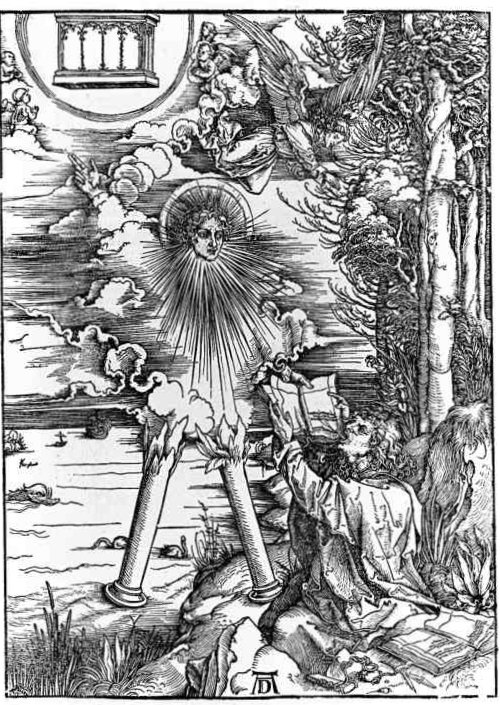
These interludes encourage God’s people in the midst of the fury and horror of divine judgment, and remind them that God is still in sovereign control of all events. During the interludes God comforts His people with the knowledge that He has not forgotten them, and that they will ultimately be victorious.1
It should be noted that the effects of the sixth trumpet may not yet be entirely complete: for the second woe is only said to be past after the ministry of the two witnesses in Revelation 11:3-13‣:2This part of the Apocalypse is sometimes treated as an episode, thrown between the second and third woe-trumpets, and having little or no relation to either. This is an error. We have still to deal with the blast of the sixth Trumpet. It is only in the fourteenth verse of the eleventh chapter, that we find the note of indication that the woe of the sixth Trumpet is accomplished.3
The theme of this chapter appears to be the declaration of God’s intention and right to take possession of the earth—both land and sea—and to bring to fulfillment the many prophetic themes found in Scripture which point to the establishment of God’s kingdom on earth. See The Arrival of God’s Kingdom. The judgments which come forth in the seventh trumpet (which include the seven bowls of God’s wrath) are in many ways parallel to the judgment of the flood in the days of Noah. Jesus compared the suddenness of the judgments of the end with the suddenness with which Noah’s flood arrived upon an unsuspecting populace (Mat. 24:37-38; Luke 17:26). We see an allusion to the judgment of Noah in the rainbow which is on the head of the mighty angel who occupies the central role in this chapter (Rev. 10:1‣).another mighty angel
The description of this mighty angel has significant similarities to that of deity.What absolutely forbids this angel being Christ is the oath sworn by the angel in Rev. 10:5-6‣, one that could never come from the lips of the second person of the Trinity (Beckwith, Mounce).5
This is faulty logic, for elsewhere Scripture readily affirms that God swears by Himself:For when God made a promise to Abraham, because He could swear by no one greater, He swore by Himself, saying, “Surely blessing I will bless you, and multiplying I will multiply you.” (Heb. 6:13-14) [emphasis added]
Similar non-sequiturs6 characterize much of the discussion on this subject. It seems that many interpreters arrive at chapter ten with an a priori view regarding the identity of the angel and simply amass snippets from supporting Scriptures in an attempt to bolster their position. Another example: some assert that this angel is Christ because of the many similarities in his description with the angel of Daniel 10‣.7 But this conclusion assumes the deity of the angel in Daniel 10‣, an assumption which is difficult to maintain when one considers that Daniel’s angel required assistance from Michael (Dan. 10:13‣, 21‣). Yet this crucial detail is not addressed.8 Care should be exercised when evaluating the evidence both for and against the divine identification. Certainly, the appearance and activities of the angel are remarkably similar to that of deity.| Characteristic | Mighty Angel | Divinity |
| Traveling with clouds. | Rev. 10:1‣ | Ex. 16:10; Ps. 97:2; Dan. 7:13‣; Mat. 24:30; Rev. 1:7‣ |
| Associated with rainbow. | Rev. 10:1‣ | Rev. 4:3‣ |
| Radiant face. | Rev. 10:1‣ | Rev. 1:16‣ |
| Feet like fire. | Rev. 10:1‣ | Rev. 1:15‣ |
| Holding a book. | Rev. 10:2‣ | Rev. 5:8‣ |
| Like a lion. | Rev. 10:3‣ | Rev. 5:5‣ |
| Swears by God. | Rev. 10:6‣9 | Deu. 32:40; Heb. 6:13 |
| Authority over land and sea. | Rev. 10:2‣, 5‣, 8‣ | Gen. 1:9-10; Zec. 9:10; Mat. 28:18; Eph. 1:22; Rev. 5:13‣ |
Whenever Jesus Christ appears in Revelation John gives Him an unmistakable title. He is called “the faithful witness, the firstborn of the dead, and the ruler of the kings of the earth” (Rev. 1:5‣), the son of man (Rev. 1:13‣), the first and the last (Rev. 1:17‣), the living One (Rev. 1:18‣), the Son of God (Rev. 2:18‣), “He who is holy, who is true” (Rev. 3:7‣), “the Amen, the faithful and true Witness, the Beginning of the creation of God” (Rev. 3:14‣), “the Lion that is from the tribe of Judah, the Root of David” (Rev. 5:5‣), the Lamb (Rev. 6:1‣, 16‣; 7:17‣; 8:1‣), Faithful and True (Rev. 19:11‣), the Word of God (Rev. 19:13‣), and “King of Kings, and Lord of Lords” (Rev. 19:16‣). It is reasonable to assume that if Christ were the angel in view here He would be distinctly identified.12
It is our view that this angel is not Christ, but a divine emissary whose great glory and declarative actions indicate he is acting in the authority of God and asserting the right and intention of God to reclaim the globe in the judgments which will follow. This angel represents Christ in a similar way to which the Angel of Jehovah represented Jehovah in the OT, but with an important difference: this angel is not divine.This phrase probably denotes angels which normally reside in heaven, perhaps even in His immediate presence. Perhaps this angel is one of the seven “presence angels” which stand before God (Rev. 8:2‣) and which were given the seven trumpets (Rev. 8:2‣). Later, another angel, not called mighty, but having great authority, comes down from heaven to announce the impending fall of Babylon (Rev. 18:1-2‣). The angel who binds Satan, an assignment necessitating great authority and power, also is said to come down from heaven (Rev. 20:1‣).Clouds generally attend the divine presence. See commentary on Revelation 1:7. Clouds are associated with the resurrection of the two human witnesses (Rev. 11:12‣). See Divine Similarities.a rainbow was on his head
The only angel said to have a rainbow on his head. This passage undoubtedly contributed to artist depictions of halos which often characterized religious artwork.13 Here, the rainbow is a reminder of God’s covenant with Noah (Gen. 9:11-17; Isa. 54:9). Fausset takes the rainbow as “the emblem of covenant mercy to God’s people, amidst judgments on God’s foes.”14 But this ignores the setting of the Noahic covenant which came after the destruction of the flood in which Noah and his family were preserved in the ark. The rainbow does not indicate a covenant with certain people over against other people for the covenant following the flood was “between God and every living creature of all flesh that is on the earth” (Gen. 9:16). In the more severe judgments to come within the seventh trumpet, God has promised never again to flood the entire earth as He did in the days of Noah (Isa. 54:9). Judgment must now come by a different means (2Pe. 3:5-7). The rainbow is also an indicator of God’s general faithfulness to covenant. The mystery declared to the prophets (Rev. 10:7‣) which He has promised, is sure to come to pass. The angel’s stance on both earth and sea indicate, as during Noah’s flood, the global nature of the judgments which will attend his roar (Rev. 10:3‣).Up to now, even though the wicked prosper, in the midst of God’s direct judgment we can expect that those who know Him will be specially protected:You have said, ‘It is useless to serve God; what profit is it that we have kept His ordinance, and that we have walked as mourners before the LORD of hosts? So now we call the proud blessed, for those who do wickedness are raised up; they even tempt God and go free.’ Then those who feared the LORD spoke to one another, and the LORD listened and heard them; so a book of remembrance was written before Him for those who fear the LORD and who meditate on His name. “They shall be Mine,” says the LORD of hosts, “On the day that I make them My jewels. And I will spare them as a man spares his own son who serves him.” Then you shall again discern between the righteous and the wicked, between one who serves God and one who does not serve Him. “For behold, the day is coming, burning like an oven, and all the proud, yes, all who do wickedly will be stubble. And the day which is coming shall burn them up,” says the LORD of hosts, “That will leave them neither root nor branch. But to you who fear My name The Sun of Righteousness shall arise with healing in His wings; and you shall go out and grow fat like stall-fed calves.” (Mal. 3:14-4:2)
his face was like the sun
This angel has a radiant countenance like the glorious angel which Daniel saw (Dan. 10:6‣). See Divine Similarities.His burning feet speak of judgment. That which he stands upon—the earth and the nations—will be judged (Isa. 63:3-6; Rev. 14:19-20‣). See commentary on Revelation 1:15. The description of this angel closely parallels that of Daniel’s vision (Dan. 10:6‣). See Divine Similarities.Since the theme of the Exodus is always in the background of this central section of Revelation, it is quite possible that the angel’s legs would recall the pillar of fire and cloud that gave both protection (Ex. 14:19, 24) and guidance (Ex. 13:21-22) to the children of Israel in their wilderness journey. Farrer notes that the description of the angel fits his message—affirming God’s fidelity to his covenants (Rev. 10:7‣): the bow reminding of God’s promise through Noah, the pillar of fire God’s presence in the wilderness, and the scroll the tablets of stone.15
his right foot on the sea and his left foot on the land
That which he places his feet upon he demonstrates his authority over (Deu. 11:24). “The setting or planting of his feet on sea and land is the formal taking possession of both; or the formal expression of the purpose to do so.”17 And is δὲ [de] which often indicates an adversative relationship: but. Left is εὐώνυμον [euōnymon]: “Used by the Greeks as a euphemism for left, the left hand, the left side, as a replacement for ἀριστερός [aristeros] (left) in opposition to the right, since omens on the left were regarded as unfortunate (Mat. 20:21).”18 His right foot (the side of favor) is placed upon the sea but his left foot (the side of disfavor) is placed on the land. This is a literal depiction with a possibly additional secondary symbolism: (1) the sea and land depict the entire physical globe; and 2) the sea represents the Gentile nations (Rev. 13:1‣; 17:15‣) while the land may represent the Jewish nation as stewards of the Promised Land (Gen. 13:15; Lev. 25:10-28; 27:24; 2Chr. 10:7; Ps. 83:12; Joel 1:6; 3:2).19 The authority the angel represents is complete: both geopolitically and nationally (Ps. 2:8; 89:25; Zec. 9:10; Mat. 28:18; Eph. 1:22). The placement of the disfavored foot upon the land, if the land is representative of Israel, may indicate that judgment will begin with the Jewish nation—those who have the greater revelation and responsibility (Rom. 2:9 cf. Mat. 10:15; Luke 12:47-48). See commentary on Revelation 13:1 and Revelation 13:11.See Divine Similarities. Therefore prophesy against them all these words, and say to them: “The LORD will roar from on high, and utter His voice from His holy habitation; He will roar mightily against His fold. He will give a shout, as those who tread the grapes, Against all the inhabitants of the earth. A noise will come to the ends of the earth-For the LORD has a controversy with the nations; He will plead His case with all flesh. He will give those who are wicked to the sword,” says the LORD. Thus says the LORD of hosts: “Behold, disaster shall go forth from nation to nation, and a great whirlwind shall be raised up from the farthest parts of the earth. And at that day the slain of the LORD shall be from one end of the earth even to the other end of the earth. They shall not be lamented, or gathered, or buried; they shall become refuse on the ground. Wail, shepherds, and cry! Roll about in the ashes, you leaders of the flock! For the days of your slaughter and your dispersions are fulfilled; you shall fall like a precious vessel. And the shepherds will have no way to flee, nor the leaders of the flock to escape. A voice of the cry of the shepherds, and a wailing of the leaders to the flock will be heard. For the LORD has plundered their pasture, and the peaceful dwellings are cut down because of the fierce anger of the LORD. He has left His lair like the lion; for their land is desolate because of the fierceness of the Oppressor, and because of His fierce anger.” (Jer. 25:30-38) [emphasis added]
When we recall the extensive parallels between the previous chapter and Joel, it is little surprise that Joel expresses the same theme. This angel gives a roar as a lion to awaken the people of the earth in preparation for the judgment of God against all nations:Let the nations be wakened, and come up to the Valley of Jehoshaphat; for there I will sit to judge all the surrounding nations. Put in the sickle, for the harvest is ripe. Come, go down; for the winepress is full, the vats overflow-For their wickedness is great. Multitudes, multitudes in the valley of decision! For the day of the LORD is near in the valley of decision. The sun and moon will grow dark, and the stars will diminish their brightness. The LORD also will roar from Zion, and utter His voice from Jerusalem; the heavens and earth will shake; but the LORD will be a shelter for His people, and the strength of the children of Israel. (Joel 3:12-16)
The nations will soon be gathered to the Valley of Jehoshaphat (a compound from Hebrew Yahweh and shaphat, meaning “Jehovah has judged”22), and there God “will sit to judge all the surrounding nations” (Rev. 16:12-16‣, which see). Notice too, the winepress motif, symbolized in this chapter by the mighty angel’s stance: standing upon both sea and land. Although both the Jewish nation and the Gentile nations will be judged according to Jeremiah, Joel reminds us of an extremely important distinction between Israel and all other nations: Israel alone is God’s chosen nation and has unconditional everlasting promises of divine protection (Isa. 44:21; Jer. 31:35-37; 33:20-22; Rom. 11:1, 25-29). Therefore, in the midst of the judgment of God, “the LORD will be a shelter for His people, and the strength of the children of Israel” (Joel 3:16).23 Isaiah also records God’s promise to defend Jerusalem and Mount Zion. He stirs himself “As a lion roars, and a young lion over his prey” (Isa. 31:4). See commentary on Revelation 12.seven thunders uttered their voices
The voices are said to be their own, ἐαυτῶν [eautōn], indicating “intensive possession: ‘their own’ voices. The voices were and remained ‘their own,’ not shared with anyone else and therefore perpetuated (Alford).”24 In the vision of the throne room in heaven, John heard “thunderings and voices” (Rev. 4:5‣). One of the living creatures whose announcement attends the opening of the first seal is said to have “a voice like thunder” (Rev. 6:1‣), but there are only four living creatures, not seven. Two aspects of these thunderous voices are left as a mystery for us: (1) their identity, and 2) what they said. It may be that the lion-like cry of this mighty angel was replied to by the “seven angels having the last seven plagues, for in them the wrath of God is complete” [emphasis added] (Rev. 15:1‣). The correlation between the seven thunders and the seven angels with the seven last plagues is strengthened by what the mighty angel announces, “in the days of the sounding of the seventh angel, when he is about to sound, the mystery of God would be finished, as He declared to His servants the prophets” [emphasis added] (Rev. 10:7‣). “These may have been angel-voices, the effect (thunder) being put, by Metonymy, for the cause.”25 On the other hand, what the seven thunders utter is apparently of great importance and divine privacy, for John is not allowed to record what is said. This argues for identifying the thunders with the very voice of God Himself in that they evidently declare the mystery of God which must remain a mystery throughout the centuries from the day of John to the time of the end.26 The following verse indicates that the seven thunders uttered more than one message. We are probably right to assume that each of the seven thunders uttered a unique message, although we cannot be dogmatic on this point. The seven thunders and their seven utterances are an indication of the completeness of judgment which attend their declaration. See Seven: Perfection, Completeness.One might ask whether the seven thunders are the Seven Spirits before the throne (Rev. 1:4‣; 4:6‣)? But, as we have seen, the Seven Spirits refer to the Holy Spirit and there is no record in Scripture of the Spirit speaking in a direct auditory manner.John had earlier noted there were thunderings proceeding from God’s throne (Revelation 5:5‣) along with voices. It is probably that these seven thunderous voices which followed the great cry . . . were nothing less than seven pronouncements from the very throne of God.27
I was about to write
Since John was instructed, “What you see, write in a book” (Rev. 1:11‣) and “Write the things which you have seen, and the things which are, and the things which will take place after this” (Rev. 1:19‣), he was dutifully recording the things which he was being shown.The source of the voice is unidentified, but ultimately of divine authority for it forbids John from recording what he had previously been instructed by God to record (Rev. 1:11‣, 19‣). Later, this same voice tells John to take the little book from the mighty angel (Rev. 10:8‣).Seal up the things . . . do not write them
Although John’s primary purpose in writing Revelation is to reveal (Rev. 1:1‣; 22:10‣), here he is commanded to omit the utterance of the seven thunders from the biblical record. Daniel was also told to seal up what he had been shown in a vision (Dan. 8:26‣; 12:4‣, 9‣). In Daniel’s case, the sealing appears to denote the inability to understand the contents until a later time when knowledge and understanding of the Scriptures would increase. Here, the sealing pertains to the actual revelation which is completely omitted from the record. Amos records, “Surely the Lord GOD does nothing unless he reveals His secret to His servants the prophets” (Amos 3:7). This principle is not violated here because the prophet, John, is allowed to hear what the thunders utter, even though told not to write it down for his readers.It is ultimately fruitless for us to speculate as to what was omitted because the reason John may not record their utterance appears to be related to the outworking of the mystery of God. Therefore, it may not be known what they said until it comes to pass—for God has not chosen to reveal their message to us.Here is a definite commandment from God that no indication shall be given as to the correct interpretation of the seven thunders. In spite of this, however, some commentators have attempted to do that which God forbade John to do. It seems that the reverent student of the Word of God can do nothing but pass on to that which follows.28
Here, we would do well to remember the words of Moses and the Psalm writer: “The secret things belong to the LORD our God” (Deu. 29:29) and “It is the glory of God to conceal a matter” (Pr. 25:2).29As the visible portion of an iceberg is only a small part of the iceberg, most of which is hidden from man’s sight, so God’s disclosures reveal only part of his total being and purposes.30
A related passage in the Psalms attributes a sevenfold aspect to the voice of the LORD. Interestingly, it is found in conjunction with a reference to God’s reign as judge during the Noahic flood which we have seen is related to the global judgment set forth in this chapter:The voice of the LORD is over the waters; the God of glory thunders; the LORD is over many waters. The voice of the LORD is powerful; the voice of the LORD is full of majesty. The voice of the LORD breaks the cedars, yes, the LORD splinters the cedars of Lebanon. He makes them also skip like a calf, Lebanon and Sirion like a young wild ox. The voice of the LORD divides the flames of fire. The voice of the LORD shakes the wilderness; the LORD shakes the Wilderness of Kadesh. The voice of the LORD makes the deer give birth, and strips the forests bare; and in His temple everyone says, “Glory!” The LORD sat enthroned at the Flood, and the LORD sits as King forever. (Ps 29:3-10) [emphasis added]
Although we may not know what the seven thunders said, we can infer from the context and related passages that it concerns aspects of the remaining seven judgments (the seven bowls subsumed within the seventh trumpet) which result in the kingdoms of this world becoming the kingdoms of the Father and His Christ (Rev. 11:15‣). Perhaps the contents of the utterances demonstrate similar themes as that which the Psalm writer recorded.As to their contents, perhaps they uttered “inexpressible words, which it is not lawful for a man to utter” (2Cor. 12:4). Perhaps their contents would be unbearable down through the centuries:So terrible are they that God in mercy withholds them, since “sufficient unto the day is the evil thereof.” The godly are thus kept from morbid ponderings over the evil to come; and the ungodly are not driven by despair into utter recklessness of life.31
standing
ἐστῶτα [estōta], perfect tense participle, while having stood. The angel is still standing on the sea and land when he raises his hand to swear.Raising the hand was a common practice when taking an oath (Gen. 14:22; Deu. 32:40; Eze. 20:5, 15; 36:7; 47:14). The MT and NU texts indicate the angel raised his right hand, in which case the book would be held in his left hand. Another powerful angel lifted both hands before Daniel to swear “by Him who lives forever” (Dan. 12:7‣). swore by Him who lives forever and ever
Here and in Daniel 12‣, the angels swear to underscore the unchangeable nature of the message they give. In both cases, the aspect of the message being emphasized is the timing with which prophesied events will take place. Daniel’s angel indicated that the final period when the power of Israel would be shattered would be “times, time and half a time” (Dan. 12:7‣). Here, the angel tells John that the long history of delay where God’s grace prevented Him from moving in final judgment has come to an end. See Divine Similarities.There is no higher person by which one can swear than the eternal God (Rev. 1:18‣; 4:9‣).who created heaven and . . . the earth and . . . the sea
Emphasis is placed upon the identity of God as Creator, for the declaration of the angel in this chapter is intimately connected with God repossessing the title to the earth (both land and sea, indeed the entire creation), which has been marred by the interposition of sin and Satan. Mention of God’s creative acts over both the earth and sea parallels his stance (Rev. 10:2‣). God owns that which He has created (Gen. 2:1; 1Cor. 10:26)! See commentary on Revelation 4:11.there should be delay no longer
χρόνος οὐκέτι ἔσται [chronos ouketi estai], time no longer it will be. “Signifying not the abolition of time, which is impossible, but that there would be no further delay or waiting (Rev. 6:10‣) for the accomplishment of God’s covenanted and promised purposes.”32 The truth of this statement is found in the response of the devil after having been cast to earth (Rev. 12:12‣). Although prophetic events such as the coming of Christ for His church and the Day of the Lord are Imminent—they could begin at any time—history has evidenced a delay in the consummation of things:The true attitude of the Church, and that to which all the representations and admonitions of the Scriptures are framed, is to be looking and ready any day and every day for the coming of Christ to seize away his waiting and watching saints. But in faithfully assuming this attitude, and thus hoping and expecting the speedy fulfilment of what has been promised, the Church has been made to see one notable and quickening period after another pass away without bringing the consummation which was anticipated. Eve thought the promise on the point of fulfilment when Cain was born; but He whom she was expecting was yet 4,000 years away. When Simeon took the infant Savior to his bosom . . . he supposed that the time for the consummation had arrived; but it was only the preliminary advent that he had lived to witness. . . . The early Christians were lively in their expectations that yet in their day the standard of the coming One would be seen unfurled in the sky, and all their hopes be consummated; but the days of the Apostles and of the apostolic fathers passed, and still “the Bridegroom tarried.” . . . Although the Saviour may come any day, and our duty is to be looking for Him every day, it is still possible that all present prognostications on the subject may fail, as they have always failed; that years and years of earnest and confident expectation may go by without bringing the Lord from heaven; and that delay after delay, and ever repeating prolongations of the time of waiting may intervene, till it becomes necessary for the preservation of the faith of God’s people to hear the fresh edict from the lips of their Lord, that “there shall be no more delay.” Though the coming of the consummation be slow, it will come. There is not another truth in God’s word that is so peculiarly authenticated. . . . Shall we then have any doubt upon the subject? Shall we allow the failure of men’s figures and prognostications to shake our confidence or obscure our hope? Shall we suffer the many and long delays that have occurred, or that ever may occur, to drive us into the scoffer’s ranks?33
Habakkuk set forth the principle of the patience that is needed in regard to prophetic pronouncements of God: “For the vision is yet for an appointed time; but at the end it will speak, and it will not lie. Though it tarries, wait for it; because it will surely come, it will not tarry” (Hab. 2:3).God’s prophetic timetable is not ours. How often we forget! The result is the discrediting of His Holy Word as we misrepresent that which it teaches by making it conform to our own expectations concerning the age within which we find ourselves in the plan of history. But we must be patient! God’s predictions are sure, but they are for an appointed time which He alone knows. Let us remember that! That which God has predicted “He will manifest in His own time” [emphasis added] (1Ti. 6:15). in the days of the sounding of the seventh angel
This refers to the time period during which the seventh angel sounds and the final seven bowl judgments pour forth (Rev. 11:15‣; (16). See Literary Structure.A mystery is something which is unknowable by man unless revealed by God:The New Testament mystery doctrines (see T. Ernest Wilson, Mystery Doctrines of the New Testament, pp. 10-12) make an interesting study, and may be listed as follows (1) the faith, 1Ti. 3:9. (2) the church, Rom. 16:25. (3) the gospel, Eph. 6:19. (4) Jew and Gentile in one body, Eph. 3. (5) the bride, Eph. 5:32. Rev. 19‣, 20‣. (6) seven stars and seven churches, Rev. 1:20‣. (7) of godliness, 1Ti. 3:16. (8) kingdom of heaven, Mat. 13:11. (9) Israel’s blindness, Rom. 11:25. (10) rapture of the church, 1Cor. 15:51. (11) His will, Eph. 1:9. (12) of God, Rev. 10:7‣. (13) the indwelling Christ, Col. 1:24-29. (14) the Godhead of Christ, Col. 2:2, 9. (15) of iniquity, 2Th. 2:7. (16) Babylon, Rev. 17:5‣. Isa. 2:1-4.34
NT mysteries reveal information which was not previously made known: “The mystery [of Rev. 10:7‣] is that there will be a series of seven climactic judgments that will destroy the satanic mystery of the man of sin. This was not revealed in the Old Testament.”35The expression, “the mystery of God,” in this connection seems to indicate all those counsels and dealings of God made known by Him to and through the Old Testament prophets, concerning His governmental proceedings with men on earth looking always toward the establishment of the kingdom in the hands of Christ. When Christ comes to take the kingdom, there will be no mystery, but, on the contrary, manifestation. “The earth shall be full of the knowledge of Jehovah, as the waters cover the sea”—that is, universally and compulsorily (Isaiah 11:9).36
See commentary on Revelation 1:20.would be finished
ἐτελέσθη [etelesthē], prophetic aorist, which emphasizes the certainty of the future event as if it had already occurred.37 The completion comes in the sounding of the seventh trumpet, which initiates the seven bowls of God’s wrath. When the final (seventh) bowl is poured forth, “a loud voice came out of the temple in heaven, from the throne, saying, ‘It is done!’ ” (Rev. 16:17‣).All the pain, sorrow, suffering, and evil in the world cause the godly to long for God to intervene. A day is coming when He will break His silence, a day when all the purposes of God concerning men and the world will be consummated. . . . All the atheists, agnostics, and scoffers who mocked the thought that Christ would return (2Pe. 3:3-4) will be silenced. The millennia of sin, lies, murders, thefts, wars, and the persecution and martyrdom of God’s people will be over. Satan and his demon hosts will be bound and cast into the abyss for a thousand years (Rev. 20:1-3‣), unable any longer to tempt, torment, or accuse believers. The desert will become a blossoming garden (cf. Isa. 35:1; 51:3; Eze. 36:34-35), people will live long lives (Isa. 65:20), and there will be peace between former enemies at all levels of society—and even in the animal kingdom (Isa. 11:6-8).38
He declared to His servants the prophets
Declared is εὐηγγέλισεν [euēngelisen], he announced good news. The message declared to the prophets was ultimately one of good news: the gospel! Not only of Christ’s provision for man’s sin, but of God’s ultimate reclamation of fallen creation. The complete gospel includes much more than individual redemption, but extends to the entire redemptive revelation of God:We, therefore, plant ourselves upon the divinest of records, and upon the most authentic, direct, and solemn of all sacred utterances, and say, that he whose gospel drops and repudiates from its central themes the grand doctrine of the consummation of all things, as portrayed in this Apocalypse, is not the true Gospel of God.39
As we have attempted to emphasize throughout our study, the book of Revelation is not a “head without a body.” It is intimately connected with a large amount of prophetic material set forth elsewhere in Scripture. This fact alone undermines the attempt by preterist interpreters to limit the scope of the book. For to limit the scope of Revelation to the events surrounding the judgment of Jerusalem by Rome in A.D. 70 necessitates the cutting short of all the grand prophetic themes of Scripture. Indeed, some preterists implicitly recognize this fact when they assert that we are already in the new heavens and new earth. See Preterist Interpretation.No, we must leave the preterists to follow their own dead-end path which lops off huge parts of God’s prophetic program and understand the book of Revelation within the grand scheme of God’s entire redemptive plan for all nations, nay, for the entire globe, nay, for all of creation! See Related Passages and Themes.The phrase the prophets is best understood as denoting the Old Testament prophets because “the relative silence of NT prophecy in regard to the fulfillment of Israel’s hope and kingdom is notable. The occurrences of προφήτης [prophētēs] in the Gospels, Acts, and the Epistles are predominantly references to OT prophets.”40 Although what is to come is a mystery, the non-mysterious aspects of the mystery were declared to the OT prophets.:The mystery previously hidden refers to all the unknown details that are revealed from this point to the end of Revelation, when the new heavens and new earth are created. God had preached that mystery (without all the details revealed in the New Testament) to His servants the prophets in the Old Testament, and men like Daniel, Ezekiel, Isaiah, Jeremiah, Joel, Amos, and Zechariah wrote of end-time events. Much of the detail, however, was hidden and not revealed until the New Testament (for example in Mat. 24, 25, and 2Th. 1:5-2:12), and more particularly in the previous chapters of Revelation.41
The mystery was declared by God to His servants (Dan. 9:6‣; Amos 3:7; Zec. 1:6). The prophets were not free to speculate concerning God’s plan for history using their own uninspired words. They were His servants and He saw to it that they obeyed to record precisely that which He desired to have recorded in Holy Scripture! For how could He call them servant (even “slaves,” δούλους [doulous]) if they did not serve His will? And what could be said of a God who was unable to control His servants—those set aside for His specific use? Those commentators who would deny the inspiration and inerrancy of Scripture, of which there is no shortage, must stumble on this point. Here, John tells us that what will be fulfilled is what God declared to His servants: that which they recorded and was preserved for our learning.If the Lord spoke through His servants the prophets, only to have what He said be hopelessly twisted and distorted so that it was no longer inerrant in all matters which it records, then how could He hold men to it? Would it be fair to condemn men for eternity in flames if the very message which sets forth their doom and the offer of eternal life is itself hopelessly flawed? For even if the main message were somehow preserved (the view of partial inspiration), what man could be condemned for failing to trust in it if it could be shown that numerous passages were in error? And who is responsible for deciding what portions are the true message of God reliably preserved and which portions are not His, but flawed distortions of His original message? Clearly, views which fail to acknowledge the reliability of God’s Word make Scripture akin to Swiss cheese—full of holes.42 See Anti-supernatural Bias.Since the mystery which will be finished was declared to His servants the prophets, we might expect that the mystery involves the consummation of a wide range of prophetic themes which run like threads throughout both testaments. Jerome Smith provides a cogent summary of what may be involved in this “ultimate mystery.”This “mystery” which is to be finished involves (1) the resolution of the problem of evil, which was first manifest in the Garden of Eden, as the first sin seemingly interrupted the purpose for Adam and Eve in the Garden of Eden. The fall brought the attendant curse upon man and all creation, the curse now announced to be removed. The prophets speak unitedly of the coming Messianic Kingdom as a time of regeneration, restitution, and restoration, when earth will be restored to its paradisiacal state, a time when the curse is removed (Rev. *22:3; Gen. *3:15; Isa. 11:6-9; 60:21; Zec. 14:11; Acts 3:19-21). (2) the resolution of the apparent paradox of election and free will, and a clarification to us of the orderings of providence (1Cor. 13:12; Eph. 1:11). (3) the consummation of the mystery of godliness, involving the human and divine cooperating in establishing the Davidic theocratic kingdom (Isa. 54:1; Mat. 22:41-46; John 1:51; 1Cor. 15:50; Eph. 1:10; 1Ti. 3:16). (4) the completion of our redemption and the establishment of our inheritance (Mat. 19:27-30; Rom. 8:23; Eph. 1:11; 4:30; Heb. 9:28; 1Jn. 3:2). (5) the pre-tribulational, premillennial personal appearance of Christ for believers to prepare the organization of, and to set up, his kingdom before its open, public manifestation (Deu. 33:2; Isa. 11:11; 1Cor. 15:51-52; 1Th. 4:16-18; Tit. 2:13; Rev. 11:17-18‣). (6) the accomplishment of divine vengeance and retribution in the Day of the Lord (Is. 61:2; 63:4; Rev. 1:10‣). (7) the open revelation of Christ, the overthrow of Antichrist, the investiture of the kingdom, the exaltation of the saints, the overthrow of Satan (Dan. 7:13-14‣; Luke 10:18; Col. 3:4; 2Th. 1:10; 2:8; Rev. 20:10‣). Because this finishing occurs at the beginning of the seventh trumpet (which itself is clearly premillennial), the finishing is necessarily premillennial, not postmillennial. The theme of all the prophets is the fulfillment of the covenants and promises in the “sure mercies of David” in establishing the Messianic Kingdom, which is the kingdom of God upon earth, as our eternal inheritance (Isa. 55:3; Mat; 5:5; Acts 1:3, 6; 13:34; 15:14-18; 28:31; Rom. 4:13; 8:17).43
Peter emphasized this same truth in his first sermon after the Day of Pentecost, that heaven would receive Jesus “until the times of restoration of all things, which God has spoken by the mouth of all His holy prophets since the world began” (Acts 3:21). This is an act of redemption, but on a far grander scale then human salvation alone. Our kinsman-redeemer will restore the entire created order. See commentary on Revelation 5:2. the voice which I heard from heaven
The same voice which instructed John not to write what the seven thunders uttered (Rev. 10:4‣). The divine authority of this voice is seen in its command which countermanded God’s earlier instructions that John was to record what he saw. Here, the divine authority is seen again in that John boldly approaches a mighty angel and tells him to turn over the book.See commentary on Revelation 10:2.who stands on the sea and on the earth
See commentary on Revelation 10:2. Give me
One would typically expect an imperative mood verb here—as when commanding: you give. Here it is an infinitive, δοῦναι μοι [dounai moi], to give to me, probably reflecting John’s tentativeness to tell such a mighty angel what to do. Even though John’s authority and instruction is from heaven, it is no small thing to approach this mighty angel and tell him anything! John could only approach the mighty angel knowing he had received divine command to do so:The soul who is obedient—who yields unquestioning submission to the expressed will of God—is for the time omnipotent. He walks and acts in the strength of the Creator—the maker of heaven and earth. Fear? he knows it not. The invisible God, seen by faith, makes him invincible in the path of obedience—“immortal till his work is done.”44
λάβε καὶ κατάφαγε [labe kai kataphage], two verbs in the imperative mood: You take and you eat! The response of the mighty angel to John indicates his superior power and is intended to overcome John’s reluctance to touch, much less take, this important book held in the hands of such a mighty being.Eat is from κατεσθίω [katesthiō] meaning: “Consume, devour, swallow.”45 The emphasis is upon John completely consuming what he is given to eat. Eating God’s Word is a frequent theme of Scripture and indicates the acceptance, digesting of, meditating upon, and sustenance derived from that which is eaten (Jer. 15:16). Job declared, “I have not departed from the commandment of His lips; I have treasured the words of His mouth more than my necessary food” (Job 23:12). Jesus, the Word of God, referred to Himself as the Bread of Life (Job 23:12; John 6:27-35, 48). In the same way that God made Israel dependent upon manna, so too are His servants to be dependent upon his Word.46John was told to eat prophetic revelation much like that of Ezekiel. See commentary on Revelation 10:11.it will make your stomach bitter
Bitter is πικρανεῖ [pikranei], used “Of honey when wormwood is mixed.”47 How well this describes God’s prophetic Word! It is honey for the obedient, but mixed with wormwood (Rev. 8:11‣) in the face of disobedience. This is the very essence of the Word of God. For those who follow it, it is the Word of Life. For those who reject it, it is the Word of Death. This dual nature of God’s Word was understood by Paul:Now thanks be to God who always leads us in triumph in Christ, and through us diffuses the fragrance of His knowledge in every place. For we are to God the fragrance of Christ among those who are being saved and among those who are perishing. To the one we are the aroma of death leading to death, and to the other the aroma of life leading to life. And who is sufficient for these things? (2Cor. 2:14-16)
The bitterness would develop after John had tasted its sweetness, when its contents were fully digested. “There was sweetness in the assurance that the prayers of God’s Israel, who had ‘cried day and night unto Him,’ were about to be answered.”48 But the mature student of God’s prophetic Word will come to appreciate its bitterness. The new believer, excited by the prospect of God’s intervention into history, readily exults in God’s prophetic program, but often fails to appreciate the alternate aspect of the fulfillment of God’s promises—the eternal damnation of those who have not yet trusted in Christ. The bitterness which John will experience is an appreciation of God’s grace and mercy and the realization that in the completion of the mystery of God, judgment will have overcome the current age of mercy resulting in the eternal loss of countless persons who continue in their rejection of God. For undoubtedly the book contains “lamentations and mourning and woe” (Eze. 2:10).it will be as sweet as honey in your mouth
See commentary on Revelation 10:10. ate it
κατέφαγον [katephagon], John totally consumed or devoured it (cf. Mat. 13:4; 23:14; John 2:17).sweet as honey in my mouth. But . . . my stomach became bitter
Although the initial taste was sweet, the result was bitterness. “ ‘Turn your stomach,’ or ‘be hard on your stomach’ is a better translation than ‘bitter’ in Rev. 10:9‣, for we have no sense of taste in our stomachs.”50All of God’s Holy Word is sweet (Ps. 19:10; 119:103), but especially the initial exposure to prophetic passages. Often, those who “eat” prophetic Scripture “sit on the edge of their seat” and focus on its quick fulfillment. Like a perpetual “sugar high,” it provides an initial surge of energy and motivation, but will never sustain like a balanced meal of God’s Word. The continual chasing after the latest prophetic conference, while superficially treating prophetic passages and never grasping important aspects of God’s character—His heart for the lost and His ultimate interest in restoration over judgment—is sure to lead to disillusionment and will shipwreck the faith of some. Critics of the Rapture rightfully point to those who continually overemphasize prophetic passages within a shallow framework of Scriptural understanding and are forever watching for Antichrist rather than Christ.To almost all people, prophecy is sweet. Prophetic conferences draw larger audiences than virtually any other kind of conference. The voluminous sale of the more sensational prophecy books is another evidence of how “sweet” BIble prophecy has become to so many people. But if “sweetness” is all there is, then it is worth little. Every student of prophecy should have the second experience that John had: bitterness in the stomach. A knowledge of things to come should give every believer a burden for people. For the way of escape from these things is the Rapture, and the requirement to qualify for the Rapture is the acceptance of Messiah now. A true student of prophecy will not simply stop with the knowledge of things to come. Rather this knowledge will create the strong burden to preach the gospel to others and thereby give them a way of escape.51
The healthy saint is not sustained by hype, be it prophetic or charismatic, but seeks to know Christ through His Word and to make Him known with compassion and sensitivity—as Jesus walked in the gospels. The balanced study of God’s Word brings a burden for the lost and a growing realization of the destiny of those who fail to respond to God’s gracious offer. The desire to see God quickly judge is mitigated by a desire to see His grace prevail. Amos responded to those who desired the Day of the Lord:Woe to you who desire the day of the LORD! For what good is the day of the LORD to you? It will be darkness, and not light. It will be as though a man fled from a lion, and a bear met him! Or as though he went into the house, leaned his hand on the wall, and a serpent bit him! Is not the day of the LORD darkness, and not light? Is it not very dark, with no brightness in it? (Amos 5:18-20)
he said
The TR text has the singular form, he said whereas the MT and NU texts have the plural form, they said. If the former, then the mighty angel was speaking. If the latter, then perhaps both the voice from heaven and the mighty angel or several angels spoke in unison.52You must prophesy again
You must is δεῖ σε [dei se] which indicates necessity, often to attain a certain intended result.53 John is told to prophesy again. That which he has been relating up to now is prophetic, not some veiled political document in an apocalyptic genre. See The Genre of the book of Revelation. See Audience and Purpose.Victorinus, who wrote the first commentary on Revelation, understood this phrase to indicate John’s subsequent release from Patmos for how could John deliver what he must prophesy if he were to remain on Patmos?Victorinus [d. c. A.D. 304], who wrote the first commentary on Revelation . . . at Revelation 10:11‣ notes: “He says this, because when John said these things he was in the island of Patmos, condemned to labor of the mines by Caesar Domitian. There, therefore, he saw the Apocalypse; and when grown old, he thought that he should at length receive his quittance by suffering, Domitian being killed, all his judgments were discharged. And John being dismissed from the mines, thus subsequently delivered the same Apocalypse which he had received from God.”54
about many peoples, nations, tongues, and kings
The fourfold designation: peoples, nations, tongues, kings, indicates the global scope of the message John is prophesying. See Four: the Entire World, the Earth.Both Ezekiel’s scroll and John’s book are closely related. (See commentary on Revelation 10:2.) Both contain prophecy. However, a significant difference occurs between what Ezekiel and John ingest: Ezekiel eats a message intended for Israel, but John eats a message for all nations. Ezekiel is told to prophesy to the “house of Israel, not to many people of unfamiliar speech” (Eze. 3:6), whereas John “must prophesy again about many peoples, nations, tongues, and kings” (Rev. 10:11‣). The message of Revelation is about a multinational, multiethnic population. It is global in nature and cannot be restricted to the events of the A.D. 70 destruction of Jerusalem by Rome as preterists contend. “It is no one Empire or Emperor that is concerned in the prophecies of the second half of the Apocalypse; not merely Rome or Nero or Domitian, but a multitude of races, kingdoms, and crowned heads.”55 See commentary on Revelation 1:7.The group John is to prophecy about includes those who “dwell on the earth,” who view the bodies of slain witnesses (Rev. 11:9‣). This is the same group which an angel preaches the everlasting gospel to (Rev. 14:6‣). These are the ones upon which the harlot, Babylon, sits (Rev. 17:15‣). About is ἐπι [epi] which can also be translated against (Luke 12:52-53). For much of what John relates is both about and against the earth dwellers around the globe.Notes
1John MacArthur, Revelation 1-11 : The MacArthur New Testament Commentary (Chicago, IL: Moody Press, 1999), Rev. 10:1.
2Thomas suggests that the sixth trumpet is closed at the end of chapter 9. “Some prefer to include Rev. 10:1‣-11:13‣ as part of the sixth trumpet judgment because of the declaration of 11:14‣ that at that point the second woe has passed. This conclusion is uncalled for, however, in light of the clear indication of 9:20-21‣ that the sixth trumpet has ended there.”—Robert L. Thomas, Revelation 8-22 (Chicago, IL: Moody Press, 1995), Rev. 10:1. But Rev. 9:20-21‣ says nothing specifically about the sixth trumpet being ended. All that can be said is that it indicates a definite lull in the action which immediately followed the sounding of the sixth trumpet.
3J. A. Seiss, The Apocalypse: Lectures on the Book of Revelation (Grand Rapids, MI: Zondervan Publishing House, 1966), 223.
4This can be established from the lack of any detailed, proof-positive identification found in the text. Yet there is much discussion concerning whether this angel is Christ or simply a powerful angel.
5Thomas, Revelation 8-22, Rev. 10:1.
6“non sequitur 1. An inference or conclusion that does not follow from the premises or evidence.”—American Heritage Online Dictionary, Ver. 3.0A, 3rd ed (Houghton Mifflin, 1993).
7Henry Morris, The Revelation Record (Wheaton, IL: Tyndale House Publishers, 1983), 181.
8Those commentators who understand the vision of Daniel 10:5-9‣ as being a theophany—a vision of God—usually see the messenger of the subsequent verses (10-21) as a different individual, possibly Gabriel. This allows the first vision to be that of Christ while allowing the second individual to be an angel who seeks assistance from Michael (Dan. 10:13‣, 21‣). A problem with this view is the unity of the text which argues that the same individual is in view in both sections of the passage. The arguments for and against seeing one versus two heavenly individuals in Daniel 10‣ are beyond the scope of our treatment here other than to recognize that the similarities between Revelation 10‣ and Daniel 10‣ are insufficient to unambiguously establish the divinity of the angel of Revelation 10‣.
9Another mighty angel, who requires Michael’s assistance and is therefore not divine (Dan. 10:20‣), swears by God (Dan. 12:7‣ cf. Dan. 10:5‣).
10It should be noted that these were preincarnate appearances of Jesus. John’s vision is seen after the incarnation. Concerning the Angel of the Lord: Gen. 16:7-11; 22:11, 15; Ex. 3:2; 14:19; 23:20-23; 32:34; Num. 22:22-35; Jdg. 2:1, 4; 5:23; 6:11-22; 13:3-21; 2S. 24:16; 1K. 19:7; 2K. 1:3, 15; 19:35; 1Chr. 21:12-30; Ps. 34:7; 35:5-6; Isa. 37:36; 63:9; Hos. 12:4; Zec. 1:11-12; 3:1-6; 12:8; cf. Acts 7:30-31, 35, 37-38.
11Although, as we have observed, Christ is referred to as an angel or messenger in His OT appearances as the Angel of Jehovah, we are now speaking of the incarnate glorified Christ. “While the preincarnate Christ appeared in the Old Testament as the Angel of the Lord, the New Testament nowhere refers to Him as an angel.”—MacArthur, Revelation 1-11 : The MacArthur New Testament Commentary, Rev. 10:1.
12Ibid.
13“Some interpret the rainbow as the natural result of light from the angel’s face refracted by the cloud in which he was arrayed.”—Robert H. Mounce, The Book of Revelation (Grand Rapids, MI: William B. Eerdmans Publishing Co., 1977), Rev. 10:1.
14A. R. Fausset, “The Revelation of St. John the Divine,” in Robert Jamieson, A. R. Fausset, and David Brown, A Commentary, Critical and Explanatory, on the Old and New Testaments (Oak Harbor, WA: Logos Research Systems, Inc., 1997, 1877), Rev. 10:1.
15Mounce, The Book of Revelation, Rev. 10:1.
16Although the same book is later designated as a βιβλίον [biblion] (Rev. 10:8‣).
17E. W. Bullinger, Commentary On Revelation (Grand Rapids, MI: Kregel Publications, 1984, 1935), Rev. 10:2.
18Timothy Friberg, Barbara Friberg, and Neva F. Miller, Analytical Lexicon of the Greek New Testament (Grand Rapids, MI: Baker Books, 2000), 4:182.
19“Since God was the ultimate owner of the land of Israel, since He had given tenant possession of the land to the people of Israel forever (Gen. 13:15; 2Chr. 10:7), and since the Israelites were only the tenant administrators of God’s land, they were forbidden to sell the land forever [Lev. 25:23]. . . If . . . an Israelite became so poverty-stricken that he was forced to sell the portion of land that was his tenant possession, he did not sell the ownership of the land. Instead, he sold the tenant possession or administration of the portion of the land for a temporary period of time (Lev. 25:16, 25-27). . . . God required that a sold tenant possession be returned to the original tenant or his heir in the year of jubilee (Lev. 25:10, 13, 28; 27:24).”—Renald E. Showers, Maranatha, Our Lord Come (Bellmawr, NJ: The Friends of Israel Gospel Ministry, 1995), 78-79.
20M. R. Vincent, Vincent’s Word Studies (Escondido, CA: Ephesians Four Group, 2002), Rev. 10:3.
21“We have already seen who it is that is called ‘the Lion from the tribe of Judah.’ ”—Seiss, The Apocalypse: Lectures on the Book of Revelation, Rev. 10:3.
22James Strong, The Exhaustive Concordance of the Bible (Ontario: Woodside Bible Fellowship, 1996), H3092.
23This does not refer to the believers in general for nowhere are believers called the children of Israel. This uniquely designates the physical seed of Jacob. Believers are the spiritual seed of Abraham (Rom. 4:11-18; Gal. 3:7-8, 29). “ ‘Abraham’s seed,’ therefore, is not necessarily equivalent of a Jew or a member of the people of Israel. God’s promise to Abraham encompassed both ‘a great nation’ and ‘all peoples on earth’ (Gen. 12:2-3). Both of these groups, therefore, share the fulfillment of that promise in the salvation of God without being merged into each other. It is significant that when the fulfillment of the Abrahamic promise is related to the Gentiles, it is specifically this statement about ‘all nations,’ not any reference to the ‘great nation’ or Israel, that the apostle uses as OT support (Gal. 3:8). Again, there is sharing, but not identity.”—Robert L. Saucy, “Israel and the Church: A Case for Discontinuity,” in John S. Feinberg, ed., Continuity And Discontinuity (Westchester, IL: Crossway Books, 1988), 254.
24Thomas, Revelation 8-22, 76.
25Bullinger, Commentary On Revelation, Rev. 10:4.
26“As usual, interpretation has run wild as to the seven thunders. As a few illustrations may be cited: Vitringa, the seven crusades; Daubuz, the seven kingdoms which received the Reformation; Elliott, the bull fulminated against Luther from the seven-hilled city, etc.”—Vincent, Vincent’s Word Studies, Rev. 10:3. “Some would have use believe that these seven thunders are the Papal Bulls issued against Luther and the Reformation [Elliott, vol. ii., p. 100, etc.]. If this be so, then God sealed the book in vain for all know what those thunders uttered.”—Bullinger, Commentary On Revelation, Rev. 10:4.
27Morris, The Revelation Record, Rev. 10:3.
28Donald Grey Barnhouse, Revelation (Grand Rapids, MI: Zondervan Publishing House, 1971), 183.
29This is not the only portion of the divine record which is not recorded: John 20:30; 21:25.
30Alan F. Johnson, Revelation: The Expositor’s Bible Commentary (Grand Rapids, MI: Zondervan Publishing House, 1966), Rev. 5:4.
31Fausset, The Revelation of St. John the Divine, Rev. 10:4.
32Jerome Smith, The New Treasury of Scripture Knowledge (Nashville, TN: Thomas Nelson Publishers, 1992), Rev. 10:6.
33Seiss, The Apocalypse: Lectures on the Book of Revelation, Rev. 10:6.
34Smith, The New Treasury of Scripture Knowledge, Rom. 16:25.
35Arnold G. Fruchtenbaum, The Footsteps of Messiah, rev ed (Tustin, CA: Ariel Ministries, 2003), 702.
36William R. Newell, Revelation: Chapter by Chapter (Grand Rapids, MI: Kregel Publications, 1994,c1935), Rev. 10:7.
37“An author sometimes uses the aorist for the future to stress the certainty of the event. It involves a ‘rhetorical transfer’ of a future event as though it were past.”—Daniel B. Wallace, Greek Grammar Beyond the Basics - Exegetical Syntax of the New Testament (Grand Rapids, MI: Zondervan Publishing House and Galaxie Software, 1999, 2002), 564.
38MacArthur, Revelation 1-11 : The MacArthur New Testament Commentary, Rev. 10:1.
39Seiss, The Apocalypse: Lectures on the Book of Revelation, Rev. 10:7.
40Thomas, Revelation 8-22, Rev. 10:7.
41MacArthur, Revelation 1-11 : The MacArthur New Testament Commentary, 10:7.
42It is not our purpose here to treat the reliability of the Scriptures in great detail. For those who call Jesus “Lord,” the most revealing study which can be done is to survey the NT for passages where Jesus refers to the Scriptures (sometimes referred to as the Law and the Prophets). The unbiased reader will readily appreciate that Jesus held the generation of his day responsible for their understanding and response to God solely upon the contents of the written Scriptures. He constantly and unfailingly points to the “Scriptures.” He never recognizes a personal existential encounter with God, but identifies the ultimate truth about God as being the objective written record. What Scripture records are the very words of God: Ex. 24:4; 34:27; Num. 33:2; Deu. 31:9, 24; 31:26; 1Chr. 28:19; Isa. 8:1; Isa. 30:8; Jer. 1:9; 30:2; 36:2, 28, 32; Dan. 12:4‣; 1Cor. 2:13; 14:37; 1Th. 4:2, 15; Rev. 1:19‣; 10:4‣.
43Smith, The New Treasury of Scripture Knowledge, Rev. 10:7.
44Walter Scott, Exposition of The Revelation (London, England: Pickering & Inglis, n.d.), Rev. 10:9.
45Frederick William Danker and Walter Bauer, A Greek-English Lexicon of the New Testament and Other Early Christian Literature (Chicago, IL: University of Chicago Press, 2000), 442.
46Interestingly, each man was to daily collect the manna for his own household. How different would our country be if each father approached bible study this way—rather than ignoring the Word or relying upon a professional clergy to gather manna for him once a week?
47Ibid., 657.
48Bullinger, Commentary On Revelation, Rev. 10:11.
49 Albrecht Durer (1471 - 1528). Image courtesy of the Connecticut College Wetmore Print Collection.
50Monty S. Mills, Revelations: An Exegetical Study of the Revelation to John (Dallas, TX: 3E Ministries, 1987), Rev. 10:9.
51Fruchtenbaum, The Footsteps of Messiah, 243.
52“‘They,’ who told John he must prophesy, we may surmise were heavenly ‘watchers’ (as in Daniel 4:13‣, 17‣): for the mind of God as to earthly judgments and prophetic programs is well known by those dwelling in the light of heaven (compare Revelation 7:13‣, 14‣; 11:15‣, 21:1‣; 22:9‣).”—Newell, Revelation: Chapter by Chapter, Rev. 10:11.
53Danker, A Greek-English Lexicon of the New Testament and Other Early Christian Literature, 172.
54Mark Hitchcock, “The Stake in the Heart—The A.D. 95 Date of Revelation,” in Tim LaHaye and Thomas Ice, eds., The End Times Controversy (Eugene, OR: Harvest House Publishers, 2003), 133.
55Henry Barclay Swete, The Apocalypse of St. John (Eugene, OR: Wipf and Stock Publishers, 1998, 1906), Rev. 10:11.